
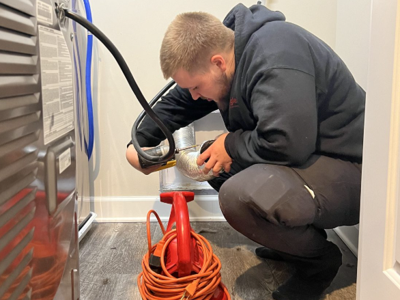

Dryer vents receive little attention until performance drops or laundry rooms grow warmer, yet airflow through this narrow system affects energy use, appliance life, and overall home safety.
With more homeowners tracking utility costs and indoor air quality, the question often becomes whether routine maintenance belongs on a weekend checklist or with a trained technician.
Understanding the tradeoffs between doing it yourself cleaning and professional service helps you make a decision aligned with your home, your schedule, and your tolerance for risk.
Why Dryer Vent Maintenance Matters More Than You Think
A dryer moves air through several feet of ducting, often with turns, vertical runs, and exterior terminations, and lint buildup restricts airflow far earlier than most people expect.
According to U.S. fire data, thousands of residential fires each year trace back to dryers, with failure to clean cited as a leading factor, while energy studies show clogged vents force dryers to run longer cycles, driving up electricity or gas use.
When airflow improves, drying times shorten, fabric wear drops, and heat buildup inside the appliance declines, which protects internal components and reduces strain on motors and heating elements.
What DIY Dryer Vent Cleaning Involves
Homeowners who choose a do it yourself approach usually start by disconnecting the dryer, removing the vent hose, and clearing lint with brushes, vacuums, or blower attachments.
This approach works best in homes with short, straight duct runs made of rigid metal, where access remains simple and visual inspection confirms progress.
Regular DIY cleaning supports awareness of appliance condition and costs little beyond basic tools, yet limitations appear quickly when ducts run through walls or ceilings, when exterior vents sit high above grade, or when flexible foil hoses trap lint in folds.
Without specialized equipment, deep obstructions and compacted debris often remain in place, even when surface lint appears gone.
When Professional Service Delivers Measurable Value
Professional dryer duct cleaning addresses issues beyond reach of household tools, since technicians rely on rotary brushes, compressed air systems, and airflow testing to clear full duct length.
In homes with long runs, multiple turns, or shared venting in multifamily buildings, professional dryer duct cleaning restores airflow to manufacturer specifications, which reduces cycle time and energy use while lowering fire risk.
Technicians also identify crushed ducts, disconnected joints, and improper materials, providing corrective recommendations based on building codes and appliance requirements, which helps prevent recurring blockages and performance decline.
Cost, Time, and Risk Considerations
DIY cleaning appears inexpensive at first glance, yet time investment grows when access proves difficult or when repeated attempts fail to resolve airflow problems.
Professional service carries an upfront fee, though many homeowners offset this cost through lower utility bills and fewer appliance repairs over time.
Risk factors also differ, since improper reconnection of ducts, overlooked blockages, or damage to vent materials during DIY work introduce hazards unseen until symptoms worsen. A realistic comparison weighs not only dollars spent, but also confidence in results and peace of mind regarding safety.
Choosing the Right Approach for Your Home
Homes with short, visible vent runs and a history of routine upkeep often benefit from periodic DIY cleaning supplemented by professional inspection every few years.
Properties with older construction, concealed ductwork, frequent lint buildup, or extended drying times gain more from scheduled professional service.
Your choice should reflect layout complexity, household usage patterns, and expectations for performance consistency, rather than habit or convenience alone.
A Balanced Maintenance Strategy
Effective dryer vent care blends awareness with action, since regular checks keep minor buildup from escalating while expert service resolves deeper issues.
By matching the maintenance approach to home design and usage demands, you protect appliances, manage energy costs, and support a safer living environment, all while preserving the comfort and efficiency expected in a well maintained home.


(0) comments
We welcome your comments
Log In
Post a comment as Guest
Keep it Clean. Please avoid obscene, vulgar, lewd, racist or sexually-oriented language.
PLEASE TURN OFF YOUR CAPS LOCK.
Don't Threaten. Threats of harming another person will not be tolerated.
Be Truthful. Don't knowingly lie about anyone or anything.
Be Nice. No racism, sexism or any sort of -ism that is degrading to another person.
Be Proactive. Use the 'Report' link on each comment to let us know of abusive posts.
Share with Us. We'd love to hear eyewitness accounts, the history behind an article.