
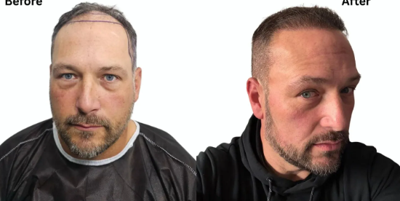

A hair transplant in the US is a surgical procedure that moves healthy hair follicles from a donor area to thinning areas. Most procedures use FUE or FUT, and the right method depends on your hair loss, donor supply, and goals.
Results can look natural when an experienced physician carefully plans the grafts and hairline. Choosing the right clinic also matters because surgeon involvement, safety standards, and long-term planning can affect the outcome.
Key Takeaways
- Hair transplant surgery moves healthy follicles from a stable donor area to thinning parts of the scalp, most often using FUE or FUT.
- The right procedure depends on donor density, hair-loss pattern, scalp condition, graft needs, and your long-term goals.
- Choosing an experienced surgeon matters because hairline design, donor preservation, graft handling, and future hair loss all affect the final result.
- Costs vary by surgeon, location, technique, and number of grafts, so patients should compare full treatment plans rather than choose based on price alone.
How Hair Transplants Work
Hair transplantation moves follicles from areas that usually resist genetic hair loss into thinning areas. Most donor hair comes from the back or sides of the scalp because these follicles often remain stable.
After transplantation, the follicles can keep producing hair if they heal well.
Modern hair transplantation techniques focus on natural direction, angle, and density. The surgeon should also consider future loss, existing hair, and the amount of donor hair available.
This planning helps protect the long-term appearance of the result.
FUE and FUT Compared
The two main methods are follicular unit extraction (FUE) and follicular unit transplantation (FUT). Both move healthy follicular units, but they remove them from the donor site in different ways. Neither method is best for every patient.
FUE removes individual hair follicles with small circular punches. An FUE procedure avoids a long linear scar and may work well for people who wear shorter hairstyles.
The number of grafts depends on donor density, hair type, and the size of the treatment area.
FUT removes a narrow strip of scalp from the donor region. The strip is then divided into individual follicular units under magnification. This method can provide many grafts in one session, but it leaves a linear scar.
Key differences include:
- FUE removes follicles one at a time.
- FUT removes a narrow strip of donor scalp.
- FUE may require more shaving.
- FUT can provide a high graft yield.
- Both depend on careful surgical planning.
The right option depends on your scalp, goals, age, and donor supply. A qualified surgeon should explain why one method is more suitable for your case.
Choosing a Qualified Surgeon
Choosing a hair transplant surgeon involves more than looking at before-and-after photos. Review the surgeon's training, experience, and how often they perform surgical hair restoration. You should also ask who performs each part of the procedure.
An FUE hair transplant surgeon should explain donor management, punch size, graft extraction, and recipient-site design. FUT requires the same level of planning. Good treatment should protect both the donor area and your future scalp appearance.
When comparing surgeons, ask:
- How long have you performed hair restoration surgery?
- Who performs the donor harvesting?
- Who creates the recipient sites?
- How do you choose the number of grafts?
- Can I see cases with similar hair types?
- How do you plan for future hair loss?
A detailed consultation should give clear answers. It should also cover risks, scarring, recovery, expected density, and whether you are a good candidate.
Surgeon Involvement Matters
Hair restoration is a medical procedure, so the physician’s role matters. The surgeon should guide diagnosis, planning, hairline design, and the key surgical steps. Trained staff may assist, but you should know each person’s role before treatment.
Patients comparing physician-led care may consider consulting Dr. Ross Kopelman to learn how specialist training, donor preservation, and hairline planning affect treatment decisions. The goal is not simply to move follicles.
The result should still look balanced if surrounding hair becomes thinner later.
Understanding Graft Numbers
The number of grafts needed can vary greatly. A small hairline procedure may need far fewer grafts than treatment of the frontal scalp, mid-scalp, and crown. Hair thickness, curl, donor density, and scalp contrast also affect coverage.
A clinic should not promise an exact graft count before examining the scalp. The estimate should reflect both the treatment area and what the donor zone can safely provide. Removing too many follicles can create visible thinning in the donor area.
Who Is a Good Candidate?
A good candidate usually has a clear diagnosis, enough stable donor hair, and realistic expectations. Age matters, but it is not the only factor. Younger patients often need more conservative planning because hair loss can continue.
Hair transplants are commonly used for male pattern baldness and other stable forms of hair loss. Some people with scars may also qualify. Active scalp disease or weak donor density can make surgery less suitable.
Costs in the United States
The cost of a hair transplant in the USA often ranges from $4,000 to $15,000 or more. Current 2026 pricing data places FUE around $6,000 to $15,000 and FUT around $4,000 to $10,000.
The final price depends on the surgeon, location, technique, and number of grafts required.
Many clinics also price procedures by graft. FUE commonly costs about $4 to $10 per graft, while FUT may cost about $3 to $7 per graft. Larger sessions can reach $15,000 or more, especially in higher-cost markets such as New York and Boston.
Typical 2026 US price ranges include:
- 500–1,000 grafts: about 5,000
- 1,000–2,000 grafts: about 10,000
- 2,000–3,000 grafts: about 13,000
- 3,000–4,500+ grafts: about $15,000 or more
- FUE: about 15,000
- FUT: about 10,000
These figures represent typical market ranges, not fixed prices. A recent national estimate placed the average overall cost between $3,919 and $10,640, with FUE generally costing more than FUT.
People researching hair transplant surgery should also ask what the quoted price includes. Medications, postoperative supplies, follow-up visits, travel, and future touch-up procedures may increase the total cost.
Some clinics offer a free consultation or financing, but the final quote should come after the surgeon evaluates your scalp and donor supply.
Reviewing Before-and-After Results
Before-and-after photos can help you judge consistency. Look for patients with similar hair color, texture, loss pattern, and starting density. Matching lighting and angles makes the comparison more useful.
Also ask to see the hairline, crown, and donor site when relevant. Good photos should show the result from several angles. Patient reviews can add context, but they should not replace a medical consultation.
Warning Signs When Comparing Clinics
Some clinics focus heavily on marketing while giving little detail about the medical team. Be cautious if a provider hides the surgeon’s role, promises guaranteed density, or recommends the same graft count for everyone.
Treat claims of scar-free surgery with caution.
Other warning signs include:
- No clear physician diagnosis.
- Pressure to pay immediately.
- Unclear answers about surgical roles.
- Very high graft recommendations.
- No discussion of future hair loss.
- Little explanation of risks or recovery.
A reliable hair transplant clinic should clearly explain the treatment plan, risks, timeline, and team roles. The consultation should focus on whether the procedure is right for you, not only on selling surgery.
Recovery and Hair Growth
After surgery, redness, swelling, crusting, and mild tenderness are common. Small crusts usually fall away as the scalp heals. Transplanted hairs often shed before new growth begins.
New hair usually appears gradually over several months. Early hairs may look thin before they become stronger. FUE hair transplants and FUT both depend on the same normal hair growth cycle after the follicles heal.
Planning for Long-Term Results
A transplant does not stop untreated natural hair from thinning. Your surgeon may discuss medical treatment when appropriate. This can help protect the hair around the transplanted area.
Good planning also protects the donor site for possible future procedures. The surgeon should consider how hair loss may progress and how much donor supply may remain. This is a key part of responsible hair restoration surgery.
Frequently Asked Questions
Is FUE Better Than FUT?
Neither method is better for everyone. FUE may suit patients who want to avoid a linear scar, while FUT may help when a larger graft yield is needed. Your donor density, hairstyle, scalp condition, and goals should guide the choice.
Does Transplanted Hair Last?
Transplanted follicles usually come from areas that resist androgen-related thinning. Many can keep growing for years. Native hair around them may still thin, so long-term planning remains important.
How Many Grafts Will I Need?
The number depends on the treatment area, donor density, hair thickness, curl, and current hair coverage. A physical or detailed virtual assessment gives a better estimate than a general calculator. Always review very high graft counts with donor safety in mind.
When Will I See Results?
New growth often begins several months after the procedure. Density improves as more follicles enter an active growth phase. Final results take time because hair grows in cycles.
Questions to Ask Before Booking
A strong consultation should explain what surgery can and cannot achieve. Ask about the recommended method, graft estimate, surgeon experience, risks, recovery, fees, and future hair-loss plan.
Clear answers make it easier to compare clinics based on medical quality instead of advertising.
A well-planned procedure combines accurate diagnosis, careful donor use, realistic expectations, and skilled technique. When comparing providers in the United States, focus on who performs the surgery and how the plan protects your future appearance.
(0) comments
We welcome your comments
Log In
Post a comment as Guest
Keep it Clean. Please avoid obscene, vulgar, lewd, racist or sexually-oriented language.
PLEASE TURN OFF YOUR CAPS LOCK.
Don't Threaten. Threats of harming another person will not be tolerated.
Be Truthful. Don't knowingly lie about anyone or anything.
Be Nice. No racism, sexism or any sort of -ism that is degrading to another person.
Be Proactive. Use the 'Report' link on each comment to let us know of abusive posts.
Share with Us. We'd love to hear eyewitness accounts, the history behind an article.