

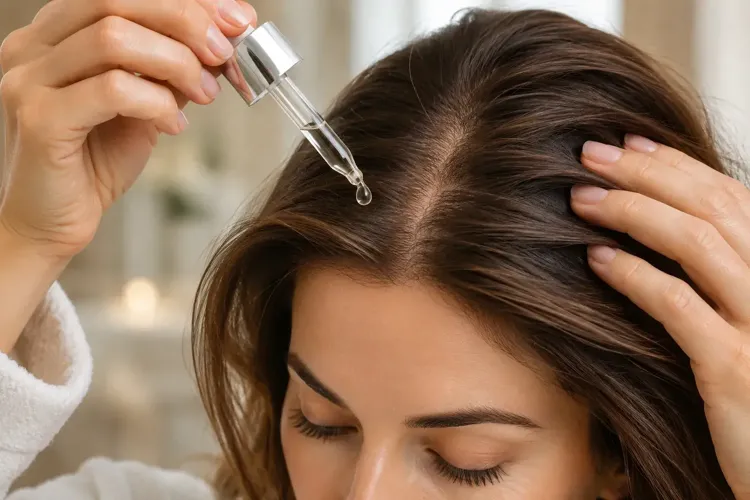

From next-generation scalp treatments to smarter everyday habits, the pursuit of fuller hair is getting more sophisticated. Here's what's worth your attention.
There are certain beauty discoveries a woman would rather not make. A new wrinkle can be negotiated with a good serum and flattering lighting. But a ponytail that suddenly feels half its former size? That's personal.
Perhaps it's the widening part you notice in a photograph. Maybe your stylist tactfully mentions that your hair seems a little finer. Or perhaps you've begun counting the strands left behind in the shower, an exercise guaranteed to make washing your hair considerably less relaxing.
Hair thinning is one of those beauty concerns that can quietly undermine confidence, and it doesn't discriminate according to the price of your haircut. Genetics, hormones, age, stress, illness, and certain nutritional deficiencies can all play a role. Sometimes hair is genuinely shedding from the follicle; other times, years of heat styling and chemical treatments have simply left it breaking faster than you'd like.
Fortunately, the conversation around thinning hair has evolved. The latest generation of luxury haircare is turning its attention to the scalp, with increasingly sophisticated formulas featuring peptides, botanical extracts, and even exosome technology. But before surrendering your credit card to the most expensive bottle on the shelf, it helps to know what these products can—and cannot—accomplish.
Here are three changes worth making if fuller, healthier-looking hair is on your beauty wish list.
1. Stop Treating Your Scalp Like an Afterthought
We've spent decades lavishing attention on the hair we can see. We condition the ends, protect our color, invest in elaborate blowouts, and occasionally spend a small fortune trying to recreate what our stylist accomplished in 45 minutes.
Meanwhile, the scalp gets whatever shampoo happens to be in the shower.
That deserves a rethink. Your scalp is skin, complete with oil glands, microorganisms, and thousands of hair follicles. Keeping it clean and comfortable is an essential part of haircare, even though a healthy scalp alone cannot guarantee hair regrowth.
One of the more interesting developments comes from SH-RD EXOSOME Scalp Revival Shampoo, part of the brand's next-generation scalp-care collection. Designed for hair that appears fine, fragile, or lacking volume, it brings emerging exosome technology into a category traditionally dominated by cleansing and conditioning ingredients. The appeal is a more targeted approach to scalp care, with the practical goal of helping hair look refreshed and fuller at the roots.
Exosomes are attracting considerable attention in regenerative science, but there's an important distinction between promising laboratory research and proven benefits from a cosmetic shampoo. There is not yet sufficient independent clinical evidence to conclude that exosome shampoos reverse hair loss. Think of this as sophisticated hair maintenance, not a follicle-transplant specialist in a bottle.
For those who prefer a botanical approach, Zenagen Revolve Thickening Shampoo offers another interesting option. Developed for visibly thinning hair, the plant-based formula is intended to support the appearance of fuller, healthier-looking strands. The directions call for leaving the shampoo on the scalp for five full minutes before rinsing—a small adjustment that makes the routine feel more intentional.
The lesson? Shampoo deserves more consideration than its fragrance or how beautiful the bottle looks beside your marble shower. Choose a formula suited to your scalp and hair type, and give it a chance to do the job it was designed to do.
2. Discover Why Scalp Serums Are Becoming the New Luxury Beauty Investment

Scalp serums are becoming an essential part of modern luxury haircare, offering targeted treatments for healthier-looking, fuller hair.
Remember when a hair mask felt like the height of at-home indulgence? Those days are looking decidedly quaint.
Today's premium haircare is increasingly borrowing from skincare, incorporating targeted leave-in treatments, carefully selected active ingredients, and formulas designed for the scalp rather than the ends. It makes sense. We wouldn't expect a facial cleanser to replace an entire skincare routine, so why expect shampoo to accomplish everything for thinning hair?
Among the more ambitious offerings is SH-RD EXOSOME Root Awakening Concentrate, a premium leave-in scalp treatment that explores the brand's exosome-focused approach. Unlike its companion shampoo, the concentrate remains on the scalp after application. It is positioned as a targeted step for those concerned about fragile, thinning-looking hair and scalp condition.
At approximately $300, this is no casual drugstore purchase. That makes the distinction between cosmetic innovation and demonstrated hair-regrowth results especially important. Exosome research is intriguing, but its potential does not automatically translate into proven results for every consumer product. And with a luxury price tag, asking for convincing evidence is entirely reasonable.
Another noteworthy contender comes from Obagi Medical BIOSTIM Scalp Serum. Known for its clinically oriented skincare, Obagi brings a similar ingredient-focused philosophy to the scalp with a once-daily serum formulated for visibly fuller, denser-looking hair. Its ingredient list includes caffeine, biotinoyl tripeptide-1, botanical extracts, and other components selected for the appearance of healthier hair and scalp.
Obagi reports improvements in hair appearance in a 24-week clinical evaluation conducted in 2025. That's useful information, although manufacturer-reported results should be considered alongside the study's design, participants, and independent evidence. The serum is a cosmetic treatment, not an FDA-approved medication for hair loss.
What makes these products appealing is the growing sophistication of scalp-focused beauty. What makes them worth evaluating carefully is that sophisticated ingredients do not always mean clinically proven regrowth.
My beauty rule is simple: Spend generously on products that genuinely meet your needs, but don't mistake an impressive price for a medical guarantee.
3. Know When Your Hair Needs Better Care—and When It Needs a Doctor
Here's a truth the beauty industry doesn't always emphasize: Not every thinning-hair problem can be solved at the beauty counter.
Hair breakage and hair loss are not the same thing. If your strands have become brittle from bleaching, heat styling, or constant tension, changing how you handle your hair can make a noticeable difference in its appearance. Less breakage means longer, more even-looking lengths and often a fuller-looking hairstyle.
Start with the habits that require surprisingly little investment. Lower the heat on styling tools, use conditioner and a suitable leave-in product to reduce friction, and stop treating wet hair like it owes you money. Tight hairstyles may look wonderfully polished, but repeated pulling can damage follicles over time. Your hair should not have to suffer for a perfect ponytail.
Actual hair shedding, however, requires a different conversation. A widening part, progressively reduced density, sudden shedding, or patchy hair loss may point to hereditary thinning, hormonal changes, an illness, or another underlying cause. The American Academy of Dermatology recommends identifying the cause before selecting a treatment. Depending on the diagnosis, options may include evidence-based medications such as minoxidil, prescription treatments, or addressing an underlying health issue.
The distinction matters because early intervention can make a real difference for some types of hair loss. It also prevents the frustrating cycle of buying one miracle product after another while the actual problem goes untreated.
And please, don't assume that taking handfuls of hair supplements will compensate for everything else. Nutritional deficiencies deserve proper evaluation, but excessive amounts of certain nutrients can create problems of their own. More is not always better, particularly when it comes in gummy form.
The smartest approach is to combine good cosmetic care with professional advice when thinning persists. An excellent scalp serum can be part of a beauty routine. A dermatologist can help determine whether you need something more.
The Future of Fuller Hair Is About Being Smarter, Not Spending More
Perhaps the most exciting development in modern haircare isn't a new miracle ingredient at all. It's the shift away from treating every thinning-hair concern as though it were the same problem.
Brands such as SH-RD, Zenagen, and Obagi Medical are bringing fresh attention to scalp care, introducing formulations that make the everyday routine feel more deliberate and sophisticated. Some focus on cleansing and visible volume; others explore targeted leave-in treatments and emerging cosmetic technologies.
The secret is knowing which products deserve a place in your routine—and which expectations should remain grounded in science.
Beautiful hair has never been about having the most bottles on the vanity. It's about choosing well, protecting what you have, and recognizing when expert treatment matters more than another luxury purchase.
And if your hair has been giving you reasons to worry lately, consider this your invitation to give your scalp the same thoughtful attention you've been giving your skin for years.
Your hair deserves that much.

(0) comments
We welcome your comments
Log In
Post a comment as Guest
Keep it Clean. Please avoid obscene, vulgar, lewd, racist or sexually-oriented language.
PLEASE TURN OFF YOUR CAPS LOCK.
Don't Threaten. Threats of harming another person will not be tolerated.
Be Truthful. Don't knowingly lie about anyone or anything.
Be Nice. No racism, sexism or any sort of -ism that is degrading to another person.
Be Proactive. Use the 'Report' link on each comment to let us know of abusive posts.
Share with Us. We'd love to hear eyewitness accounts, the history behind an article.