
Some rooms look beautifully designed before you notice a single piece of furniture. The proportions feel right, the colors belong together, and one architectural detail quietly draws your attention. Often, that detail is a thoughtfully designed wall.
An accent wall can create that effect without requiring an entire renovation. But the difference between a polished feature wall and one that feels dated comes down to more than choosing an interesting paint color.
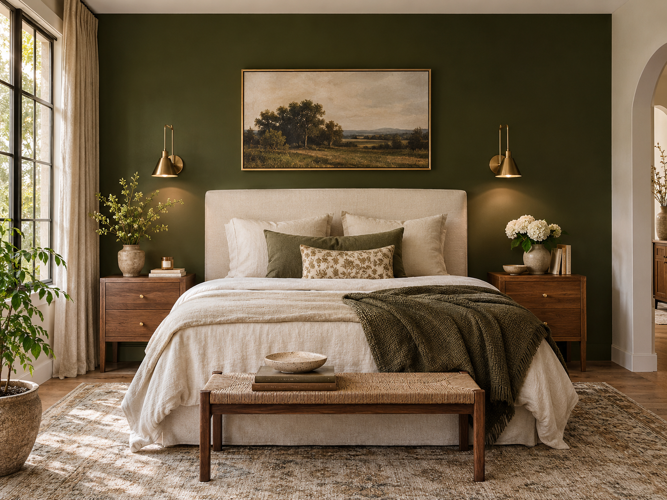
A deep green wall behind a bed might lend the room an intimate, hotel-inspired quality. Subtle plaster could soften a contemporary living room, while elegant molding can bring architectural character to an otherwise ordinary space.
The goal is not to create the loudest wall in the house. It is to create a focal point that makes the entire room feel more considered.
These accent wall ideas explore how color, texture, materials, and proportion can transform a space, with specific design examples and practical decisions worth considering before committing to a new finish.
First, Choose a Wall That Deserves the Attention
The most common mistake with an accent wall happens before anyone opens a paint can: choosing a wall simply because it is empty.
A successful focal wall should have a reason to stand out. Perhaps it frames the bed, anchors the living room fireplace, or creates a backdrop for a beautiful dining table.
In a living room, that might be the wall behind the main sofa, especially when it can accommodate artwork or carefully selected architectural detailing. In a bedroom, the headboard wall is often the natural choice because the furniture already establishes a focal point.
Avoid choosing a wall broken up by too many doors, windows, switches, or unrelated architectural features. These interruptions can make a decorative finish look fragmented.
Also consider what visitors see when entering the room. A feature wall should complement the natural sightline rather than compete with it.
Sometimes the right decision is not to create an accent wall at all. In a small study or intimate dining room, painting every wall in the same rich color may feel more cohesive than leaving three walls pale and one dramatically different.
Give Paint a More Sophisticated Role
Paint remains one of the most accessible ways to transform a room, but a luxurious result depends on choosing color with intention.
Instead of automatically selecting a bright contrasting shade, consider colors that add depth without overwhelming the room. Muted olive, tobacco brown, warm terracotta, deep blue, and sophisticated taupe can create striking backdrops for artwork, upholstery, and natural materials.
For a particularly refined example, considerBenjamin Moore's Essex Green HC-188. This exceptionally deep green approaches black in certain lighting conditions, giving a room a sense of richness without relying on a conventional statement color.
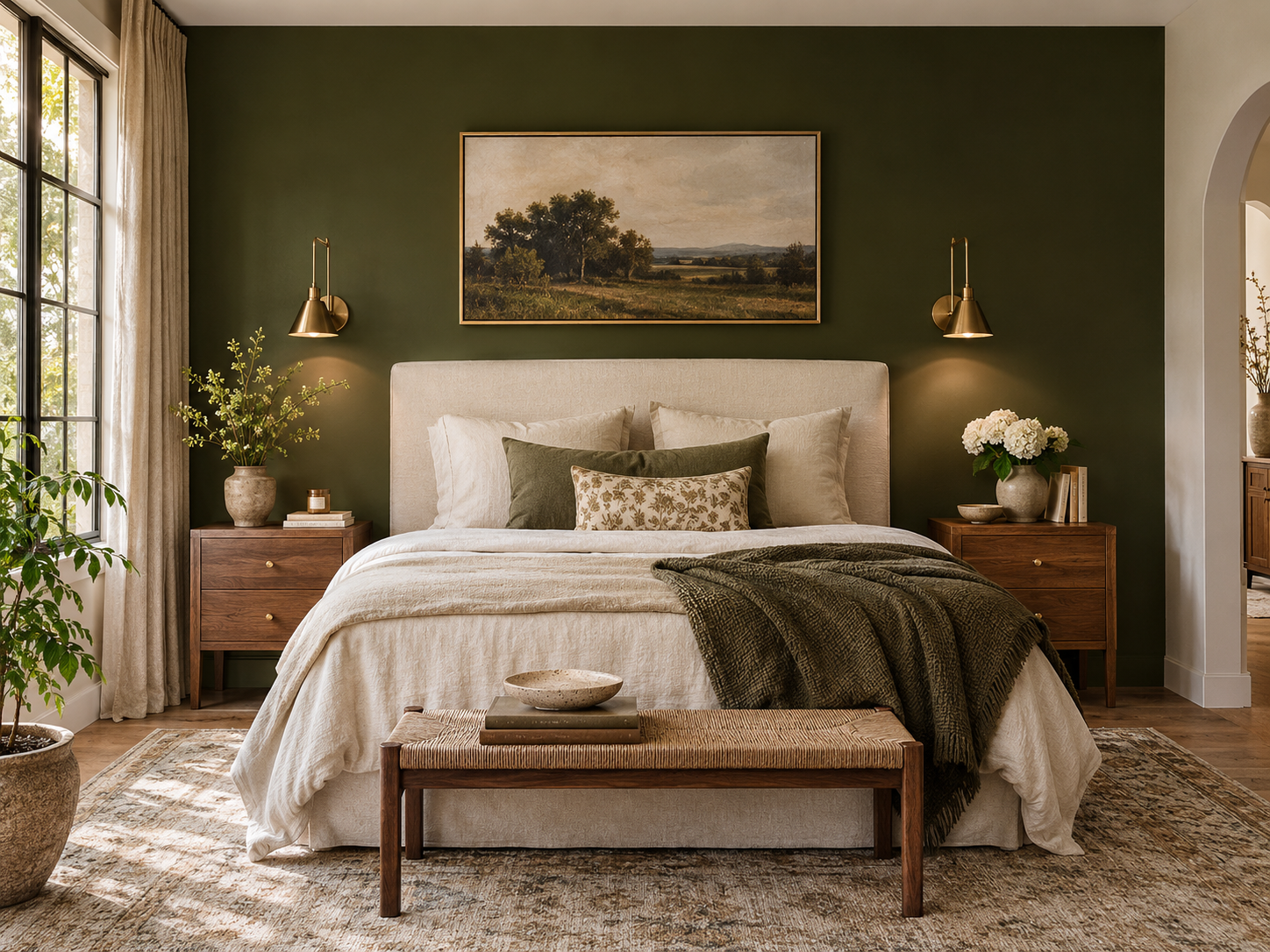
Behind a cream upholstered headboard, it could create an elegant, enveloping atmosphere, especially alongside walnut nightstands, linen bedding, and antique brass sconces. In a study, the same shade could provide a dramatic backdrop for oak shelving and leather seating.
The secret is connecting the wall color to something else in the room. A hue borrowed from a patterned rug, painting, or upholstery fabric will usually feel more deliberate than a shade selected in isolation.
Always test paint samples on the actual wall and observe them in morning, afternoon, and evening light. Deep colors can change noticeably depending on the direction of natural light and the warmth of artificial lighting.
For readers drawn to richer palettes, FINE's guide to decorating your home with jewel tones offers further inspiration for combining dramatic color with refined furnishings.
Use Wallpaper to Introduce Personality and Pattern
Wallpaper has moved far beyond the small, predictable patterns that once defined traditional feature walls.
Today's options include oversized botanical designs, painterly murals, woven finishes, geometric compositions, and richly textured wallcoverings that can introduce depth and personality.
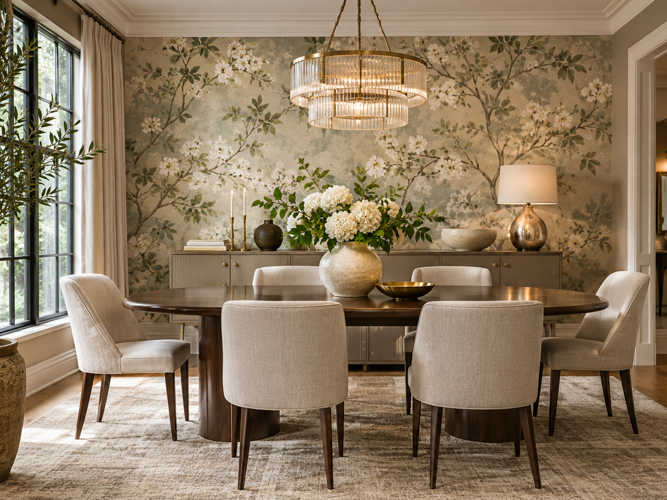
In a dining room, a softly patterned wallpaper can give a simple table and upholstered chairs an entirely new presence. In a bedroom, a scenic mural behind the headboard can become the visual centerpiece without requiring elaborate furniture.
For a quieter expression of luxury, natural grasscloth deserves consideration.
An attractive example is Thibaut's Sutton grasscloth in Natural, pattern T24061. Its knotty woven surface and tonal variation create visual depth that ordinary flat paint cannot reproduce.
Used behind a dining table, the textured material could introduce warmth without competing with sculptural pendant lighting, upholstered chairs, or collected ceramics. In a formal sitting room, it could provide a beautiful contrast to smooth stone, polished wood, and tailored upholstery.
Natural grasscloth does require thoughtful placement. Visible seams and variations are part of its character, and delicate fibers may be unsuitable for areas exposed to splashes, frequent contact, or high humidity.
Before ordering, request a generous sample and study it from across the room. A texture that seems barely noticeable up close can become a surprisingly strong architectural element over a large surface.
FINE's feature on luxury home wallpaper designs offers additional inspiration for using distinctive wallcoverings.
Make an Ordinary Wall Look Architectural With Wood and Molding
One of the most effective ways to make a relatively plain room feel more refined is to introduce architectural detail.
Picture-frame molding, board-and-batten paneling, and beautifully proportioned wood panels can add character without relying on bold color or pattern.
In a traditional home, picture-frame molding painted the same color as the wall can create a subtle, tailored effect. It looks particularly elegant when paired with classic furniture and statement lighting.
Contemporary interiors can benefit from a different approach.
Orac's W110 Hill three-dimensional wall panel offers a sculptural, paintable surface with rhythmic vertical detailing. Rather than installing conventional wood slats, homeowners can use the panels to introduce architectural texture with a more seamless appearance.
A particularly effective application would be a limited section behind a contemporary sofa or along a carefully proportioned media wall. Painting the panels in the same warm neutral as the surrounding walls would allow light and shadow to reveal the texture without introducing another competing color.
This is where restraint becomes important.
Covering every available surface with dramatic paneling can make an otherwise sophisticated room feel repetitive. A more refined approach might be to frame a fireplace, define a reading area, or create a considered backdrop for a statement piece of furniture.
Proportion matters just as much as the material. Decorative panel sizes and molding spacing should relate to the room's ceiling height, wall dimensions, and existing architecture.
Before installing, plan around electrical outlets, baseboards, lighting, and ventilation. These details often determine whether the finished result feels custom or improvised.
Let Texture Do the Work Instead of Bold Color
A feature wall doesn't need dramatic color to make an impression.
Limewash, decorative plaster, and other textured finishes can introduce movement through subtle variations in tone and surface. They work especially well in interiors where natural materials already provide much of the visual interest.
Imagine a living room furnished with a pale linen sofa, walnut coffee table, natural wool rug, and ceramic lamps. A softly textured wall can make those materials feel richer without introducing another competing color.
For a specific example, Portola Paints' Maison Roman Clay offers a plaster-like decorative finish intended for smooth interior walls. Applied with a putty knife or trowel, Roman Clay creates gentle tonal movement and an organic, low-sheen appearance.
It could be particularly beautiful behind a linen sofa or along an uninterrupted bedroom wall, where daylight can reveal the variations in the finish. The effect is more architectural than decorative, making it especially appropriate for contemporary or Mediterranean-inspired interiors.
The attraction of handcrafted surfaces extends beyond one product. Architectural Digest's 2026 interior design forecast examines the growing role of elaborate plasterwork and dimensional wall treatments in luxury interiors.
However, not every textured finish behaves the same way.
Traditional limewash, clay-based coatings, and polished plaster require different application methods and surface preparation. Portola's Roman Clay, for example, is designed for smooth interior drywall rather than wet areas such as showers.
Homeowners should also understand that application technique influences the finished appearance. Large, highly visible walls may benefit from an experienced decorative-finishes specialist.
Before committing, prepare a sample panel and examine it under both daylight and evening lighting. The beauty of these materials often lies in their irregularities, but those variations should feel intentional rather than accidental.
Sometimes the Most Beautiful Accent Wall Is a Work of Art
Not every focal wall needs paint, wallpaper, or paneling.
A carefully chosen artwork can establish a room's entire visual identity, particularly when the surrounding wall remains deliberately understated.
This approach works beautifully in interiors filled with collected furniture, antiques, and meaningful objects. Rather than competing with those pieces, the artwork can provide a visual center that connects them.
Consider Gate by Daniel Fletcher, available through Tappan. The restrained monochromatic composition demonstrates how an expressive work can introduce movement without overwhelming a neutral interior.
Its modest dimensions make it an interesting choice above a narrow console or in an intimate study, where it can be appreciated up close. A simple floating frame and subtle picture lighting would allow the artwork to remain the focus.
For larger living rooms, a substantial painting above a sofa can introduce color and structure without requiring a decorative wall treatment.
Scale is essential. As a starting point, artwork above a sofa often looks balanced when it spans approximately two-thirds to three-quarters of the furniture's width, although the architecture and composition should guide the final decision.
For gallery walls, arrange the pieces on the floor first. Establish a visual center, choose consistent spacing, and select frames that share some relationship without necessarily matching.
The result should feel collected over time rather than assembled simply to occupy a blank surface.
Which Accent Wall Treatment Works Best for Your Room?
Different materials create different atmospheres. Before committing, consider how much visual attention you want the wall to attract and how practical the finish will be to maintain.
Wall Treatment | Best Suited For | What to Consider |
Rich paint color | Bedrooms, studies, dining rooms | Undertones and lighting |
Luxury wallpaper or grasscloth | Dining rooms, bedrooms, formal living spaces | Seams, pattern scale, surface care |
Architectural molding or paneling | Living rooms, media walls, home offices | Proportions, installation, outlets |
Limewash or decorative plaster | Contemporary living rooms and bedrooms | Wall preparation and application technique |
Oversized art or gallery wall | Living rooms, hallways, dining areas | Artwork scale, placement, hanging support |
The most sophisticated choice is not necessarily the most elaborate.
A beautifully proportioned painting on a warm neutral wall can be just as compelling as an expensive decorative plaster treatment.
Five Details to Check Before You Start
An accent wall should feel like part of the original room design, not an afterthought. Before ordering materials or hiring an installer, consider five details that often determine the finished result.
Look at the entire room. The wall should relate to the furniture, flooring, window treatments, and existing architectural features.
Study the lighting. A textured surface can look striking under gentle side lighting but considerably flatter under strong overhead illumination.
Think about furniture placement. A wall hidden behind tall shelving or oversized furniture may not justify an elaborate treatment.
Consider maintenance. Textured surfaces, delicate wallpaper, natural fibers, and specialty finishes may require more care than ordinary painted walls.
Know when to stop. Combining dramatic wallpaper, decorative molding, multiple artworks, and statement lighting on one wall can create unnecessary visual competition.
A successful accent wall should improve the entire room, even when the rest of the furnishings remain unchanged.
The FINE Take

A beautifully designed accent wall is not about following the latest decorating trend. It is about understanding what a room needs.
Sometimes that means adding a rich color that makes familiar furniture feel more elegant. Sometimes it means introducing texture, architectural character, or a piece of artwork that deserves attention.
And sometimes the most confident design choice is to leave the walls understated and allow the furniture and materials to speak.
The best accent wall ideas aren't necessarily the boldest. They're the ones that make a room feel as though every detail belongs.

(0) comments
We welcome your comments
Log In
Post a comment as Guest
Keep it Clean. Please avoid obscene, vulgar, lewd, racist or sexually-oriented language.
PLEASE TURN OFF YOUR CAPS LOCK.
Don't Threaten. Threats of harming another person will not be tolerated.
Be Truthful. Don't knowingly lie about anyone or anything.
Be Nice. No racism, sexism or any sort of -ism that is degrading to another person.
Be Proactive. Use the 'Report' link on each comment to let us know of abusive posts.
Share with Us. We'd love to hear eyewitness accounts, the history behind an article.