
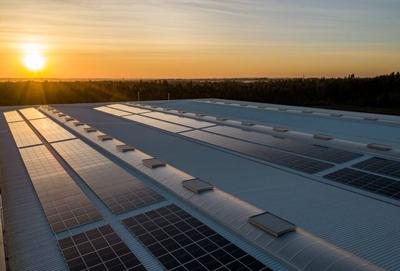

As climate change becomes a more pressing issue, many eco-conscious homeowners wonder what more they could be doing to lessen their home’s carbon footprint. One easy way to make your home greener is to switch to cleaner forms of energy. The average homeowner spends over $2,000 on utilities every year, with a considerable chunk of that total going towards electricity.
Fortunately, there are many ways to power your home with renewable energy, from wind turbines to hydropower. Still, solar panels take the cake as the most common form of green energy people use. While installing solar panels can be a significant investment, the financial payoff is well worth the effort, and you can lessen your impact on the environment in the process.
If you’re looking to do your part in addressing the climate crisis, it’s vital to do your research, flip through a solar guide, and determine whether or not your home is fit for solar panels.
Your electricity bill is high.
The first consideration in deciding whether your house is a good candidate for solar is whether or not installing solar panels will be more cost-efficient than paying your existing electricity bills. If you live in an area where your electricity makes up a large portion of your utility bills, solar energy could be an excellent alternative. In general, the agreed threshold at which installing solar panels makes the most financial sense is if your monthly bill is at least $75. After installing your solar panels, you should be paying less than you currently pay for electricity.
You live in an area with enough sunlight.
Before installing solar panels, you should determine whether your geographical area has enough sunlight exposure to absorb. Contrary to popular belief, you don’t necessarily need to live in an entirely sunny location. Infrequently cloudy regions like the Pacific Northwest, solar panels will only produce about 25% of their standard output. However, this extra output is enough to lower electricity bills significantly. On the other hand, if you live in an area with a lot of snow, solar panels may not be the right renewable energy source for you. When snow covers solar panels, they’re unable to absorb any sunlight. If you’re not sure of your solar potential, using a tool like Project Sunroof can tell you whether your address is exposed to enough sunlight for solar panels.
You have a compatible roof.
You can install solar panels on almost any roof, but you want to ensure that you’re placing them at the right angle and that your roof is durable enough to support them. The material your roof is made from can determine whether solar is right for you. A metal, slate, or composite roof is the best option for installing solar panels, while tile or wood roofs are much more difficult to install solar panels on. If you’d prefer not to re-do your roof to accommodate solar panels, you can install them on the ground.
Install your solar panels to be south-facing so that they can generate the most power over the day. Solar panels that face east or west will still produce enough energy to make your electricity bill smaller, but they will generate about 20% less energy than south-facing solar panels. A pitched roof is also ideal for solar panels, but you can still mount your solar panels at an angle if you have a flat roof.
Your roof is long-lasting.
If you’re planning on making any roof repairs or renovations, ensure that you either complete the process before installation or install your solar panels in conjunction with your new roof. Solar panels are very durable and can last up to 40 years, so if your roof isn’t ready for them, future repairs will be much more costly. Should you need to fix your roof after installing solar panels, an expert will need to take the whole solar panel system off and then reinstall it after repairs are complete.
You benefit from government incentives.
To encourage homeowners to use more eco-friendly forms of energy, state and federal governments offer incentives to install solar panels or wind turbines on their properties. The federal government will subsidize the cost of installing solar panels by up to 30% through a tax credit. Incentives at the state level vary, so you can save even more money depending on where you live.
You want to live as efficiently as possible.
If you genuinely want to benefit from a renewable energy source, make sure that your household is as energy efficient as it can be. Install LED and CFL lightbulbs in place of traditional bulbs, and maximize your appliance usage. Make sure you turn off lights in rooms you’re not currently using and unplug electronics from any outlets when they’re not in use. Living as energy-efficiently as possible can significantly reduce your kilowatt-hours and help you save money.
The bottom line
As renewable energy becomes a more and more accessible option for homeowners worldwide, you may be wondering if it’s also suitable for your home. Keep these tips in mind as you decide, and even if solar won’t work for you, try to do all you can to make your household environmentally friendly.

(0) comments
We welcome your comments
Log In
Post a comment as Guest
Keep it Clean. Please avoid obscene, vulgar, lewd, racist or sexually-oriented language.
PLEASE TURN OFF YOUR CAPS LOCK.
Don't Threaten. Threats of harming another person will not be tolerated.
Be Truthful. Don't knowingly lie about anyone or anything.
Be Nice. No racism, sexism or any sort of -ism that is degrading to another person.
Be Proactive. Use the 'Report' link on each comment to let us know of abusive posts.
Share with Us. We'd love to hear eyewitness accounts, the history behind an article.