


Quiet luxury is often mistaken for a visual code: muted tones, refined materials, understated silhouettes, the absence of logos. But aesthetics are only the surface expression. The deeper truth is more subtle and more powerful. Quiet luxury is not about how something looks. It is about how little it asks of you.
In homes, wardrobes, and daily routines, simplicity feels luxurious because it reduces the number of decisions we are required to make. It removes friction. It quiets mental noise. In a culture defined by endless choice and constant optimization, the ability to move through life without continuous evaluation has become a form of wealth.
The Luxury of Not Having to Decide
Modern life is cognitively dense. From the moment the day begins, we are asked to choose: what to wear, what to eat, what to read, what to respond to, what to prioritize. Even leisure has become a decision-making exercise. Streaming platforms, restaurant menus, travel planning, and wellness routines all require comparison and judgment.
Psychologists refer to this accumulation as decision fatigue, the gradual depletion of mental energy caused by repeated choices. What feels like exhaustion at the end of the day is often not physical at all, but cognitive.
Quiet luxury operates in direct opposition to this condition. It narrows the field. It removes unnecessary options. It creates environments where the right choice is obvious, or better yet, already made.
Why Certain Homes Instantly Feel Luxurious

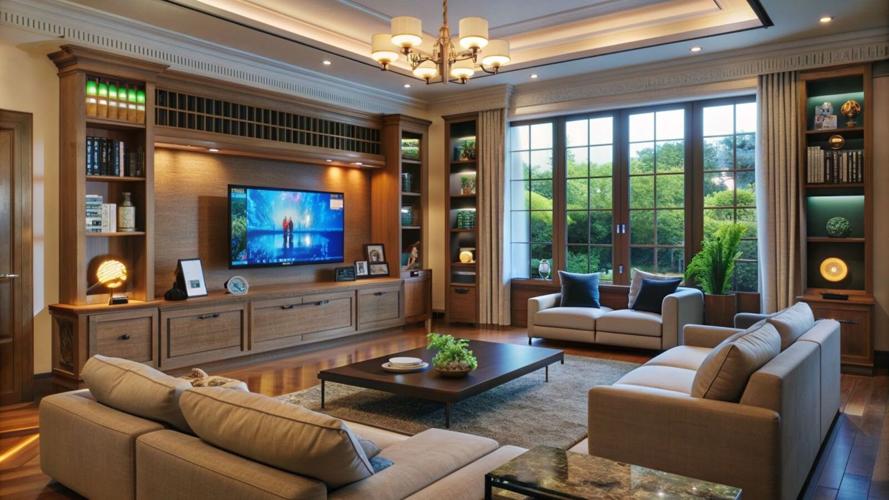
Some homes feel calm the moment you enter them. Not because they are large or expensive, but because they are legible. You intuitively know where things belong. The lighting feels appropriate without adjustment. The temperature is steady. Materials don’t glare, echo, or demand attention. Storage exists where you expect it.
These homes do not ask you to manage them. They support you.
Architects and designers often describe this as clarity of intent. When circulation is logical, proportions are balanced, and materials are chosen for how they age and behave, the space recedes into the background. You are not negotiating with it. You are simply living in it.
This is the essence of quiet luxury: environments that reduce cognitive effort rather than add to it.
The Architectural Roots of Simplicity
Long before “quiet luxury” entered the cultural vocabulary, architects understood that restraint was not about emptiness, but precision. John Pawson, whose work is frequently cited for its serenity, has described simplicity as the elimination of the unnecessary so that what remains can function clearly and beautifully.
Good architecture does not compete for attention. It organizes space in a way that feels inevitable. Circulation flows naturally. Light is controlled. Materials are honest. The building communicates its purpose without explanation.
This is why truly well-designed spaces often feel timeless. They are not chasing visual novelty. They are responding to human behavior
Wardrobes That Work the Same Way
The same logic applies to clothing. A wardrobe that feels luxurious is not one filled with endless options, but one built around cohesion. Colors relate to one another. Silhouettes repeat. Pieces layer easily. Dressing becomes recognition rather than deliberation.
This is not about uniformity. It is about reliability.
When you trust what you own, getting dressed no longer consumes mental energy. The wardrobe becomes a system rather than a puzzle. That quiet confidence—the absence of second-guessing—is what elevates simplicity into luxury.
Daily Routines Without Friction

Quiet luxury also reveals itself in routines that unfold smoothly. Kitchens where cooking does not require rearrangement. Morning rituals that do not involve searching or improvising. Evenings that settle without effort.
These routines are not optimized; they are settled. They were designed once, thoughtfully, and then left alone. There is no constant upgrading, tweaking, or improvement cycle. Familiarity replaces novelty.
This is why well-designed hotels feel restorative. Not because they are indulgent, but because they remove uncertainty. Lighting is preset. Storage is adequate. The environment anticipates needs rather than reacting to them.
Homes that borrow this logic—without copying the aesthetic—often feel more luxurious than those filled with features.
Simplicity Is Not Minimalism
It is important to distinguish simplicity from minimalism. Minimalism is a visual language. Simplicity is a functional one.
A minimalist space without storage creates stress. A visually rich space that works beautifully can feel deeply calm. Quiet luxury does not require empty rooms or neutral palettes. It requires clarity.
Clarity in layout.
Clarity in purpose.
Clarity in how a space is meant to be used.
This philosophy aligns with ideas explored in a recent FINE feature on building living environments that nurture long-term recovery and well-being, where the emphasis was not on aesthetics, but on how spaces quietly support the nervous system over time. The most restorative environments are rarely the most dramatic.
Why Simplicity Endures
Trends demand attention. Simplicity does not. That is why it ages better.
People will always prefer environments that are easy to understand, easy to maintain, and easy to inhabit. They will always value spaces that reduce friction rather than add ceremony. Quiet luxury endures because it aligns with human needs, not cultural moments.
It does not announce itself. It reveals itself slowly, through use.
Luxury as Mental Space
At its most refined, quiet luxury offers something increasingly rare: mental space. Fewer decisions. Fewer interruptions. Fewer negotiations with the world.
In an era defined by abundance, restraint has become meaningful. Not as austerity, but as intention. Not as deprivation, but as design.
Quiet luxury is not about money.
It is about the freedom that comes when life asks less of you.
And that freedom, once experienced, is unmistakable.


(0) comments
We welcome your comments
Log In
Post a comment as Guest
Keep it Clean. Please avoid obscene, vulgar, lewd, racist or sexually-oriented language.
PLEASE TURN OFF YOUR CAPS LOCK.
Don't Threaten. Threats of harming another person will not be tolerated.
Be Truthful. Don't knowingly lie about anyone or anything.
Be Nice. No racism, sexism or any sort of -ism that is degrading to another person.
Be Proactive. Use the 'Report' link on each comment to let us know of abusive posts.
Share with Us. We'd love to hear eyewitness accounts, the history behind an article.