
Open your ears, gather 'round, and be prepared for a story filled with shocking moments, heart-wrenching truths, and famed fables. Krik? Krak! In La Jolla Playhouse's newest play, directed by UC San Diego graduate Joshua Kahan Brody, traditional folklore and personal narrative blend together in an unexpected tale.
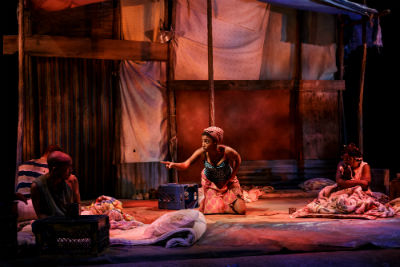
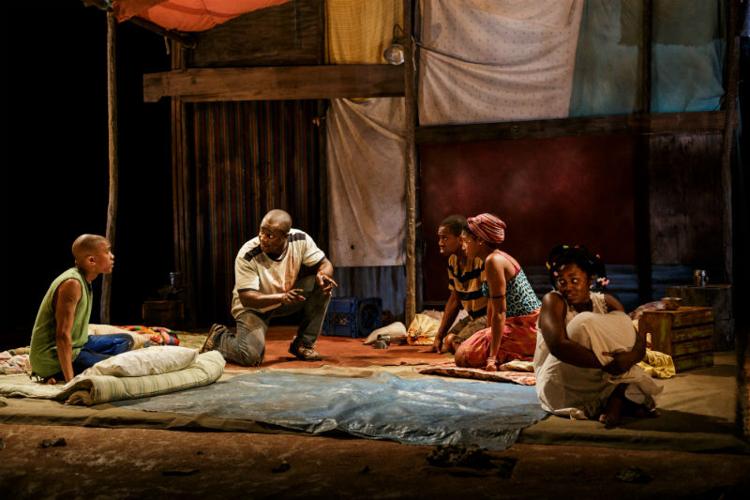
Written by UC San Diego MFA graduate Jeff Augustin, The Last Tiger in Haiti follows five restaveks (or Haitian children indentured to wealthy families as slaves in a practice still widely followed throughout Haiti today) throughout their servitude to a sadistic man and his wife. The children––the youngest at merely eleven––live in a dirty, bare-bones hovel on the property's edge of their master's home. The play opens with the eldest child, Max (a strong and solemn Andy Lucien), newly eighteen and ready to begin his life anew as a free man. On the last night of kanaval (a Haitian celebration and custom), Max gathers with the other restavek children to share stories and band together for one last night.

The Last Tiger in Haiti
With a unique exploration of storytelling and narrative, The Last Tiger in Haiti is a thoughtful world premiere that delves into Haitian folklore and history. The production asserts that it's not necessarily the truth that matters but the way in which stories are told. Such a notion is prominent throughout the play, wherein the five restaveks take turns telling detailed stories in exaggerated performances––some comical, some heartbreaking. It's a tradition for these children to share stories with other because they need the hope telling lavish tales provides in order to survive their cruel reality and the constant abuse they undergo daily from Mister, their master.
While this first-run production thrives on examining the nuance of storytelling and the truth, The Last Tiger in Haiti can at times be a little too coy and subtle with their revelations, particularly in the shorter Act II (nearly half the run time of Act I), as the narrative jumps into both the future and a decorative Miami apartment. Act II's suddenly pristine location is a jarring (if effective) contrast to the uncomfortable setting of the Haitian shack, both sets expertly designed by Takeshi Kata.

The Last Tiger in Haiti La Jolla Playhouse
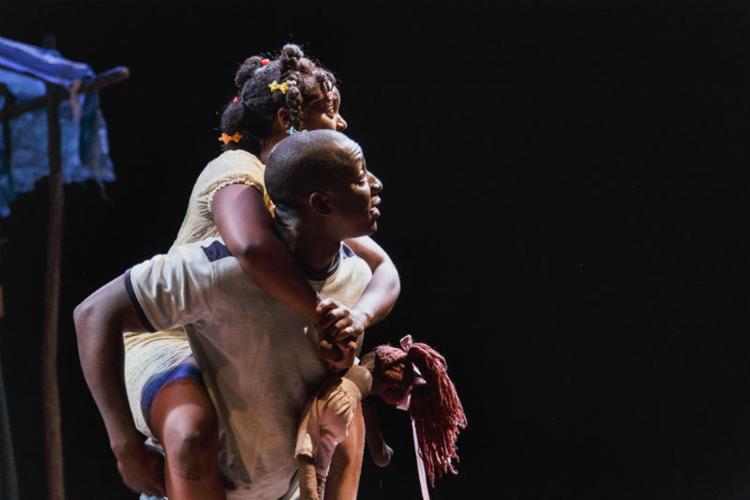
At the core of The Last Tiger in Haiti is the relationship between Max and the youngest of the restavek children, Rose (played by the versatile and emotive Brittany Bellizeare). Naive and hopeful, Rose doesn't want Max to leave his servitude, wanting him to instead stay with her longer.
Though a dark premise, this Augustin play is filled with a surprising amount of levity through the relationships of the other restavek children. The vibrant cast includes the cynical, dry, and often outspoken Joseph (played by the animated Reggie D. White), the sweet though teasing Laurie (a confident Jasmine St. Clair), and the earnest Emmanuel (Clinton Roane), still learning how to be jaded by his life as a restavek.
With intricate sound (designed by Nicholas Drashner) and mood-setting colored lighting (designed by Alexander Nichols), The Last Tiger in Haiti creates vivid representation of the restavek life with assistance from the costumes (designed by Dede Ayite) and the hair styles (designed by Cookie Jordan).
The Last Tiger in Haiti, produced with Berkeley Repertory Theatre, is playing at La Jolla Playhouse's Mandell Weiss Forum through July 24th.

(0) comments
We welcome your comments
Log In
Post a comment as Guest
Keep it Clean. Please avoid obscene, vulgar, lewd, racist or sexually-oriented language.
PLEASE TURN OFF YOUR CAPS LOCK.
Don't Threaten. Threats of harming another person will not be tolerated.
Be Truthful. Don't knowingly lie about anyone or anything.
Be Nice. No racism, sexism or any sort of -ism that is degrading to another person.
Be Proactive. Use the 'Report' link on each comment to let us know of abusive posts.
Share with Us. We'd love to hear eyewitness accounts, the history behind an article.