
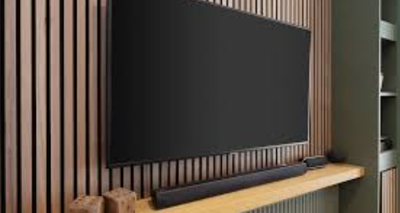

You’ll get the fastest improvement if you first pin down what you’re actually hearing: echo/reverb in your own room, or sound coming in from outside/next door. It sounds like a small detail, but it immediately pushes your choice in the right direction.
Do a quick test: speak out loud and clap once. If there’s a clear “tail” that lingers, it’s mainly reverberation. If it sounds like it’s coming through a wall, ceiling, or floor, then it’s more likely transmitted noise.
On Acosorb.com you’ll find solutions for both situations. Handy if you already have a sense of whether you mainly want to tackle reflections in the room, or you actually need something more construction-based.
First decide: echo in the room or sound coming in?
You recognize echo/reverb by that hollow, sharp, or “hard” sound after a clap or a voice. It happens faster in rooms with lots of hard surfaces, like glass, a bare wall, a smooth ceiling, or a hard floor. In that case, solutions that reduce reflections usually help the most. You’ll often notice it right away through:
- voices that “bounce” less
- conversations that are easier to follow
- less need to raise your voice
If you mainly hear neighbors, a TV, or voices through the wall, you’re dealing with transmitted noise. Important: something that reduces echo makes your room more comfortable, but it usually doesn’t stop sound that comes in through walls, ceilings, floors, or gaps. You can often recognize transmitted noise because:
- the sound clearly comes “from one side” (for example a wall or ceiling)
- it stays audible even if your own room already has little echo
What usually works better then: a heavier, more sealed build-up or other construction measures. In that case, absorption mainly helps make your own room calmer—it doesn’t remove the source.
Acoustic panels: quickly noticeable, but you’ll see them and you need to place them smartly
Panels often make a quickly noticeable difference with echo, especially in rooms with lots of hard surfaces. They take the edge off and make the room feel less “busy,” so talking and listening becomes more relaxed.
The real gain is in placement. Panels work best where sound reflects a lot, rather than only where they “look nice.” Think of a big bare wall you often sit facing, or a large area on the ceiling above the seating area or dining table. With the same panels, you simply get more result that way.
Practically, it’s smart to think in advance about how you want to mount and use them:
- Gluing looks clean; moving them later is often more work.
- Screwing makes swapping or shifting easier; the fixings can sometimes remain visible.
- With a fabric-like finish, it helps to think about maintenance in spaces where you cook, do DIY, or have a lot of dust.
Acoustic plaster: a calm look, but it’s less of a “try it and see” choice
If you don’t want visible elements, plaster often gives the calmest look: one continuous surface without edges or separate parts. It keeps your interior clean and prevents you from constantly seeing “loose panels.”
Plaster is especially nice if you want to tackle a larger surface in one go, because the result doesn’t build up panel by panel. At the same time, the substrate and the finish layer strongly determine how it looks and how it works out in practice. And if you want to change something later (patching, moving, refinishing), it usually takes more work than swapping a panel.
Quick choice guide in 5 points
- Want less echo quickly: panels often give the fastest audible effect.
- Want a clean, “invisible” result: plaster often fits better.
- Want to be able to move things around or expand later: panels are more flexible.
- Mainly expecting less neighbor noise: look at soundproofing measures rather than absorption alone.
- Not sure: tackle the biggest annoyance first (often echo), test again with clapping and talking, then decide what’s still left.
If you describe your floor, ceiling, and the big hard surfaces—plus what exactly bothers you (echo or transmitted noise) you can choose much more precisely between panels and plaster.
(0) comments
We welcome your comments
Log In
Post a comment as Guest
Keep it Clean. Please avoid obscene, vulgar, lewd, racist or sexually-oriented language.
PLEASE TURN OFF YOUR CAPS LOCK.
Don't Threaten. Threats of harming another person will not be tolerated.
Be Truthful. Don't knowingly lie about anyone or anything.
Be Nice. No racism, sexism or any sort of -ism that is degrading to another person.
Be Proactive. Use the 'Report' link on each comment to let us know of abusive posts.
Share with Us. We'd love to hear eyewitness accounts, the history behind an article.