
Sugar cravings are a universal experience: they show up when you’re tired, stressed, underfed, hormonal, or simply standing too close to the kitchen like it’s a hobby. For many people, cravings aren’t about “willpower” as much as biology, routine, sleep, and blood-sugar swings.
If you’ve been seeing “GLP-1 supplement drinks” trending online, you’re not alone. But before we get swept up in the marketing, it helps to understand what GLP-1 actually is—and what a drink can (and can’t) realistically do.
For a helpful medical overview of why sweet cravings happen, Cleveland Clinic breaks it down here: Why you’re craving sweets and how to stop.
What GLP-1 is and why it matters
GLP-1 (glucagon-like peptide-1) is a hormone your gut releases after you eat. It plays a role in appetite and blood-sugar regulation, including increasing satiety signals and slowing gastric emptying (how quickly food moves out of your stomach). Those mechanisms are part of why prescription GLP-1 receptor agonist medications can reduce appetite and support weight loss in appropriate patients.
If you want the science, these are strong references: Nature review on GLP-1 as a satiety hormone and research overview of GLP-1 and delayed gastric emptying.
So what is a “GLP-1 supplement drink” really?
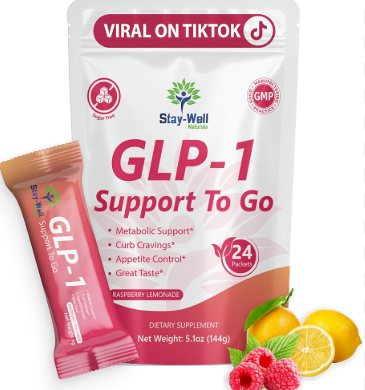
Most products marketed as “GLP-1 drinks” are not GLP-1 hormones in a bottle. They’re typically beverages or powders that may include ingredients such as fiber, protein, botanicals, or nutrients that could support fullness or steadier eating patterns. Some may help you feel more satisfied, which can indirectly reduce cravings—especially if they replace high-sugar snacks or stabilize your routine.
Important reality check: Over-the-counter drinks are not the same as prescription GLP-1 medications, and shoppers should be cautious of products implying they’re a replacement for FDA-approved treatments. The FDA has published safety information related to unapproved GLP-1 drugs being marketed outside proper approval pathways: FDA statement on non-FDA-approved GLP-1 drugs.
How these drinks may help reduce sugar cravings
Even without “true GLP-1” inside, some drink formulas may help with cravings through more straightforward (and realistic) pathways:
More fullness: Fiber and protein can help you feel satisfied longer, making “drive-by cookies” less tempting.
Fewer blood-sugar swings: Balanced meals and slower digestion patterns can reduce the “crash” that often triggers sweet cravings.
Routine support: If a drink becomes a consistent pre-meal habit, it may help reduce impulsive snacking.
If your goal is simply to cut back on added sugar, it helps to know the benchmark. The Dietary Guidelines recommend keeping added sugars under 10% of calories, and the FDA explains how to use the Added Sugars line on Nutrition Facts labels here: FDA guide to added sugars on labels.
Drinks, mixes, and packets
Most “GLP-1 support” products come in a few common formats:
Ready-to-drink beverages: Convenient, but watch for added sweeteners and high calorie counts.
Powder mixes: Flexible and portable—often easier to control sweetness and serving size.
Single-serve packets: Travel-friendly, but check the ingredient list for stimulants or heavy sweeteners.
GLP-1 shots vs. “GLP-1 support” drinks
This is where clarity matters. Prescription GLP-1 medications (shots or other forms, depending on the drug) are designed to activate GLP-1 receptors and have clinical evidence behind them. Drinks sold as supplements may support satiety through nutrition (fiber/protein) or other mechanisms, but they typically do not replicate prescription effects.
Shots/medications: Clinically studied; require medical guidance; may have side effects and contraindications.
OTC drinks: Vary widely; can be helpful as part of a routine, but claims should be read carefully.
How to choose a smarter, safer option
Look for transparency: clear ingredient amounts, not “proprietary blend” mystery math.
Watch added sugars: it’s counterproductive if a craving product is sweetened like dessert.
Prioritize fiber/protein: these are the most evidence-based tools for satiety in a drink format.
Be skeptical of “as good as Ozempic” language: that’s a red flag.
Check with your clinician: especially if you’re pregnant, diabetic, on blood sugar meds, or have GI conditions.
If you want to explore a brand mentioned in this space, here is one example readers may see: Ozzi. (As with any supplement, evaluate ingredients, added sugars, and claim quality before purchasing.)
How to use it in real life
Timing: try it before a meal or during your most common craving window (late afternoon is a classic).
Consistency: cravings often improve when routines are consistent—sleep, meals, hydration.
Pair with protein: the “sweet craving spiral” often starts when lunch was basically air.
And if you’re tackling cravings as part of a broader wellness reset, these internal reads fit nicely: Natural Ways to Stay Balanced in a Stress-Filled World and How to Boost Your Body’s Natural Detox Tips for a Healthier You.
Bottom line
GLP-1 is real physiology. But “GLP-1 drinks” are often marketing shorthand for products that may support fullness, steadier eating, and fewer cravings—not a substitute for prescription GLP-1 medications. If a drink helps you reduce added sugar and snack less impulsively, it can be a useful tool. Just keep the claims grounded, read labels like an adult, and loop in a healthcare professional if you’re managing blood sugar or weight medically.
(0) comments
We welcome your comments
Log In
Post a comment as Guest
Keep it Clean. Please avoid obscene, vulgar, lewd, racist or sexually-oriented language.
PLEASE TURN OFF YOUR CAPS LOCK.
Don't Threaten. Threats of harming another person will not be tolerated.
Be Truthful. Don't knowingly lie about anyone or anything.
Be Nice. No racism, sexism or any sort of -ism that is degrading to another person.
Be Proactive. Use the 'Report' link on each comment to let us know of abusive posts.
Share with Us. We'd love to hear eyewitness accounts, the history behind an article.