
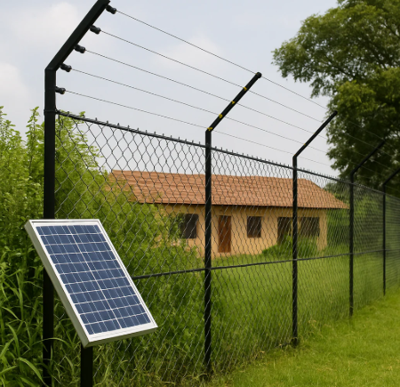

If you manage a farm or a stretch of rural land, protecting your property is always at the top of your list. Whether you're keeping livestock in, predators out, or both, the right electric fence kit can make a significant difference in how well your land stays secured. The market provides plenty of options today, but not every kit suits every situation. This guide breaks down what matters most, so you can choose an electric fence kit that fits your land, your animals, and your budget without any second-guessing.
Why Electric Fence Kits Are a Smart Investment for Rural Properties
Traditional barbed wire and wooden post fencing have served farmers for generations, but they come with real drawbacks: high installation costs, frequent maintenance, and limited effectiveness against determined animals or wildlife. Electric fence kits solve most of these problems in a much more practical way.
For example, a complete electric fence kit from Jono & Johno online store, along with similar options from suppliers like Gallagher, Thunderbird, Daken, and Bunnings, usually includes the main parts needed for setup, such as the energizer, wire or tape, insulators, posts, and connectors. This makes installation easier because you are not trying to source every small part separately.
From a cost perspective, electric fencing is far more affordable per meter than permanent fencing alternatives. It also deters animals through a brief, harmless shock rather than physical force, which means less stress on livestock and wildlife alike. For rural landowners who need a flexible, low-maintenance solution that adapts to different paddocks or seasonal needs, an electric fence kit is one of the most practical tools available.
What to Look for When Choosing an Electric Fence Kit
Not every electric fence kit delivers the same results. Before you commit to a purchase, there are a few key factors worth understanding.
Energizer Power, Coverage, and Joule Rating
The energizer is the heart of any electric fence system. It converts mains or battery power into a high-voltage pulse that travels through the conductor. The output joule rating tells you how much energy the energizer releases per pulse, and this directly affects how many kilometers of fence it can effectively power.
For a small hobby farm or garden perimeter, a low-output energizer in the range of 0.5 to 1 joule is usually sufficient. For larger properties with multiple paddocks or dense vegetation that may contact the fence line, you'll want an energizer rated at 3 joules or higher. Always size up if you're unsure, because a slightly overpowered energizer handles vegetation contact far better than one that's underpowered.
Wire, Tape, or Rope: Choosing the Right Conductor
The conductor is what carries the electrical charge along the fence line. Your three main options are wire, tape, and rope, and each has a distinct use case.
- Wire is the most traditional and durable option. It works well for permanent fences and is highly resistant to weather and UV exposure. But it can be harder for animals to see, which reduces its psychological deterrent effect.
- Tape is wider and far more visible, which makes it a strong choice for horses and other animals that respond to visual barriers. It's also easy to handle and rewind, so it suits temporary setups. The trade-off is that it catches more wind, which can increase wear over time.
- Rope (also called braid) combines the visibility of tape with better tensile strength. It's a solid all-rounder for mixed livestock setups. Your choice should match both your animal type and how permanent you need the fence to be.
Best Electric Fence Kits for Livestock Management
Livestock management is the most common reason farmers turn to electric fencing. Whether you're dealing with cattle, sheep, goats, or horses, the right kit makes rotational grazing and paddock control straightforward.
- For cattle, you need a higher-joule energizer because cattle have thick hides and may not respond well to a low-output pulse. Look for kits that include 12-gauge or 14-gauge steel wire, heavy-duty insulators, and a mains or solar-powered energizer rated at 3 to 5 joules. Cattle fences typically use two to three strands at specific heights to prevent the animals from ducking under or jumping over.
- For sheep and goats, these animals are notorious for finding gaps and escaping through them. A multi-strand setup with closer wire spacing works best. Kits with a 2 to 3 joule energizer and either polywire or tape can be very effective. Goats in particular require a psychological deterrent, so higher visibility conductors help.
- For horses, visibility matters more than almost anything else. Horses can injure themselves badly on wire, so wide electric tape (40mm or wider) is strongly recommended. Choose a kit designed specifically for horses that includes broad white or colored tape and a low-impedance energizer to maintain consistent output across longer runs.
With any livestock application, also check that the kit includes earth stakes and sufficient connection leads, as a poor earth connection is one of the most common reasons electric fences fail.
Best Electric Fence Kits for Crop Protection and Perimeter Security
Protecting crops from wildlife and keeping your property perimeter secure is a different challenge compared to managing livestock. In these situations, the fence needs to deter animals like deer, rabbits, foxes, and feral pigs that approach from the outside.
- For deer and larger wildlife, a multi-strand fence with strands placed at nose height for the target species works well. Deer fences often use a baited wire technique where a small amount of attractant is applied to an outrigger wire, so the animal receives a shock when it investigates. Look for a kit with a 5 to 10 joule energizer if your property has heavy deer pressure, as these animals are persistent.
- For rabbits and small animals, the fence needs to be lower to the ground and may require a fine mesh or closely spaced strands near the base. A lower-joule energizer is fine here, but placement and spacing become more important than raw power.
- For perimeter security on larger rural parcels, solar-powered energizer kits are worth considering. They eliminate the need for power line access and allow you to set up a fence in remote areas of your property. Many solar kits now come with built-in battery backup to maintain output through overcast days.
Regardless of the application, check the coverage rating of any kit you consider. Manufacturers list the maximum fence length their energizer supports under ideal conditions, so for real-world use with vegetation contact or corners, expect slightly reduced performance.
The best electric fence kit is the one that matches your specific property, animals, and goals. There's no universal answer, but the good news is that there's almost certainly a kit built for your situation. Focus on energizer output, conductor type, and what's included in the box before you buy. A well-matched kit saves you money upfront, reduces ongoing maintenance, and keeps your land and animals secure for years ahead.

(0) comments
We welcome your comments
Log In
Post a comment as Guest
Keep it Clean. Please avoid obscene, vulgar, lewd, racist or sexually-oriented language.
PLEASE TURN OFF YOUR CAPS LOCK.
Don't Threaten. Threats of harming another person will not be tolerated.
Be Truthful. Don't knowingly lie about anyone or anything.
Be Nice. No racism, sexism or any sort of -ism that is degrading to another person.
Be Proactive. Use the 'Report' link on each comment to let us know of abusive posts.
Share with Us. We'd love to hear eyewitness accounts, the history behind an article.