

Personal Space and Lifestyle: How Home Environments Influence Private Daily Decisions
Late evening, Houston, 10:30 PM. A small apartment, lights on in only one room, the rest left dark. The door is locked, notifications muted, the pace slows down compared to the street outside. The shift is immediate. A phone is picked up, not for browsing, but for specific actions that rarely happen in public. Search history is already cleared, tabs open and close within seconds. A query like houston escort appears in that controlled setting, not randomly, but as part of a deliberate sequence shaped by privacy, time, and habit. The environment matters. At home, decisions are not filtered by noise or pressure. They are direct, contained, and completed without interruption.
Control over the environment changes behavior
Home space removes variables that exist outside. No background noise, no movement of strangers, no external interruptions. This changes how decisions are made and how long they take.
Observed differences between public and private settings:
- Decision time increases by 20–40% in private environments
- Users open more tabs before selecting
- Comparison across options becomes more detailed
- Abandonment rate decreases due to fewer distractions
The absence of pressure allows for more deliberate actions. The user stays longer, reads more, and finalizes choices with fewer mistakes.
Physical layout influences interaction
The arrangement of a living space directly affects how devices are used. A desk setup leads to longer sessions and more structured browsing. A couch or bed leads to shorter, more fragmented interactions.
Common patterns based on layout:
- Desk setups increase session duration and number of opened tabs
- Minimal setups lead to faster decisions and fewer comparisons
- Lighting conditions affect screen focus and reading depth
A well-lit, organized space supports extended interaction. A dim or cluttered space reduces attention span and speeds up decisions.
Time of day reshapes intent
Private environments are tied closely to time. Daytime behavior at home differs from nighttime behavior, even within the same space.
Data from user activity shows:
- Peak private browsing occurs between 9 PM and 1 AM
- Late-night sessions are shorter but more targeted
- Daytime sessions include more interruptions and pauses
The later the hour, the more focused the interaction. Intent becomes narrower, and decisions are completed faster.
Device usage shifts in private space
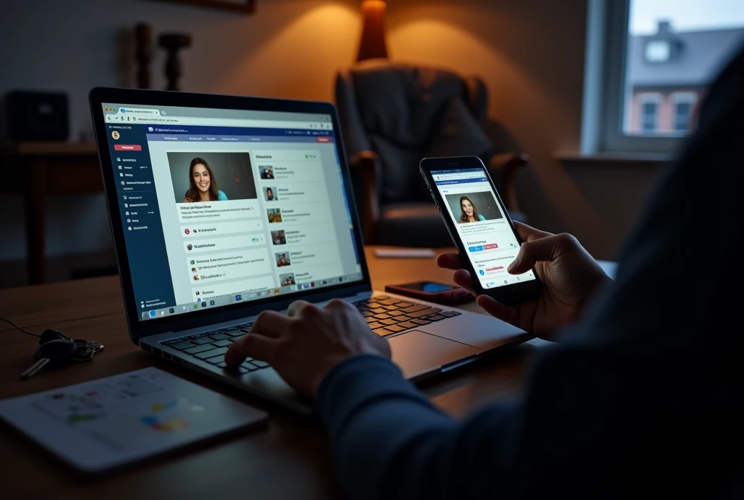
Users rely on multiple devices differently when at home. Phones dominate quick actions, while laptops support longer sessions and detailed comparison.
Typical distribution:
- Phone used for immediate searches and confirmations
- Laptop used for extended browsing and filtering
- Switching between devices occurs within the same session
This dual-device behavior allows users to move between speed and depth depending on the task.
Privacy increases decisiveness
A controlled environment removes hesitation linked to visibility. Users act faster when they know their actions are not observed.
Key effects of privacy:
- Reduced delay between search and selection
- Increased likelihood of completing an action
- Lower tendency to abandon mid-process
- Higher confidence in final choice
Privacy does not slow decisions. It removes barriers that exist in shared or public spaces.
Noise isolation and cognitive clarity
Sound conditions inside a home directly affect how decisions unfold. A quiet environment extends attention span and reduces the number of repeated actions. Users do not rush, they process information in a more linear way, without jumping between options. Even small differences matter. Closed windows, minimal background noise, and stable lighting increase the time spent on a single screen. In contrast, a TV running in the background or intermittent sounds from neighbors shorten focus and push faster selection. Measured patterns show that in quiet conditions, users are 25% more likely to review at least two additional options before confirming a choice. The absence of external noise does not slow decisions, it removes unnecessary interruptions that break concentration.
Habits form around repetition
Repeated use of the same environment creates predictable patterns. Users return to familiar setups and follow the same sequence of actions.
Common behavioral loops:
- Same location in the room for device use
- Same time window for specific activities
- Same sequence of opening and closing apps
These patterns reduce cognitive effort. Decisions become faster because the process is already known.
Where private behavior is heading
Home environments continue to shape how people interact with services. As devices become more integrated, the distinction between quick and extended actions will narrow.
Key directions:
- Faster transitions between devices within a single session
- Increased reliance on saved preferences and history
- More targeted actions with fewer exploratory steps
Private space does not expand options. It refines them. Decisions become more precise, more controlled, and more consistent over time.
(0) comments
We welcome your comments
Log In
Post a comment as Guest
Keep it Clean. Please avoid obscene, vulgar, lewd, racist or sexually-oriented language.
PLEASE TURN OFF YOUR CAPS LOCK.
Don't Threaten. Threats of harming another person will not be tolerated.
Be Truthful. Don't knowingly lie about anyone or anything.
Be Nice. No racism, sexism or any sort of -ism that is degrading to another person.
Be Proactive. Use the 'Report' link on each comment to let us know of abusive posts.
Share with Us. We'd love to hear eyewitness accounts, the history behind an article.