
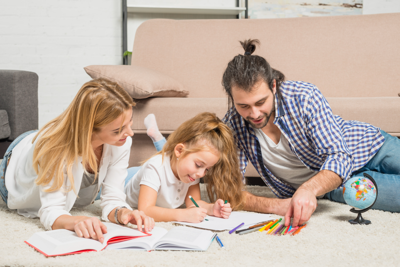

Traditional school habits like long desk hours and homework are fading. Families now see learning as a constant lifestyle rather than a fixed schedule. This shift moves the focus from grades to lifelong curiosity.
The gap between home and school is disappearing. Parents manage the learning process by using travel, hobbies, and conversations. Children experience subjects instead of just studying them. Families now value real-world experience over test scores. This helps children learn to adapt, which is more useful than memorizing facts.
1. The Rise of the Living Room Lab and Personalized Support
The first part of this change is making the home a place for specific learning. Many families no longer want a standard school plan. They set up spaces that match a child’s speed and hobbies. Often, they hire experts to meet specific goals. For instance, families seeking tutoring Vancouver use mentors to improve skills, even if the child has good grades.
The Power of One-on-One Mentorship
In a lifestyle-led educational model, a tutor is less of a teacher and more of an academic coach. This distinction is vital. When learning is a lifestyle, the focus shifts to:
Targeted skill building
Deep diving into specific areas like coding, creative writing, or advanced calculus that the standard curriculum might gloss over.
Confidence restoration
Addressing the emotional side of learning to ensure the child feels capable and motivated.
Scheduling flexibility
Fitting education around family travel or extracurricular passions, rather than the other way around.
Creating a Learning-Rich Environment
Families also change their physical living spaces. They add things like reading corners, science kits, and art tools. The goal is to make these items easy to reach. When kids see a microscope or a map daily, learning becomes a normal habit. Success is seen when a child asks questions during their own free time.
2. Worldschooling: The Globe as a Classroom
The second way families change their view of success is through Worldschooling. This method uses travel as the main way to get an education. Instead of reading about history in a book, children visit old ruins or explore markets in other countries. By living in different cultures and talking to local people, they learn about the world in a way that is hard to do in a normal school.
Experiential Learning in Action
Worldschooling focuses on the idea that experience is the best teacher. This includes several parts:
Cultural immersion. Children often learn a new language because they need it to move around a city or talk to people.
Practical geography. They study nature by hiking in forests or watching how the ocean moves the sand on the coast.
Social intelligence. Meeting many different people helps them learn how to communicate better than they would in a small school group.
Defining Success Through Adaptability
In this lifestyle, success means being able to adapt to new things. A child is considered well-educated if they can use a bus in a foreign country, manage different types of money, and follow local customs. Families who do this believe that solving real problems while traveling helps more with future jobs than getting high grades in a classroom. They choose real-life lessons instead of sitting at a desk.
3. Micro-Schooling and Pod Learning
The third trend is micro-schooling. Small groups of families work together to create local learning spaces. These pods focus on the community and social health instead of large school systems. Groups usually have five to ten children. This makes learning a social activity where the lessons can change based on what the kids like or what is happening in the world.
The Benefits of Hyper-Local Education
Micro-schools are a mix of homeschooling and private school. They have several main features:
Agile curricula. If a local election is happening, the pod might spend a week focusing on civics. If a solar eclipse occurs, the focus shifts to astronomy.
Strong peer bonds. Children form deep, multi-age friendships that mirror real-world social structures better than age-segregated grades.
Parental involvement. Families have a direct say in what and how their children learn, ensuring the education aligns with the family's core values.
Reimagining Social Success
In this model, being social is not about being popular in a big class. It is about leading, helping others, and fixing problems in a small group. Children in pods often speak better and feel more sure of themselves. They are used to being heard. Success is the ability to work in a team to solve tasks, which is an important skill for future jobs.
4. The Integration of Hard and Soft Skills
The fourth part is combining school subjects like math and science with life skills like money management and emotional control. Families now see that school facts are not enough if a person cannot manage a budget or handle stress. Success is now defined as being able to live and work independently.
Practical Application of Knowledge
Families are finding ways to make hard skills relevant to daily life:
Mathematics through cooking and budgeting
Using grocery shopping to teach percentages or baking to explain fractions.
Science through gardening
Understanding biology and chemistry by maintaining a family vegetable patch.
Literacy through journalism
Encouraging children to write blogs or family newsletters to practice clear communication.
Prioritizing Emotional Regulation
This approach also focuses on mental health. Success is not just getting top grades while being stressed. It means knowing when to rest and how to explain feelings. Parents include these habits in the daily routine to help children stay healthy. A good student stays balanced and knows how to handle a busy world.
5. Lifelong Learning: The Parent as a Student
The fifth part of this change is how parents act. In these families, parents do more than just watch their children work. They learn alongside them. This removes the old teacher and student setup. It creates a family habit of being curious. When kids see parents take a class or read a hard book, they learn that education stays with you for life.
Modeling Intellectual Curiosity
Parents can create this type of environment by using several daily habits:
Shared learning projects
This involves doing things like taking a pottery class together or working as a family to learn a new digital skill.
Family book clubs
Families read the same book and talk about it during dinner. This helps everyone practice how to think deeply and share different ideas.
Transparent problem solving
Parents let their children watch while they handle difficult tasks at work or fix things around the house. This shows the process of finding solutions.
The Goal of Intellectual Autonomy
In this model, success is defined as a child’s ability to learn things on their own. The aim is for children to find topics they want to study without needing an adult to tell them to do it. By observing their parents' own learning habits, children start to see that being curious is a permanent part of their character. It is not just something they do to get a school degree. This creates a home where seeking out new knowledge feels natural. This habit stays with the child even after they grow up and move out.
FAQ: Redefining Academic Success
What is Education as a Lifestyle?
This is a way of learning that happens all day, not just in school. Families make learning a regular part of their daily life. The focus is on doing real things and staying curious during normal activities. Each day is a chance to learn a new fact or skill.
How do I start Worldschooling with a limited budget?
You do not need to buy expensive plane tickets. Worldschooling is about how you explore the place where you live. You can visit local parks, go to museums, or walk through different parts of your town. Use what is near you to find new information and ideas.
Does this lifestyle work for children with learning differences?
Yes. This method is very flexible. Parents can change the setup to match what their child needs. It stops the stress of following a strict school timeline. You can spend more time on specific areas where the child needs help using methods that work for them.
How do universities view this non-traditional approach?
Many good colleges look for students with unique interests. They want to see real-life projects and experiences. A life spent learning often shows more maturity and better skills than just having high test scores. This can make a student stand out during the application process.
Can I maintain this lifestyle while working full-time?
Yes. You do not have to leave your job. It is about making small changes to your routine. You can talk about a podcast in the car or show your child how you finish a work task. These small actions turn regular time into a learning experience for the family.


(0) comments
We welcome your comments
Log In
Post a comment as Guest
Keep it Clean. Please avoid obscene, vulgar, lewd, racist or sexually-oriented language.
PLEASE TURN OFF YOUR CAPS LOCK.
Don't Threaten. Threats of harming another person will not be tolerated.
Be Truthful. Don't knowingly lie about anyone or anything.
Be Nice. No racism, sexism or any sort of -ism that is degrading to another person.
Be Proactive. Use the 'Report' link on each comment to let us know of abusive posts.
Share with Us. We'd love to hear eyewitness accounts, the history behind an article.