


We all spend quite a bit of time indoors, especially when the sun goes back in. It's so easy to just collapse on the sofa and watch the telly for hours on end, but doing that every single evening can leave your brain feeling a bit mushy. Picking up a hobby is a brilliant way to break the cycle. You do not need to sign up for an expensive course or leave the house to get your brain working. Plenty of everyday activities force you to think, plan, and focus, which naturally keeps your mind sharp.
Crochet

Crochet might look like something people only do to make thick winter blankets, but it is actually a fantastic mental workout. Counting stitches takes a surprising amount of concentration. If you lose track, your whole pattern (e.g., a scarf, a jumper, or a cushion cover) can go completely wonky. You are forced to pay attention to the smallest details, therefore, if you want the final piece to look right. As you loop the yarn, your brain is constantly working out spatial patterns. The repetitive motion is quite soothing, so it helps clear your head after a busy day while still demanding enough focus to keep your brain ticking over nicely.
Card Games
Sitting down with a deck of cards is a classic way to pass the time. It also happens to be brilliant for your brain. Games like rummy or poker require you to guess what other people might do, calculate odds, and change your strategy as the game unfolds. If you prefer playing with others from the comfort of your own living room, you could look into platforms like NetBet Live for a bit of real-time interaction. Since card games rely on quick decisions, they stop your mind from getting lazy. You have to stay alert, which is exactly the kind of workout your brain needs. You can play a quick hand during your lunch break or spend an entire evening trying to outsmart your family.
Jigsaws
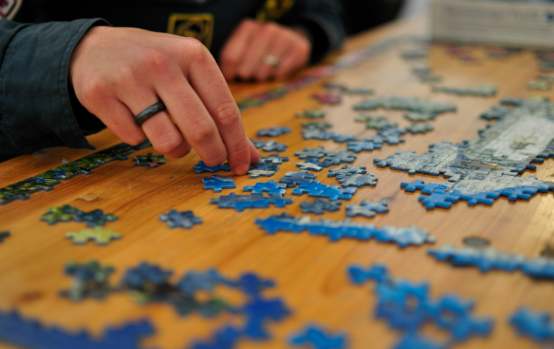
Jigsaw puzzles are brilliant because they use different parts of your brain at the exact same time. You use logic to sort the pieces by shape and colour, while another part of your brain tries to visualise the final picture. Doing a puzzle improves your visual-spatial skills (which helps with everyday things like parking a car or packing a suitcase). Finding that one specific edge piece you have been searching for takes real patience. Every time you snap a piece into the right spot, your brain gets a little reward. This makes you want to keep going for just one more piece.
Learn a Musical Instrument
You do not have to be a teenager to start learning the guitar or the keyboard. Picking up an instrument as an adult is actually one of the hardest, yet most rewarding, things you can do for your brain. Reading sheet music and telling your fingers where to go requires a lot of coordination. It feels tricky at first, but sticking with it builds entirely new connections in your mind. Strumming those chords actually boosts your memory, which means you start picking up on tiny background sounds you usually ignore. Even just practicing for ten minutes a day makes a huge difference.
Pick Up a New Language
Learning a foreign language is a massive challenge that really stretches your intellect. Sitting with a cup of tea, you can easily chip away at Italian or French using a basic phone app. Trying to wrap your head around weird verb tenses makes your brain sweat a bit, as it has to build entirely new pathways. Staying flexible like this is a massive help if you want to stay sharp well into your later years.
Simple Ways to Practice
To make it a bit more fun, you might try:
- Sticking post-it notes on things around the house with their foreign names
- Listening to foreign radio stations while doing the washing up
- Watching a film with the subtitles turned on
Painting
Painting gives you a chance to be creative while still requiring a lot of focus. Mixing watercolours or acrylics to get the exact shade you want makes you look at things differently. You start noticing shadows, light, and textures that you would normally walk right past. Since painting is so hands-on, it is great for your hand-eye coordination. Taking a blank canvas and turning it into something interesting takes planning and imagination. It is a really satisfying way to spend an afternoon, and it keeps your creative gears turning.
Gardening

People often assume planting flowers is just physical graft. It actually takes a fair bit of brainpower to keep things alive. You end up reading up on random plant varieties, testing your soil, and constantly checking the forecast. Even if you only have a tiny window box, you are forced to make choices daily. Figuring out why a fern looks miserable, or deciding which corner gets the best morning sun, requires real problem-solving. All this trial and error keeps your mind incredibly active. The physical digging is just an added bonus that tires you out for a good night's sleep. Besides, eating a strawberry you grew from a tiny seed is incredibly rewarding.
Picking an activity you actually look forward to doing stops the whole process from feeling like hard work. Just dedicating a couple of evenings a week to these little projects ensures your mind stays wonderfully agile without ever stepping out the front door.


(0) comments
We welcome your comments
Log In
Post a comment as Guest
Keep it Clean. Please avoid obscene, vulgar, lewd, racist or sexually-oriented language.
PLEASE TURN OFF YOUR CAPS LOCK.
Don't Threaten. Threats of harming another person will not be tolerated.
Be Truthful. Don't knowingly lie about anyone or anything.
Be Nice. No racism, sexism or any sort of -ism that is degrading to another person.
Be Proactive. Use the 'Report' link on each comment to let us know of abusive posts.
Share with Us. We'd love to hear eyewitness accounts, the history behind an article.