
In the past, most college students did not think too much about transportation. As long as they could get from the dormitory to class on time, that was usually enough.
However, modern campuses are becoming larger, and student schedules are becoming increasingly busy. Because of this, commuting efficiency has become an important part of daily college life.
On many university campuses, students travel constantly between classrooms, libraries, cafeterias, laboratories, and activity centers.
Walking long distances every day takes time and increases fatigue. Traditional bicycles improve efficiency, but riding uphill or carrying heavy backpacks can still feel exhausting.
Because of this, more college students are beginning to see electric bikes as a better fit for campus life.
Compared with traditional transportation tools, electric platforms reduce commuting stress while making everyday movement feel much easier.
Why Electric Riding Fits Modern Campuses Better
One of the biggest characteristics of modern universities is distance.
Traveling from dormitories to classrooms may take more than ten minutes, and students often need to move across different campus zones throughout the day.
At the same time, many students also manage clubs, part-time jobs, and evening study schedules, which means daily mobility is extremely important.
Compared with walking, electric riding dramatically improves efficiency.
Compared with motorcycles or cars, electric bikes feel lighter and more flexible.
On crowded campuses where students constantly stop, park, and move through busy walkways, convenience becomes far more important than speed.
Because of this, more students are exploring different types of electric bikes to find models that truly fit campus life.
Why Step-Through Designs Are Becoming More Popular
When many students buy their first electric bike, they usually focus on appearance or battery range.
However, after riding regularly, many realize that convenience matters far more.
On campuses where students constantly stop and restart their rides, the frame structure directly affects usability.
Students often need to get on and off quickly near classrooms, libraries, cafeterias, and crowded bike parking areas.
If the frame is too high, these repeated movements quickly become inconvenient.
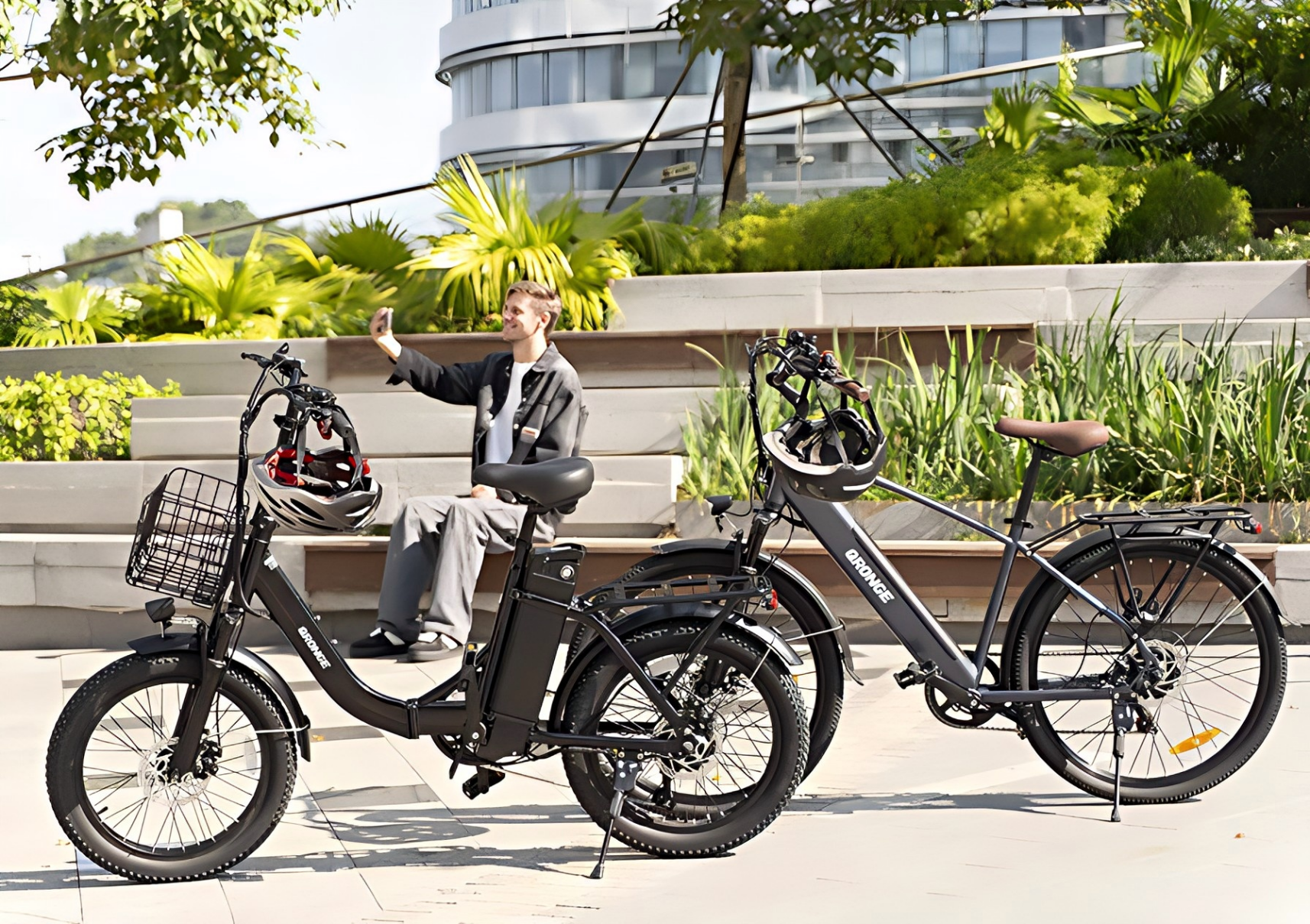
Because of this, more students are now interested in the step-through e-bike category.
The biggest advantage of this design is easier mounting and dismounting.
Riders do not need to lift their legs high, which feels much more natural when carrying backpacks or wearing casual clothing.
For students who ride multiple times every day, this convenience makes a major difference.
This design is especially attractive for female riders, smaller riders, and beginners who are still adapting to electric riding.
At the same time, low-step frames often feel easier to balance and control at lower speeds, making them ideal for crowded campus environments.
What Makes Step-Through E-Bikes So Practical
Many people think step-through bikes are only about easier mounting.
In reality, these bikes fit campus environments for several important reasons.
First, they usually focus heavily on riding comfort.
Relaxed riding posture, wider handlebars, and stable frame geometry all help reduce fatigue during longer rides.
Second, these bikes naturally match the rhythm of campus commuting.
University riding rarely involves high-speed performance. Most students care more about stability and comfort than aggressive acceleration.
At the same time, many step-through models also prioritize storage practicality.
Front baskets, rear racks, and backpack-friendly layouts all support everyday student needs.
For many college students, the biggest advantage of step-through bikes is not speed — it is how easy and stress-free they feel during daily use.
Why Commuter E-Bikes Work Better for Long-Term Riding
Compared with more casual or sporty models, commuter-focused electric bikes are designed mainly around practicality.
After using electric bikes regularly, many students begin to realize that comfort matters more than performance.
Because of this, more riders are paying attention to the commuter e-bike category.
These bikes are usually optimized for long-term everyday riding.
Features often include:
Softer seats;
City-friendly tires;
Stable suspension systems;
More natural riding posture.
Although these details may not look exciting in advertisements, they strongly affect how riders feel after using the bike every day.
For students traveling across campus several times daily, comfort can dramatically influence fatigue levels.
This is why commuter-focused electric bikes often fit real campus life much better.
Which Students Benefit Most From Commuter E-Bikes
Students with busy schedules often benefit the most from commuter-oriented designs.
For example, students who frequently travel between laboratories, libraries, and off-campus jobs usually prioritize a stable and comfortable riding experience.
Compared with short recreational riding, they care more about:
Not feeling tired after riding all day;
Comfort while carrying backpacks;
Stable handling over bumps;
Reliable riding in changing weather.
These are exactly the areas commuter-focused electric bikes are designed to improve.
At the same time, commuter models also tend to focus more on battery consistency.
For most college students, what matters is whether the bike can handle everyday campus life reliably — not maximum theoretical range.
Why Pedal Assist Changes the Student Experience
One of the biggest differences between electric bikes and traditional bicycles is pedal-assist technology.
Many college campuses include steep roads and long riding distances.
Without assistance, repeated riding quickly becomes tiring.
Pedal assist helps riders during starts, hills, and windy conditions, reducing physical effort significantly.
This becomes especially important during early morning classes, hot summer weather, or after long days of studying.
At the same time, many electric bikes now offer adjustable assist levels.
Students can customize power delivery depending on road conditions and riding preferences, creating a much more natural experience.
For many college students, pedal assist does not simply mean “faster.” It changes the entire rhythm of campus life.
Why Students Are Paying More Attention to Real Riding Experience
In the past, many consumers mainly compared electric bikes based on specifications.
Speed, range, and battery size were usually the main focus.
However, after using electric bikes regularly, students' priorities are beginning to change.
More riders are asking questions such as:
Will it feel tiring after riding all day?
Is parking convenient?
Does mounting and stopping feel natural?
Is the riding stable in rainy conditions?
Is the seating position comfortable for long rides?
Because of this, students are increasingly paying attention to real-world experience instead of only looking at numbers.
Many young riders exploring commuting culture may also encounter brand names such as Qronge, as discussions surrounding electric commuting and lightweight mobility continue growing online.
Why Electric Bikes Are Changing Student Life
As the lightweight commuting culture continues expanding, more students are beginning to treat electric riding as part of everyday life.
Late-night rides to the library, weekend city exploration, short trips with friends, and daily commuting are all becoming more connected to electric mobility.
At the same time, discussions surrounding ebikes are becoming increasingly common among younger users.
Many students no longer see them as simple transportation tools.
Instead, they view electric bikes as a way to make campus life more efficient and flexible.
Compared with walking, they save time.
Compared with traditional bicycles, they feel easier.
Compared with cars, they offer greater freedom.
These advantages are helping electric bikes become a natural part of modern campus life.
Why Campus Transportation May Become Increasingly Electric
Over the next few years, electric riding will likely continue growing on college campuses.
Compared with traditional commuting methods, electric bikes better match modern students’ need for comfort and efficiency.
Step-through models and commuter-focused designs are especially likely to become more popular because they fit real student lifestyles so naturally.
For most college students, the ideal vehicle is not something overly complex or performance-focused.
What they truly want is transportation that feels simple, comfortable, reliable, and easy to integrate into everyday life.
Electric bikes are quickly becoming exactly that solution.
(0) comments
We welcome your comments
Log In
Post a comment as Guest
Keep it Clean. Please avoid obscene, vulgar, lewd, racist or sexually-oriented language.
PLEASE TURN OFF YOUR CAPS LOCK.
Don't Threaten. Threats of harming another person will not be tolerated.
Be Truthful. Don't knowingly lie about anyone or anything.
Be Nice. No racism, sexism or any sort of -ism that is degrading to another person.
Be Proactive. Use the 'Report' link on each comment to let us know of abusive posts.
Share with Us. We'd love to hear eyewitness accounts, the history behind an article.