
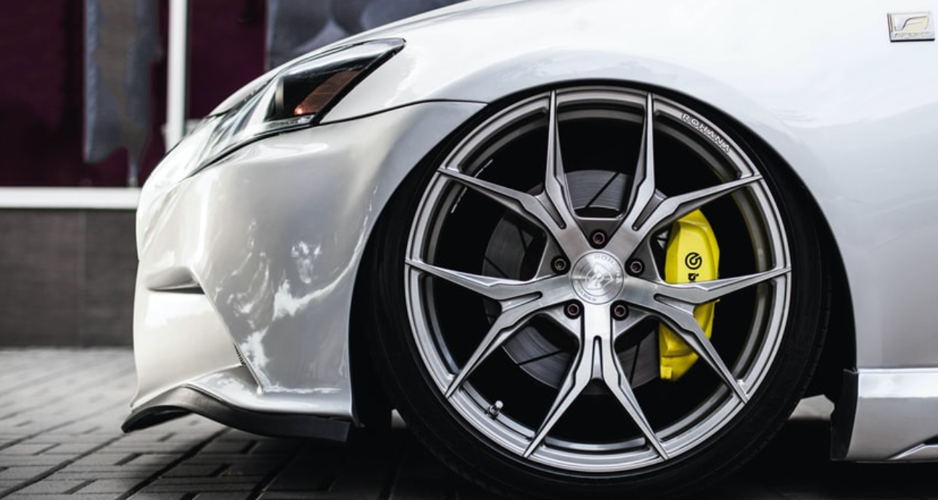

Faster lap times depend on multiple factors. A high-revving, eager engine definitely helps, but the combination of grippy, low-profile tyres, a car stripped of excess weight and decently-appointed brakes means more speed into corners, and more RPMs ready for the straights.
Apart from engine and suspension upgrades that tune production cars for added power and control, upgraded brakes able to perform under hard braking, or aid with pivoting the car into optimal race lines are often the last upgrades track novices consider.
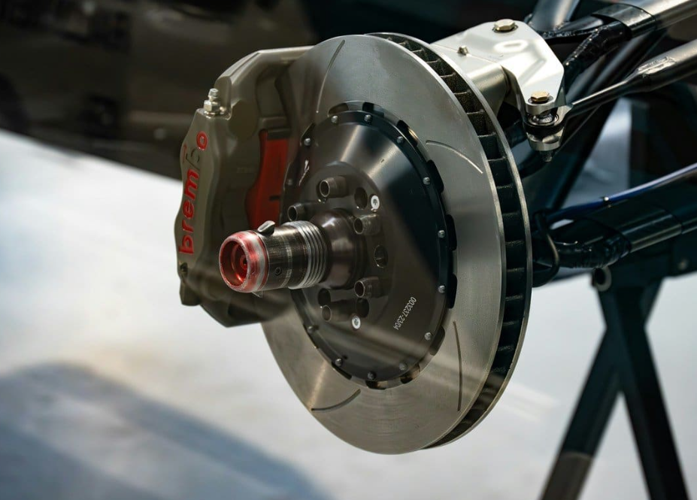
Besides race-ready sintered or semi-metallic brake pads, machined ceramic or high-carbon rotors, and low viscosity fluid fed through braided steel lines, it's the brake callipers that are the least understood link in any performance braking assembly. Straddling the rotors and housing the brake pads, callipers use the force of hydraulic fluid to engage the pads against the rotors and ensure vehicles slow down or come to a timely stop.
Setups differ vastly for different purposes - ranging from single floating or sliding callipers that push a single cylinder in street vehicles, to multi-piston callipers machined from engineering metals to evenly distribute pressure across pads and ensure shorter stopping distances in track cars.
The Anatomy of Stopping Power: How Brake Callipers Work

Hitting the brake pedal initiates a sequence of events. Pressurised brake fluid rushes from the master cylinder into the calliper bore, engages one or more cylindrical plungers - the calliper pistons - to force the pads against spinning rotors and bring cars to a stop. The mechanics of this process differs between the two main brake calliper types: floating and fixed.
Floating (or sliding) callipers are what you can commonly find in most production cars. They consist of pistons on the inboard side of the rotors and rely on a sliding mechanism to clamp outboard brake pads. When the inboard piston extends, it pushes the inner pad against the rotor. The reaction force pulls the calliper body inward on sliding guide pins, and the outer pads against the disc.
The setup is simple, lightweight and cheap to produce, but has its shortcomings - more pronounced brake fade under heavy braking, a spongier and inconsistent brake pedal feel and risk of seized pistons resulting in overheated pads, reduced clamping force and uneven pad wear.
Fixed callipers go with higher clamping and stopping power, a firmer brake fell with more immediate response, and significantly reduced brake drag from seized pistons and stuck pads. They are rigidly mounted on steering knuckles and have opposing pistons on both sides of the rotors to simultaneously exert pressure on the pads. With no moving or sliding housing parts and a fixed calliper body, pistons can freely push pads against the rotors and ensure immediate stopping.
While more expensive to produce (due to the larger size, lighter and tougher metals and multiple pistons), fixed callipers optimally handle extreme temperatures of hard braking with significantly higher heat dispersion. They also ensure longer service lives with machined designs and with pistons placed symmetrically, resulting in lower brake pad wear. The inclusion of quick-release mechanisms also provides faster pad changes without having to disassemble the calliper from the mount - a boon in racing.
Design Differences and Piston Count
Not all fixed callipers are created equal. The general divide is between monoblocs and two-piece callipers. Monoblocs are often lighter, and machined from a single piece of billet aluminium or steel, incurring higher production costs, but are preferred for superior rigidity and immediate brake modulation. Decently-built 2-piece variants are made of lightweight aluminium and held together by steel bolts. The design allows for larger brake pads and, in some cases, higher heat dispersion, but often suffers from pronounced flex (and reduced clamping) under continuous, heavy braking.
Piston count can also vary. Generally, the more pistons, the stiffer the brake feel, and the better the callipers deal with heat dispersion. Dual-piston setups are seen in entry performance vehicles, with one piston located on each side of the housing. There's significantly more clamping force, linear modulation and a firmer brake pedal with 4-piston setups (factory options are seen in the Honda Type-R, BMW M cars, Audi S and RS models, etc.)
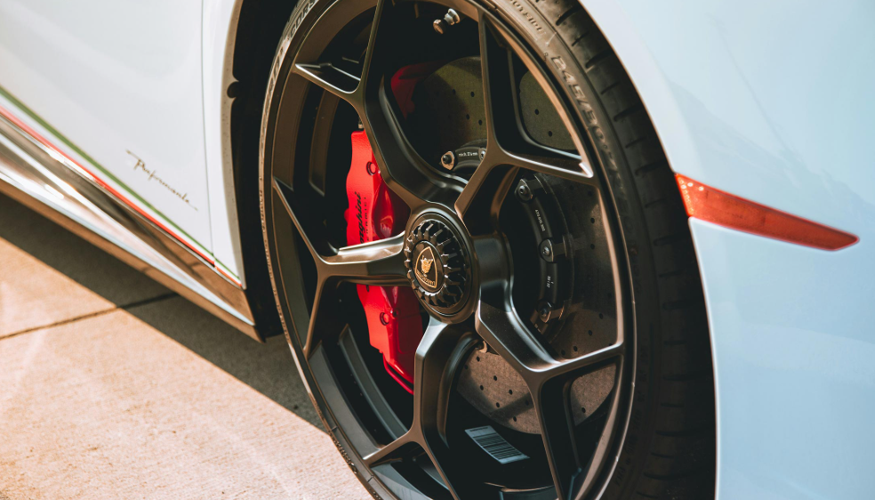
Higher piston count, and understandably larger calliper housings feature in the likes of the Lambo Huracan, Bugatti Chiron/Veyron, Porsche 911, and the Bentley Continental GT. Here, six or eight titanium pistons located in lightweight, machined high-grade aluminium (or titanium) housings do the honours of bringing the cars from 200+mph to full stop within a matter of seconds.
Materials and Machining
Materials determine overall stopping power, control, heat dispersion, and weight. Most floating calliper designs are made of cast-iron as a cost-effective, durable, and reliable option in everyday driving. The material can handle decent temperature ranges and relatively high pressure, but suffers from excessive weight (unsprung mass) that potentially eats into handling dynamics.
Upgrade to high-grade aluminium alloys in 2-piece or forged monobloc brake callipers for significantly lower weight (up to 40 percent), better handling, and significantly faster heat dissipation. The material additionally provides more acute brake feel and enhanced control. Supplemental high-temperature coatings and anodising ensure the callipers and pistons don't succumb to rust and corrosion when driving in the wet. Understandably, forged units machined from a single piece of aluminium block will also retain higher strength and rigidity in demanding braking.
Hypercars like the Chiron use 3D-printed titanium alloys in the housings for half the weight, double the strength and even better heat dissipation than forged aluminium monoblocs. A comparable material in competition racing applications is magnesium. This is the lightest option, has better overall heat dispersion but lacks the strength of titanium. The exorbitant cost and machining requirements also put them well out of reach for most race enthusiasts.
Buying Considerations Other Than Brake Upgrades

Make an informed decision about how you'll be using your car. Manufacturers market car callipers as street and racing varieties, with subtle design differences, distinct uses and very different price tags. Street callipers include protective dust boots to filter out road debris and moisture, often as machined 2-piece fixed types in sizes meant to accommodate most disc diameters. Racing variants are commonly sized larger, usually as forged monoblocks and with a 4 to 8 piston count.
Upgrading callipers alone will bring benefits to how vehicles perform. This however, is rarely left as a single upgrade. A complete overhaul of the factory braking system, with bigger and harder metallic, composite or ceramic racing brake pads, slotted, grooved and upsized brake rotor discs and braided steel brake lines is the common route. Braking fluid with a high boiling point ensures maximised pressure to move pistons and dual master cylinders distribute fluid separately to front and rear axles for more controlled braking.


(0) comments
We welcome your comments
Log In
Post a comment as Guest
Keep it Clean. Please avoid obscene, vulgar, lewd, racist or sexually-oriented language.
PLEASE TURN OFF YOUR CAPS LOCK.
Don't Threaten. Threats of harming another person will not be tolerated.
Be Truthful. Don't knowingly lie about anyone or anything.
Be Nice. No racism, sexism or any sort of -ism that is degrading to another person.
Be Proactive. Use the 'Report' link on each comment to let us know of abusive posts.
Share with Us. We'd love to hear eyewitness accounts, the history behind an article.