
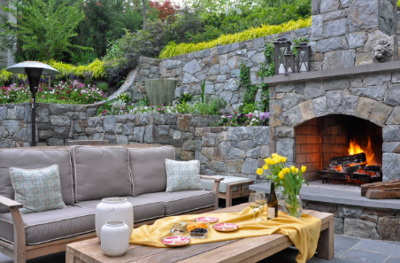

In Los Angeles, outdoor space has never truly been peripheral. Climate plays a role, of course, but daily habit plays a larger one. Patios and terraces are used daily, often without much ceremony, and that familiarity has gradually changed how they are designed. What was once furnished quickly is now furnished with more attention, functionality and with the understanding that these areas function as rooms in their own right. In many high-end homes, conversations around luxury outdoor Furniture Los Angeles living now sit comfortably alongside discussions of interior layouts and finishes, reflecting a broader shift in how the boundaries of a home are understood by homeowners.
This change is becoming more like a trend, rather than correction, where residential designs are becoming more cohesive, where outdoor areas are no longer treated as a stand apart from interiors but are continued, giving a cohesive look. Repetitions of materials are more apparent, with both of the interior and outdoor areas proportions align, and light becomes a connective element between those two, rather than a divider.Well-designed outdoor spaces dont rarely function as standalone areas but designed in relation to the interior, contributing to a sense of the home as a whole.
A More Considered Approach to Outdoor Furnishings
The furniture placed in these spaces has evolved accordingly. Instead of prioritizing durability alone, designers now look for a balance between longevity and visual restraint. Frames are slimmer. Forms are quieter. Comfort is achieved through proportion rather than excess. These are pieces meant to be lived with, not simply admired from a distance.
Material choices reflect that intention. Teak is often left to weather naturally, allowing time and exposure to become part of its character. Powder coated metals are chosen for softness rather than shine. Performance fabrics are selected as much for texture as for resilience. Over time, the furniture settles into its surroundings, feeling less like an addition and more like an expected presence.
This approach aligns with how many homeowners now define luxury. Rather than looking for statements, they look for continuity. Outdoor furnishings are expected to relate to the architecture, the landscape, and the interior beyond the glass, contributing to a sense of calm rather than contrast.
Interior Logic, Carried Outside
One of the clearest indicators of this shift is how closely outdoor spaces now follow interior design logic. Color palettes tend to remain controlled, often drawn directly from adjacent rooms. Soft neutrals dominate, allowing changes in daylight and shadow to shape the atmosphere naturally. When color appears, it tends to echo something already present inside the home, rather than introducing a new visual language.
Material relationships are handled with similar care. Wood tones outside often correspond to interior flooring or ceiling treatments. Metal finishes align with window frames, door hardware, or lighting details. Upholstery choices are made with an eye toward how they will read in different light and how they will feel after long periods of use.
Furniture placement reflects this same discipline. Seating is arranged to encourage conversation rather than simply to face a view. Dining areas are scaled realistically, with circulation considered as carefully as it would be indoors. These decisions are informed by a growing body of luxury outdoor furniture ideas for Los Angeles living spaces, where livability has become as important as appearance.
Los Angeles as Context
Los Angeles offers a particular lens through which to view this evolution. Outdoor spaces here are not seasonal, and that consistency demands a higher level of design accountability. Furniture is used year-round, across different times of day and in varied social settings. Pieces that rely too heavily on novelty tend to feel out of place fairly quickly.
As a result, there is a noticeable preference for designs that emphasize clarity and longevity. Outdoor areas are expected to feel appropriate whether they are full of guests or entirely quiet. That expectation has influenced everything from scale to finish selection, reinforcing a design language that favors balance over display.
This perspective has also shaped how modern outdoor patio furniture trends in LA homes are interpreted. The most successful spaces are not those that follow trends most closely, but those that adapt them quietly, in service of everyday use.
A Broader View of Home
As residential design continues to evolve, the distinction between interior and exterior becomes less useful than the idea of coherence. Homes that feel complete do not manage transitions; they allow them to dissolve. Outdoor spaces, when furnished with intention, extend the architectural narrative rather than interrupt it.
Approached this way, outdoor furniture becomes a long-term design decision rather than a seasonal one. It encourages fewer pieces, chosen more carefully, and arranged with the same attention given indoors. For many homeowners, thinking in terms of curating outdoor living furniture for California homes reflects a broader understanding of luxury, where one grounded in use, continuity, and a certain quiet confidence.
In that sense, the outdoor room is no longer secondary. It is simply part of the house, designed with care and lived in just as fully.
Here are some other articles related to your search:
- Tempe's Finest: Discovering the Luxury of Fine Homes and Living
- Smart Tips for Designing a Backyard That Feels Open and Spacious
- How to Renovate Your Home Exterior


(0) comments
We welcome your comments
Log In
Post a comment as Guest
Keep it Clean. Please avoid obscene, vulgar, lewd, racist or sexually-oriented language.
PLEASE TURN OFF YOUR CAPS LOCK.
Don't Threaten. Threats of harming another person will not be tolerated.
Be Truthful. Don't knowingly lie about anyone or anything.
Be Nice. No racism, sexism or any sort of -ism that is degrading to another person.
Be Proactive. Use the 'Report' link on each comment to let us know of abusive posts.
Share with Us. We'd love to hear eyewitness accounts, the history behind an article.