

Every homeowner in the United States deals with the intrusion of a wild animal at some point in their life. This is only natural because wildlife is left with fewer and fewer natural habitats as our society expands. So many of them are forced to adapt and learn how to coexist with humans to survive.
Still, while understandable, it can be unpleasant, not to mention dangerous, when a wild animal takes it into its head to move in with you. Some of the most common wild animals that bother human homes include raccoons, skunks, squirrels, possums, snakes, mice, and bats, among many others.
And most of these animals will gravitate towards one area of the house, the attic.
Why the attic?
The main attraction of the attic is that people don’t go in there as much. Most households in the United States use the attic as a storage area, which doesn’t leave much space for wandering about. Not only that, but attics tend to house many items such as boxes, bags, and old furniture. This means that the wild animals also find a lot of nesting areas in your attic, which makes the place ideal for a wildlife invasion.
What can you do to stop a wildlife invasion?
This is usually the point where most homeowners will ask themselves how they might prevent a wildlife invasion in their attic. While there is no foolproof plan for this, there are several steps you can take to avoid a wild animal from nesting on your property. Such as?
1. Trim your trees.
One of the first things to consider here is the question - how do wild animals get to your attic in the first place? And the answer to that is pretty simple: they either climb the exterior of your home or climb in from the nearby trees.
Letting the branches of your trees grow unchecked can create a pretty straightforward path from the outside world straight unto your roof, and from there, into your attic. Skilled climbers like squirrels will have no trouble discovering this path and making their way into your attic. It would be best if you kept your trees neatly trimmed and a safe distance away from your home, and already, you cut off a major entry point for wild animals.
To understand more about keeping squirrels out of your home, as well as the damage they can do once inside, visit squirrelattic.com.
2. Regularly check your roof and walls.
Next, we must consider the entry points themselves, which often involve holes, cracks, or other faulty structures in the roofing or attic walls. Your home will be the victim of natural wear-and-tear over the years, which will include missing shingles, damaged window structures, and holes in the walls, all of which can be used by wild animals to access your property.
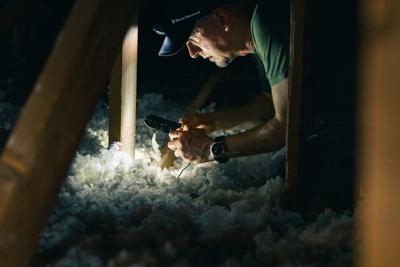
This is why it’s a good idea to check the attic walls regularly. You can do this by going upstairs with intense light and being diligent. You can also inspect the outside of the walls using a ladder. Similarly, you’ll want to check the roof with reasonable care to ensure there aren’t any gaps. Remember that even minute holes can allow small wildlife access into your home and that to get rid of mice in the attic is much more complicated than preventing entry in the first place.
3. Check and seal vents.
Another way wild animals have been known to infiltrate human homes and attics, in particular, is through vents. Since these pretty much mean a straight and open path into the house, they’re ideal for most wild animals just looking for a home.
This is why we advise our clients to regularly check the condition of their vents and seal them where appropriate. Vent seals won’t impede the vent’s natural function but will successfully prevent the entry of wild animals through the vent system.
You can do this yourself or ask a professional to do it. Some wildlife removal companies may even offer this service as part of their wildlife prevention service.
4. Have an expert check the attic.
It never hurts to get a second (expert) opinion, and many wildlife removal companies like Animoval, a Humane Wildlife Solution, offer such inspections to ensure that the homeowner is doing everything in their power to prevent wildlife intrusions.
A wildlife removal expert can easily spot any potential weaknesses or entry points and stay vigilant to signs of wildlife population that you may easily miss. Often, homeowners only realize the presence of a wild animal after weeks of inhabitation. Whereas a wildlife removal expert can spot warning signs of inhabitation after only a few days and even hours, so if you suspect you might be at risk, this might be a good option for you.
5. Clear out the attic regularly.
We understand that having to regularly clear out your storage space kind of defeats the purpose of having a storage room in the first place. However, if you want to minimize the risk of a wildlife invasion in your attic, we recommend that you regularly clean out your attic at least once a season.
By getting rid of objects and pieces of furniture you no longer need, you allow wild animals less space to hide or build a nest in. Not only that, but you also clear up more space for your other things, so really, it’s a win-win situation.
Better yet, by regularly cleaning your attic, you create some commotion around that space, signaling to potential intruders that the attic isn’t completely abandoned, as they might’ve once hoped.
So do yourself a favor and regularly inspect the state of your attic, as this is by far the best way of keeping wild animals out. If you like, you can also consider installing deterrents on the roof or in the garden, but cleanliness is by far the biggest step to a pest-free life.


(0) comments
We welcome your comments
Log In
Post a comment as Guest
Keep it Clean. Please avoid obscene, vulgar, lewd, racist or sexually-oriented language.
PLEASE TURN OFF YOUR CAPS LOCK.
Don't Threaten. Threats of harming another person will not be tolerated.
Be Truthful. Don't knowingly lie about anyone or anything.
Be Nice. No racism, sexism or any sort of -ism that is degrading to another person.
Be Proactive. Use the 'Report' link on each comment to let us know of abusive posts.
Share with Us. We'd love to hear eyewitness accounts, the history behind an article.