
To ensure the trees across your property keep their aesthetic look and structural integrity, it is essential to perform regular maintenance like pruning. But this task includes more than randomly sawing off limbs at will. Proper pruning involves carefully selecting the correct branch to cut for optimal growth and overall tree health.
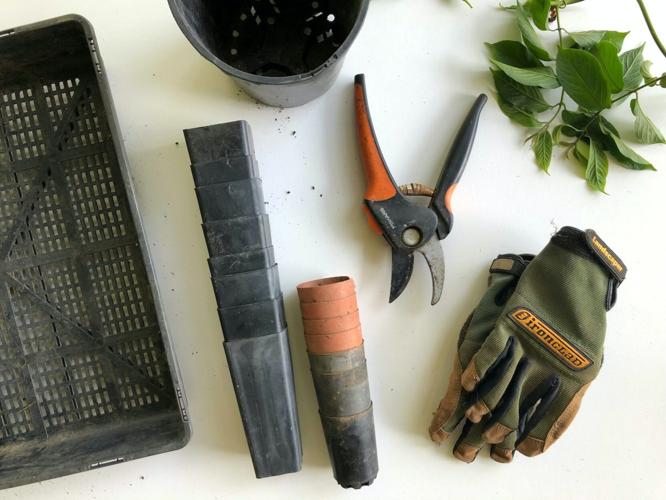
When tackling your next pruning project, you must equip yourself with the necessary tools, including hand shears, lopping shears, and electric chainsaws. Furthermore, maintaining proper safety requirements will ensure you successfully complete the task.

Reasons to Prune
When deciding what to prune in your garden, it is important to identify problem areas that need to be addressed with the tree structure before you start cutting branches. This will enable you to select the correct tools necessary to maintain maximum safety.
Increased Light & Air Removal
Pruning fully grown trees helps to thin out the more densely packed top branches. Removing them makes room for increased air flow and sunlight, which is particularly beneficial to growing foliage underneath the tree.
Furthermore, sunlight is essential to creating a tree’s distinct crown shape. When old branches block this much-needed sun and air, the entire structure of the tree becomes vulnerable to external stressors that can negatively impact its health and shape.
Proper Clearance
If branches are encroaching onto your home, driveway, or surrounding areas or pose a safety hazard to power lines that run alongside your property, properly pruning them ensures there is much-needed distance between the tree and these valuable structures, including your roof, powerlines, and vehicles.
Maintaining this proper clearance is essential to avoid electrical faults, structural damage, and increased debris during adverse weather.
Dead Branch Removal
For your safety and the safety of your property, it is vital to remove any dead or decaying branches in your garden, as they pose an increased risk of falling. As an added bonus, eliminating these limbs will improve the overall look of your trees.
You can identify dead branches by their noticeable dry exterior and brown inner color. Removing them will help direct essential nutrients to the healthy branches and tree trunk, decreasing the risk of pests and other diseases from infiltrating the tree’s structure.
Improved Fruit & Flower Production
If your garden is flushed with fruit trees or beautifully flowering shrubbery, pruning is essential to maintaining its annual bloom and quality. It allows you to maintain the size of the tree while guaranteeing the proper nutrients to reach the growing branches. Furthermore, properly pruned trees will have fruit in easy-to-reach places.

Tree Pruning Challenges
Natural growth patterns, storm damage, and landscape needs create unique pruning challenges that most homeowners will likely encounter in their gardens.
Suckering
Some trees grow new shoots from the ground as a survival instinct. Over time, these stems can weaken the main tree by diverting much-needed nutrients and water. It is vital to remove these suckers before they grow taller than six to 12 inches by cutting them off at ground level using a lopper.
Clustered Branches
When too many branches are bunched together, it can quickly and easily weaken the tree's overall structure. This is mainly because the smaller, densely packed, and weak branches prevent the growth of larger, stronger branches.
Removing these laterally growing, unneeded branches will improve airflow and light to the remaining limbs, allowing them to grow stronger.
Stubs
A stub is left over after a branch breaks off due to adverse weather or is cut too far from where it connects to the main tree. Removing these stubs as soon as possible is essential as they prevent a protective callus from developing over the ‘wound,’ providing insects with the perfect entry point. Once they begin to make inroads in the tree, moisture and rot quickly take over.
V-Shape Branching
Some trees naturally form narrow, v-shape junctions. These narrow branches may weaken the tree’s overall structure, but they do not require any type of corrective pruning. Native elms, hornbeams, and Osage orange trees are generally strong enough and small enough not to require pruning except to remove any crossing branches that may rub.
However, larger trees like Maples, flowering pears, and willows should be watched closely and given early structural training to avoid any issues as they grow larger.
Forked Trunks
Trees with forked trunks are traditionally less stable than a single trunk and often grow intertwined, leaving a hollow cavity where insects and rot can further penetrate and weaken the tree. This will lead to the tree splitting or one of the trunks breaking off.
To prevent this, removing one of the forked trunks while the tree is still young and developing is essential. Cut the trunk away as close to the ground as possible, at a slight angle, to allow rainwater to drain correctly. Take care not to damage the bark on the remaining trunk.

Tools for the Job
Pruning trees and other plants in the garden may require specialized tools you don't have readily available in a standard garage setup. The tool you need largely depends on the size of the branch you are cutting and the effort you are willing to make.
The most commonly needed tools include hand shears for small branches, plants, and shrubs. Lopping shears are excellent for medium-sized branches. Most loppers come with adjustable handles that allow you to access more hard-to-reach areas.
Pruning saws are heavy-duty shears used on large branches. They look similar to long, thin carpenter saws. Pole pruners, also known as pole saws, are pruners used to reach thick, out-of-reach branches that pose a safety hazard to your property. And finally, a chainsaw is an electric or gas power tool with enough power to prune a branch of any size with minimal effort.
Here are some other articles related to your search:
When Is The Right Time For Pruning plants Why It Is Very Necessary
Why Tree Maintenance is Key to Successful Property Management


(0) comments
We welcome your comments
Log In
Post a comment as Guest
Keep it Clean. Please avoid obscene, vulgar, lewd, racist or sexually-oriented language.
PLEASE TURN OFF YOUR CAPS LOCK.
Don't Threaten. Threats of harming another person will not be tolerated.
Be Truthful. Don't knowingly lie about anyone or anything.
Be Nice. No racism, sexism or any sort of -ism that is degrading to another person.
Be Proactive. Use the 'Report' link on each comment to let us know of abusive posts.
Share with Us. We'd love to hear eyewitness accounts, the history behind an article.