
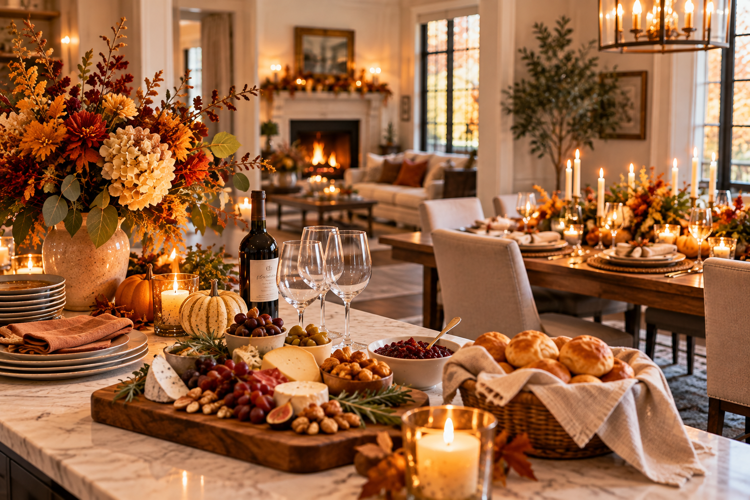

Thanksgiving has a way of beginning with the best intentions. You imagine a beautifully set table, the comforting aroma of something roasting in the oven, a little music playing in the background, and the people you love gathered together for an afternoon of good food and conversation.
Then reality arrives. The turkey needs another hour, the mashed potatoes are getting cold, someone is asking where the serving spoons are, and you've spent so much time in the kitchen that you've barely spoken to your guests.
Sound familiar?
For many hosts, Thanksgiving becomes less about enjoying the holiday and more about managing an elaborate production. But a memorable celebration doesn't require a dozen homemade dishes, an immaculate house, or a host who has perfected the art of doing everything at once.
The real secret to hosting Thanksgiving beautifully is knowing what deserves your attention, what can be prepared ahead, and what simply doesn't need to be complicated.
With a little planning and a different approach to entertaining, you can create a holiday that feels generous, welcoming, and wonderfully relaxed.
Start With the Kind of Thanksgiving You Actually Want
Before making a grocery list or pulling out the good china, think about how you want the celebration to feel.
Is it an intimate dinner with close family, where everyone lingers over dessert? A lively gathering with children running between rooms? Or perhaps a more sophisticated evening with candlelight, seasonal cocktails, and a beautifully arranged table?
The answer should influence everything from the menu to the seating arrangement.
A smaller dinner might call for family-style serving and a leisurely pace, while a larger gathering often benefits from a buffet that allows guests to help themselves. Neither approach is more elegant than the other. The best choice is the one that suits your space, your guests, and the experience you want to create.
It's also worth remembering that Thanksgiving isn't a competition. Your table doesn't need to resemble a magazine cover, and your menu doesn't have to rival a restaurant's holiday tasting experience.
As FINE explores in 5 Essentials Every Great Host Should Have, having the right entertaining basics can make gatherings considerably easier to manage.
A home that feels genuinely welcoming will always leave a stronger impression than one where everyone is afraid to move a napkin.
Let Your Thanksgiving Menu Work for You
One of the biggest mistakes Thanksgiving hosts make is treating every dish as equally important.
The turkey, stuffing, mashed potatoes, green beans, cranberry sauce, sweet potatoes, dinner rolls, multiple desserts—it sounds wonderful until you realize that everything needs attention at approximately the same time.
Instead, build the menu around a few dishes that genuinely matter to your family.
Perhaps it's the roasted turkey everyone looks forward to, your grandmother's stuffing recipe, or the pumpkin pie that has appeared on the table for generations. Give those dishes the attention they deserve and simplify everything else.
A thoughtfully prepared main course, two or three favorite sides, a fresh seasonal vegetable, and a lovely dessert can feel every bit as abundant as a much larger spread.
And there is absolutely nothing wrong with a little outside help.
A beautiful pie from a local bakery, freshly baked bread from your favorite shop, or a professionally prepared appetizer can make the meal easier without making it feel any less personal.
The key is to choose where your efforts will have the greatest impact.
If homemade stuffing is your Thanksgiving signature, make it. If pastry has never been your strength, let someone else handle dessert.
Good hosting is about creating an experience, not proving you made every ingredient from scratch.
Do the Work Before Thanksgiving Day
The easiest way to spend less time in the kitchen on Thanksgiving is to stop treating Thursday as the day everything must happen.
A few days beforehand, check your serving dishes, confirm the guest count, and make sure you have enough seating. It's much easier to borrow an extra chair on Tuesday than to discover you need one when the doorbell rings.
Many components of Thanksgiving dinner can also be prepared in advance.
Cranberry sauce often benefits from a day or two in the refrigerator as the flavors settle. Pie crusts can be made ahead, vegetables can be washed and trimmed, and casseroles can be assembled according to their recipes and refrigerated until it's time to cook.
Even simple preparations, such as measuring ingredients, organizing serving utensils, and checking oven space, make an enormous difference.
The night before Thanksgiving, set the table and arrange the dishes you'll use for serving. Place a small note inside each platter indicating what belongs there. It's a surprisingly useful trick when several people are helping in the kitchen.
Of course, preparing ahead also means storing food properly. The USDA's Thanksgiving food safety guidance recommends refrigerating perishable dishes promptly and reheating leftovers to an internal temperature of 165°F. Perishable food should generally be refrigerated within two hours, or within one hour when temperatures exceed 90°F.
A well-organized Thanksgiving isn't one where nothing unexpected happens. It's one where the unexpected doesn't derail the entire afternoon.
Give Your Table the Attention It Deserves
A beautiful Thanksgiving table can establish the mood long before dinner is served.
And fortunately, creating that atmosphere requires considerably less effort than preparing another elaborate side dish.
Begin with a simple foundation: a linen tablecloth or runner, dinnerware you love, and glassware that feels appropriate for the occasion. From there, introduce a few seasonal details.
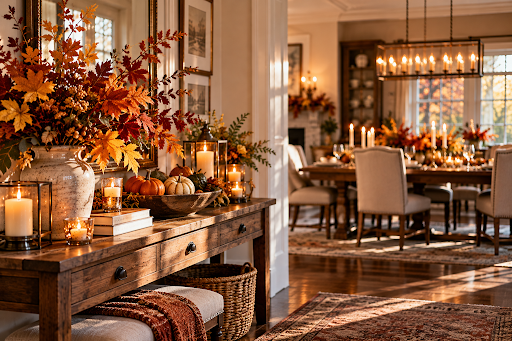
Branches of autumn foliage, small arrangements of fresh flowers, miniature pumpkins, or a handful of pears can create a beautiful centerpiece without overwhelming the table.
Warm candlelight adds intimacy, especially for an evening gathering. Unscented candles are preferable near food, allowing the aromas of dinner to take center stage.
Color can help bring everything together. Instead of relying on traditional orange and brown, consider softer combinations of ivory, olive green, muted gold, burgundy, or warm terracotta.
The most elegant tables often have one thing in common: restraint.
You don't need towering floral arrangements or decorations on every available surface. In fact, lower centerpieces generally work better because guests can see one another across the table.
The goal isn't simply to create something beautiful. It's to create a space where people want to sit, talk, laugh, and stay awhile.
Make the First Fifteen Minutes Feel Effortless
One of the most overlooked aspects of Thanksgiving entertaining is what happens before dinner.
Guests arrive, coats need somewhere to go, drinks are requested, and the host is still checking the oven.
That first quarter-hour can set the tone for the entire gathering.
Instead of leaving everything until the last minute, create a welcoming space that works independently of the kitchen.
Arrange a small drinks station with sparkling water, a seasonal mocktail, wine, or a simple signature cocktail. Set out a few easy appetizers, such as spiced nuts, olives, cheese, or crackers, so guests have something to enjoy while everyone settles in.
For a more thoughtful approach to seasonal drinks, FINE's A Toast to Italian Elegance for Thanksgiving Gatherings offers inspiration for creating a celebratory atmosphere around the holiday table.
Music helps, too. A relaxed playlist playing quietly in the background gives the gathering an immediate sense of warmth without competing with conversation.
Another small gesture worth considering is greeting each guest personally rather than calling hello from the kitchen. A genuine welcome does more for the atmosphere than another perfectly arranged appetizer.
Stop Trying to Do Everything Yourself
There's an unspoken expectation that the Thanksgiving host should somehow manage the cooking, decorating, serving, entertaining, and cleaning while remaining completely composed.
It's an impossible standard, and one worth abandoning.
When guests offer to bring something, let them.
Assigning a dessert, a bottle of wine, or a favorite family side dish doesn't diminish your role as host. It allows everyone to contribute to a celebration that is, after all, about sharing.
The same applies once guests arrive.
Someone can refill water glasses. Another person can bring dishes to the table. A willing relative can handle carving while you finish preparing the vegetables.
For larger gatherings, consider serving some dishes buffet-style rather than plating everything individually. It gives guests flexibility and removes the pressure of coordinating every plate at precisely the same moment.
If you're serving a turkey, take a moment to review the USDA's safe turkey cooking recommendations. A food thermometer, rather than a fixed roasting time, is the reliable way to confirm that the thickest part of the breast and innermost parts of the thigh and wing have reached 165°F.
You might even decide to order the entire main course from a trusted restaurant or caterer and prepare just a couple of meaningful dishes yourself.
There's no rule that says Thanksgiving must be exhausting to count as Thanksgiving.
In fact, the most gracious hosts are often the ones who understand that hospitality is a shared experience rather than a solo performance.
Leave Room for the Moments That Make Thanksgiving Special
Think back to the Thanksgiving celebrations you remember most fondly.
Chances are, you don't recall whether the roasted carrots were perfectly glazed or whether every napkin was folded identically.
You remember the conversations, the laughter, the familiar stories, and the people who made the occasion feel special.
That's why it's important not to schedule every moment of the day.
Allow time for guests to settle in before dinner. Don't rush everyone away from the table the moment the plates are empty. Let dessert become its own relaxed part of the evening.
A pot of coffee, a selection of teas, and a few slices of pie can be all the encouragement guests need to linger.
For hosts who want to add something special without complicating dinner, a little thought about the beverages can go a long way. FINE's Ultimate Holiday Wine Pairing Guide offers inspiration for pairing wines with traditional Thanksgiving flavors.
If your family enjoys traditions, make space for them. Perhaps everyone shares something they're grateful for, a treasured recipe is served each year, or a post-dinner walk becomes part of the celebration.
You don't need to invent elaborate activities. Sometimes the most meaningful tradition is simply having everyone together, without the distraction of a tightly managed schedule.
The evening should have room to unfold naturally.
And When Something Goes Wrong, Let It
Something probably won't go exactly as planned.
The turkey might need another twenty minutes. Someone may forget the cranberry sauce. The centerpiece might be moved to make room for another serving platter.
None of these things has to become a crisis.
Keep a little flexibility in your schedule and avoid promising dinner at an exact minute. If the main course runs late, guests can enjoy another drink or spend a little longer catching up.
And if a dish doesn't turn out quite as expected, resist the temptation to apologize for it throughout the meal.
Your guests came to spend Thanksgiving with you, not to evaluate your performance.
A relaxed host gives everyone permission to relax. That feeling, more than any decorative detail or complicated menu, is what makes a gathering truly enjoyable.
The FINE Take
The best Thanksgiving celebrations aren't necessarily the most elaborate. They're the ones where the food feels comforting, the atmosphere feels welcoming, and everyone has the opportunity to enjoy being together.
That includes the person hosting.
Preparing ahead, simplifying the menu, and accepting a little help don't make the occasion less special. They give you more time for the parts of Thanksgiving that matter.
Set a beautiful table. Serve the dishes your family loves. Light the candles, pour the drinks, and let the evening take its own course.
And when everyone finally sits down to dinner, make sure you're sitting there with them.
After all, the one thing missing from too many Thanksgiving celebrations is the host who's been too busy making everything perfect to enjoy it.

(0) comments
We welcome your comments
Log In
Post a comment as Guest
Keep it Clean. Please avoid obscene, vulgar, lewd, racist or sexually-oriented language.
PLEASE TURN OFF YOUR CAPS LOCK.
Don't Threaten. Threats of harming another person will not be tolerated.
Be Truthful. Don't knowingly lie about anyone or anything.
Be Nice. No racism, sexism or any sort of -ism that is degrading to another person.
Be Proactive. Use the 'Report' link on each comment to let us know of abusive posts.
Share with Us. We'd love to hear eyewitness accounts, the history behind an article.