
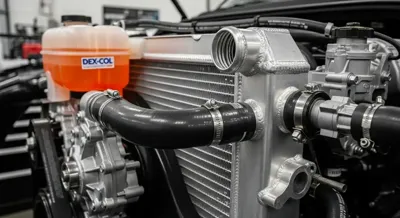

When you tow a caravan, climb a long gradient, drive in extreme heat or push an engine hard for extended periods, the cooling system has to remove far more heat than it does during ordinary driving. Better coolant control helps you manage that increased thermal load by maintaining effective coolant circulation and keeping engine temperatures within a more stable operating range. This can protect performance, reduce strain on components and help prevent overheating when your vehicle is working hardest.
Maintains Coolant Flow as Engine Load Rises
As engine load increases, more fuel is burned and more heat must be transferred away from critical engine components. Your cooling system needs sufficient coolant flow through the engine and radiator to keep that heat under control.
If your vehicle regularly tows, tackles steep terrain or operates in high temperatures, you may need to assess whether the standard cooling system is still suited to those demands. Depending on the application, you might compare upgraded pumps, fans and controllers, including Davies Craig cooling solutions for demanding conditions, with other options appropriate for your vehicle. What matters most is choosing components that work together to provide suitable coolant circulation for the workload.
Reduces Temperature Spikes Under Sustained Loads
Heavy loads often create sustained heat rather than a brief rise in temperature. A long uphill climb, for example, can keep your engine under considerable load for several minutes while airflow and operating conditions continue to change.
More consistent coolant circulation can help move heat from the engine to the radiator before local temperatures rise excessively. Controlling these temperature spikes reduces the likelihood of the coolant approaching its boiling point and helps your cooling system maintain a more predictable operating temperature throughout prolonged demanding conditions.
Protects Engine Components From Excess Heat
Excessive engine temperature affects more than the coolant itself. Cylinder heads, head gaskets, seals, hoses and lubricants can all experience additional stress when operating temperatures become too high.
Keeping coolant temperature under control helps maintain the conditions these components were designed to operate within. This is particularly important if you frequently tow close to your vehicle's rated capacity or drive in hot Australian conditions, where high ambient temperatures can leave the radiator with less capacity to shed additional heat.
Improves Cooling Control at Low Road Speeds
High engine load does not always come with high road speed. Four wheel driving, slow towing manoeuvres and steep climbs can place considerable demand on the engine cooling system while relatively little natural air passes through the radiator.
In these situations, coolant circulation and forced airflow become especially important. An effective cooling system needs to move heat through the engine and then release it through the radiator even when vehicle speed provides limited assistance. Matching coolant flow with suitable radiator fans can therefore improve temperature control during demanding low speed operation.
Helps the Engine Recover After Heavy Use
Cooling requirements do not immediately disappear when you reduce throttle or stop after a demanding drive. Heat stored within the engine can continue moving into the coolant, producing what is commonly known as heat soak.
Effective coolant management helps redistribute this residual heat instead of allowing temperatures to remain concentrated in particularly hot areas. Depending on the cooling system design, controlled circulation after periods of high load can support a smoother reduction in engine temperature and reduce unnecessary thermal stress.
Stable Cooling Supports Demanding Driving
Better coolant control gives your cooling system a stronger foundation for managing the extra heat created under heavy loads. By maintaining circulation, limiting temperature spikes, supporting cooling at low speeds and managing residual heat, you can help your engine operate more consistently when towing, climbing or driving in demanding conditions. Any cooling upgrade should still be matched carefully to your vehicle, engine configuration and intended use so that the system works effectively as a whole.

(0) comments
We welcome your comments
Log In
Post a comment as Guest
Keep it Clean. Please avoid obscene, vulgar, lewd, racist or sexually-oriented language.
PLEASE TURN OFF YOUR CAPS LOCK.
Don't Threaten. Threats of harming another person will not be tolerated.
Be Truthful. Don't knowingly lie about anyone or anything.
Be Nice. No racism, sexism or any sort of -ism that is degrading to another person.
Be Proactive. Use the 'Report' link on each comment to let us know of abusive posts.
Share with Us. We'd love to hear eyewitness accounts, the history behind an article.