
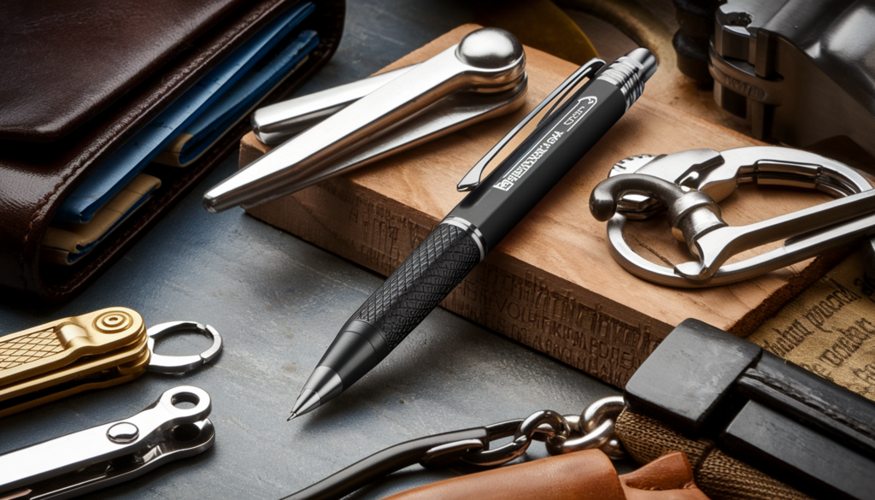
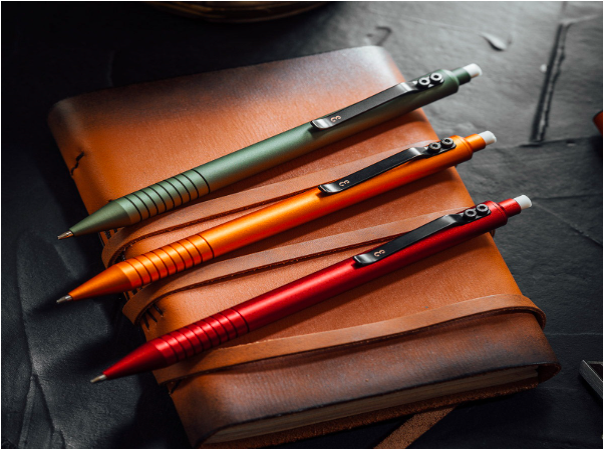
The right tools can transform how we work, travel, and create. For anyone who values precision and portability, the everyday carry (EDC) mechanical pencil has become an indispensable companion—compact enough to slip into a pocket, yet capable enough to handle everything from quick notes to detailed sketches.
What sets mechanical pencils apart is their combination of reliability and convenience. They deliver consistent line quality without the interruption of sharpening, making them ideal for capturing ideas the moment they strike. From architects drafting on-site to writers journaling in transit, these instruments have earned their place in the modern toolkit through decades of refinement and innovation.
The Evolution of Mechanical Pencils
The mechanical pencil's origins trace back to the late 18th century, when inventors sought alternatives to the constant maintenance required by wooden pencils. Early designs were rudimentary but revolutionary—they introduced the concept of replaceable lead and eliminated the need for knife-sharpening between uses.
The introduction of the twist mechanism marked a turning point in mechanical pencil design. This innovation allowed users to control lead advancement with precision, transforming what had been a novelty into a practical writing instrument. As manufacturing techniques improved throughout the 19th and 20th centuries, designers experimented with different materials—from brass and steel to modern polymers—creating pencils that were both more durable and more comfortable to hold for extended periods.
Selecting the Right Mechanical Pencil
Choosing a mechanical pencil requires understanding how different features align with your specific needs. The market offers countless options, but a few key characteristics separate exceptional tools from mediocre ones:
Build Quality: Metal bodies—particularly those machined from aluminum or brass—provide longevity and a satisfying heft. High-grade plastics offer lighter alternatives without sacrificing durability.
Lead Diameter: Fine 0.3mm and 0.5mm leads suit detailed technical work and small handwriting. Standard 0.7mm strikes a balance between precision and strength. Bold 0.9mm leads work well for sketching and those who prefer heavier lines.
Grip Design: Knurled metal grips provide secure control. Rubberized sections offer cushioning during marathon writing sessions. The best choice depends on your grip style and typical duration of use.
Mechanism Type: Click-advance mechanisms are most common and reliable. Twist-advance designs offer finer control. Shake-to-advance models provide one-handed operation.
Different professions and pursuits demand different specifications. Writers typically prefer 0.5mm or 0.7mm leads with comfortable grips that won't fatigue the hand during long sessions. Artists often need multiple pencils with varying lead sizes to achieve different line weights and shading effects. Engineers and architects require precision instruments—usually 0.3mm or 0.5mm—with mechanisms that won't fail during critical work.
Professionals can select mechanical pencils from Everyman, Pentel, or Uni for specification-matched writing instruments.
Mechanical Pencils for Creative Work
For artists and designers, the mechanical pencil offers advantages that traditional wooden pencils cannot match. The consistent line width enables techniques that would be impossible with a dulling graphite point, while the ability to switch lead hardness without changing instruments streamlines the creative process.
Several features distinguish pencils designed for creative applications:
Lead Grade Versatility: The ability to use different lead hardnesses—from 4H for light construction lines to 6B for rich darks—in the same pencil body provides flexibility without requiring multiple tools.
Extended Lead Sleeves: Longer metal sleeves allow artists to see their work more clearly when using rulers or templates, improving precision in technical illustration.
Weight Distribution: Properly balanced pencils reduce hand fatigue during extended drawing sessions, allowing artists to maintain control and precision.
Retractable Tips: Protecting the delicate lead sleeve during transport prevents damage and extends the pencil's working life.
Professional illustrators and designers have long recognized these advantages. Many prefer mechanical pencils for preliminary sketches and technical drawings, where consistency and precision matter most.
Engineering Pencils: When Precision Matters
In technical fields where accuracy can mean the difference between success and costly errors, the engineering pencil represents more than convenience—it's a precision instrument. These specialized tools incorporate features that distinguish them from general-purpose mechanical pencils:
Fixed Lead Sleeves: Non-retractable metal sleeves, typically 4mm in length, allow the pencil to be used with templates and straightedges without the tip retracting under pressure.
Precise Lead Advancement: Mechanisms that advance lead in exact increments—often 0.5mm per click—ensure consistent line weight throughout a drawing.
Professional-Grade Construction: Metal bodies resist the wear and tear of daily professional use, maintaining their precision over years of service.
Weighted Balance: Carefully distributed weight reduces hand fatigue during the long hours required for detailed technical drawings.
Integrated Lead Hardness Indicators: Windows or markings that display the current lead grade eliminate guesswork when switching between different hardnesses.
These features address the specific demands of technical drawing, where even minor inconsistencies can compromise a design's integrity. Architects, engineers, and drafters rely on these instruments to translate precise measurements and specifications onto paper with absolute accuracy.
How Mechanical Pencils Are Made

The manufacturing process behind quality mechanical pencils combines precision engineering with careful material selection. Understanding this process reveals why premium pencils command higher prices—and why they're worth the investment.
Production begins with material selection. Bodies may be machined from solid brass or aluminum, injection-molded from engineering-grade plastics, or crafted from exotic materials like titanium or carbon fiber. Each material choice affects the pencil's weight, durability, and feel in hand.
The internal mechanism—the heart of any mechanical pencil—requires particularly precise manufacturing. Components must be machined to tolerances measured in hundredths of a millimeter to ensure smooth, reliable operation over thousands of clicks. Springs, clutches, and advancement mechanisms undergo rigorous testing to verify they'll perform consistently throughout the pencil's lifetime.
Assembly typically involves both automated and hand-fitted processes. While machines can handle repetitive tasks with perfect consistency, skilled technicians often perform final adjustments and quality checks. Each pencil is tested to ensure the mechanism advances lead smoothly, the grip provides adequate purchase, and all components fit together without play or binding.
Premium manufacturers subject their products to additional scrutiny—drop tests, extended-use simulations, and ergonomic evaluations—before pencils reach consumers. This attention to detail explains why well-made mechanical pencils can last decades with proper care.
Why Mechanical Pencils Make Sense
Beyond their technical capabilities, mechanical pencils offer practical advantages that become apparent with regular use. These benefits extend beyond mere convenience to encompass environmental and economic considerations:
Consistent Performance: The line width never varies, eliminating the gradual degradation that occurs as wooden pencils wear down. This consistency proves particularly valuable for technical work and detailed writing.
Ergonomic Advantages: Modern grip designs distribute pressure across the hand, reducing fatigue and strain during extended use. This matters more than many realize—poor ergonomics can lead to discomfort or even repetitive stress injuries.
Environmental Impact: A single mechanical pencil with refillable lead can replace hundreds of wooden pencils over its lifetime, significantly reducing waste. The environmental benefits become substantial when multiplied across millions of users.
Long-Term Economics: While the initial investment exceeds that of wooden pencils, the refillable nature of mechanical pencils makes them more economical over time. A quality mechanical pencil can last years or even decades with minimal maintenance.
Professional Appearance: In business settings, a well-made mechanical pencil conveys attention to detail and professionalism in ways that disposable writing instruments cannot.
These advantages explain why mechanical pencils have maintained their relevance despite the digital revolution. They fill a niche that tablets and styluses cannot—offering the tactile feedback and simplicity that many users prefer for certain tasks.
Here are some other articles related to your search:
- The Tools That Actually Matter This Year
- Best New Cars for a New College Grad — A First-Person Guide I Wish I Had Sooner
- How I Use LED Lighting to Make My Yard Feel Designed, Not Decorated
(0) comments
We welcome your comments
Log In
Post a comment as Guest
Keep it Clean. Please avoid obscene, vulgar, lewd, racist or sexually-oriented language.
PLEASE TURN OFF YOUR CAPS LOCK.
Don't Threaten. Threats of harming another person will not be tolerated.
Be Truthful. Don't knowingly lie about anyone or anything.
Be Nice. No racism, sexism or any sort of -ism that is degrading to another person.
Be Proactive. Use the 'Report' link on each comment to let us know of abusive posts.
Share with Us. We'd love to hear eyewitness accounts, the history behind an article.