
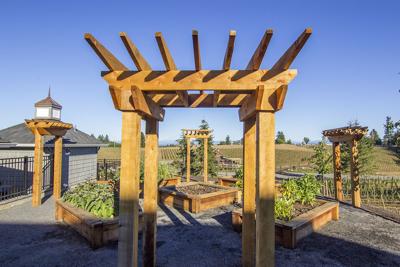
At some point in reviewing design options for a landscaping project, many homeowners find themselves wrapped up in conversations about flow, fixtures, and even some decisions that could impact a home’s resale value. Making the most of the property’s natural features is typically the aim, but making choices that help protect those natural features is just as important. Choosing the right sustainable materials goes a long way to preserving the beautiful views homeowners want to pay tribute to in the living postcard that is their landscape design.
Why Redwood Stands Out in Sustainable Landscaping
When it comes to combining natural beauty with sustainability, there’s no topping redwood. This California-grown lumber has long been known as naturally strong, pest and decay-resistant, dimensionally stable, and fire-resistant. And, as new, man-made lumber products are introduced, with the use of fossil fuels producing significant amounts of carbon in their manufacture, natural products like redwood are looking better than ever.
The Strength and Durability
Redwood is one of the lightest, yet structurally strong, softwoods found in North America, which helps make it the ideal wood to use wherever your plans call for large structural components. But what’s even better: It has excellent strength and durability, shrinks and swells less than other woods, and is less likely to warp or split. It’s a natural-born strength that works hard not just for a project but making the planet a little bit healthier.
Environmental Impact and Lifecycle
Independent analysis has confirmed the environmental qualities of Redwood. A life-cycle assessment – a scientific technique that helps quantify the environmental footprint of producing and consuming products we use in our everyday lives – showed that it is one of the most environmentally responsible building materials available.
Redwood uses nothing more than the energy from the sun and rain to grow, is recyclable, and is cleaner to produce than composites or plastics. Milling processes minimize waste as well, collecting sawdust and bark that are used to produce clean energy. Sawmills use this biomass energy to power their operations and return excess electricity to the state’s power grid.
Sustainable Production: Redwood vs. Man-Made Materials
The same cannot be said of plastics and composite building products that rely on chemical resins and fossil fuels in their manufacturing processes – materials that release carbon and increase emissions. Composite lumber, while incorporating some recycled content, is likely landfill-bound at the end of its useful life. Trees, meanwhile, take carbon out of the air and store it in wood fiber, trapping carbon in perpetuity, which helps reduce emissions and lower your carbon footprint. Biodegradable redwood lumber does not end up in landfills at the end of its useful life, but can be broken down and returned to nourish the earth.
Humboldt Redwood: A Commitment to Environmentally Friendly Practices
Humboldt Redwood is an environmentally friendly option for landscapes and gardens. Through adherence to some of the strictest growing and harvest mandates, as well as a replanting protocol on commercial lands, today’s growers have plentiful lumber stock for future generations. Approximately seven seedlings are planted for every tree taken out of the forest during harvesting, ensuring an ongoing cycle of renewal and replenishment.
The Aesthetic and Structural Advantages
The natural hardiness of redwood makes it the perfect material for structural yet visually interesting features in an outdoor space. The renewable, recyclable, and biodegradable qualities discovered in redwood provide environmental advantages that surpass any benefit promoted by alternative "manufactured" building materials. Homeowners can find Forest Stewardship Council® (FSC®)-certified redwood products from companies like Humboldt Redwood Company.
Local Sourcing and Additional Environmental Benefits
The closer proximity of redwood – compared, for example, to exotic wood species that would have to travel via freight delivery from their countries of origin to your backyard project site – lends additional benefits of requiring less energy to travel from the mill to the property.
The Uncompromised Quality of Redwood for Landscaping
None of the redwood’s environmental benefits are engineered and require no special handling to maximize the sustainable impact it delivers with each project. Even better, there is no tradeoff between beauty, quality, or durability. Once homeowners understand more about the versatility and environmentally friendly features of this lumber, they quickly decide: that there is no better choice for their landscaping design.
Embracing Redwood for a Greener Future
To learn more about one of nature’s most environmentally friendly, beautiful, and strong building materials and to find local redwood dealers, visit getredwood.com.
HRC is working to cultivate a lasting legacy of environmentally responsible forestry and sourcing, manufacturing, and distribution of top-quality redwood lumber products.
Here are Some Other Articles Related to Your Search:
- How Modern Innovation Improved Deck And Fencing Materials
- How to Treat Wood for Outdoor Use?
- Outdoor Decor Trends for Better Summer Entertaining

(0) comments
We welcome your comments
Log In
Post a comment as Guest
Keep it Clean. Please avoid obscene, vulgar, lewd, racist or sexually-oriented language.
PLEASE TURN OFF YOUR CAPS LOCK.
Don't Threaten. Threats of harming another person will not be tolerated.
Be Truthful. Don't knowingly lie about anyone or anything.
Be Nice. No racism, sexism or any sort of -ism that is degrading to another person.
Be Proactive. Use the 'Report' link on each comment to let us know of abusive posts.
Share with Us. We'd love to hear eyewitness accounts, the history behind an article.