
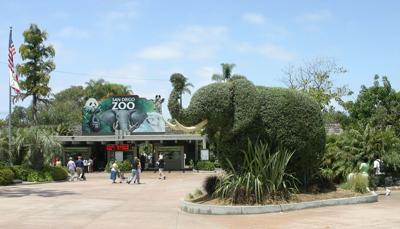
The chirps and guttural roars of animals in the night has never been more fun! San Diego Zoo’s various events on its many stages are all great fun to see before September 4th. Musical performers, stilt-walkers, exclusive 4-D movies, and bug exhibits (there’s no shame in avoiding that last one). "Africa Rocks" began on July 1st and features six new habitats, each with its own theme.
The first exhibit focuses on ocean and coastal ecosystems in Africa––one animal in particular is an unexpected surprise: penguins. Although these flightless birds are more commonly associated with polar regions, 24 islands in the African region do play host to penguins. An unfortunate member of the endangered species list, African penguins are harmed by environmental destruction and a dwindling food supply.
Exhibit two shows off the African Sahara and features a time-honored classic, leopards. The stylish and intense presence of this predator betrays its ferocity, and the rosettes dotting their fur are both hypnotic and functional. Excluding hunting for prey, leopards are calm and casual in their stride and hang about in the trees above.
For exhibit three, welcome to Madagascar, one of the world’s largest islands, home to around 700 animal species. Way up in the trees, bounding overhead sometimes as far as 40 feet from point to point the Sifaka soaring overhead is a sight to see. On the ground, they are no less nimble, scampering across the ground in their own unique way.
From the ocean to the Sahara and up into the trees, exhibit four takes us higher, to the Northeastern Highlands of Ethiopia. Flora and fauna have adapted to the hot and dry climates. Hamadryads baboons are the rough and hardened survivors of the rocky crests in Ethiopia. These tough mountain monkeys are not to be trifled with.
Exhibit five takes us down to the underground alleys of Africa, "underground" being the most important word. Kopjes are granite-based fissures all across the savanna. The various caverns and tunnels below make for a great home for the smaller and more agile creatures of the continent. Meerkats are the star of the show, and they are a perfect example of an animal family in the savanna. All that they do is for the sake of the community, foraging, digging, or even sentry duty.
The dense and humid rainforest habitat is the last and certainly not the least stop on the African tour. The West African Dwarf Crocodile is true to its name, it’s a little guy (for a crocodile) at only five feet long. However, unlike all the species on the list so far, the Dwarf Crocodile prefers to hunt at night, preferring small crabs, frogs, and fish. Like most crocodiles, it lurks in the marshes and occasionally leaves the water to bathe in the sun.
For Related Articles Try:
Balinese Paradise in Indonesia
(0) comments
We welcome your comments
Log In
Post a comment as Guest
Keep it Clean. Please avoid obscene, vulgar, lewd, racist or sexually-oriented language.
PLEASE TURN OFF YOUR CAPS LOCK.
Don't Threaten. Threats of harming another person will not be tolerated.
Be Truthful. Don't knowingly lie about anyone or anything.
Be Nice. No racism, sexism or any sort of -ism that is degrading to another person.
Be Proactive. Use the 'Report' link on each comment to let us know of abusive posts.
Share with Us. We'd love to hear eyewitness accounts, the history behind an article.