
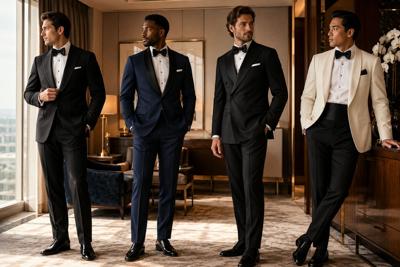

A tuxedo can make almost any man look sharper, taller, and considerably more prepared for the evening ahead. It can also do the exact opposite when the shoulders collapse, the trousers gather around the shoes, and the jacket appears to have been borrowed from a larger relative on the way to the ceremony.
The difference is not always the price printed on the label. More often, it is the fit.
Whether you are the groom, a groomsman, a wedding guest, or someone who has finally reached the point in life when owning formalwear makes sense, understanding how a tuxedo should fit is far more useful than chasing one designer, trend, or fashionable silhouette.
A properly fitted tuxedo should complement your proportions without squeezing, disguising, or overwhelming them. It should also let you sit through dinner, raise a champagne glass, hug relatives, and dance without appearing trapped inside formal packaging.
How Should a Tuxedo Fit
A tuxedo should follow the shape of your body without clinging to it. The shoulders should sit cleanly, the jacket collar should rest against the shirt collar, and the front should button without pulling.
Before getting into every tailoring detail, use this quick tuxedo fit checklist:
- The shoulder seams end at your natural shoulders.
- The jacket collar rests against the shirt collar without a visible gap.
- The lapels lie flat against the chest.
- The jacket buttons without creating an X-shaped pull.
- Approximately one-quarter to one-half inch of shirt cuff is visible.
- The jacket is long enough to create balanced proportions.
- The trousers stay comfortably at the waist without a belt.
- The trouser hems create little or no break over the shoes.
If those details are correct, the tuxedo is already well ahead of many hurried rentals and unaltered purchases.
The Shoulders Matter Most
The shoulder seam should end where your natural shoulder ends. If it hangs beyond that point, the jacket will look oversized. If it stops too early, the upper sleeve may pull and create an indentation near the shoulder.
The shoulders are also among the most difficult and expensive parts of a jacket to alter. Sleeve length, trouser hems, and modest changes to the jacket waist are usually much easier for a tailor to refine.
Stand naturally during the fitting. Do not dramatically pull your shoulders back or hold in your stomach. The tailor needs to fit the body you will actually occupy throughout the event.
The Collar Should Sit Against the Shirt
The back of the tuxedo collar should rest neatly against the shirt collar. A visible gap usually means the jacket is not following the shape of your neck, shoulders, or posture correctly.
Horizontal wrinkles below the collar may also indicate that an adjustment is needed. This is one reason a tuxedo that looks perfectly respectable on a hanger can behave very differently once someone puts it on.
The Chest Should Look Clean
Button the jacket and look at the front. The lapels should remain flat, and the fabric should not pull sharply away from the button.
A little shaping through the chest and waist is flattering. Straining fabric is not. You should be able to slide a flat hand comfortably between your chest and the closed jacket. The Emily Post Institute offers similar fit guidance, noting that an overly tight jacket will pull while a slightly roomy garment can often be adjusted if the shoulders fit correctly.
Move your arms naturally during the fitting. You do not need the mobility of a workout jacket, but you should be able to shake hands, sit down, and reach for dinner without fighting the garment.
The Jacket Length Should Create Balance
A classic tuxedo jacket generally covers the seat and creates a balanced line between the upper and lower body. A jacket that is too short can make the torso appear boxy, while one that is too long may visually shorten the legs.
Fashion moves between cropped, elongated, slim, and relaxed silhouettes. Correct proportion is more important than whatever happened to appear on a runway recently.
Shorter men do not automatically need the shortest jacket available, just as taller men do not need unnecessary extra fabric. The purpose of the fitting is balance rather than following a simplified body-type rule.
The Sleeves Should Show a Little Shirt Cuff
Tuxedo sleeves should end near the wrist bone and reveal approximately one-quarter to one-half inch of shirt cuff. That small detail makes the entire outfit look more finished and allows cuff links to appear naturally.
If the sleeves cover the hands, the tuxedo looks borrowed. If they stop too high, the jacket looks undersized. Sleeve length is a relatively straightforward alteration, so there is little reason to ignore it.
The Trousers Should Fall Cleanly
Tuxedo trousers should sit comfortably at the waist and fall smoothly through the seat and thigh. They are often worn slightly higher than casual pants, helping lengthen the leg and preventing the shirt from showing underneath the buttoned jacket.
Traditional tuxedo trousers do not require a belt. Side adjusters, suspenders, or a properly fitted waistband preserve the clean line of the outfit.
The hem should lightly meet the shoe with little or no break. Large folds of fabric around the ankle can undermine even a very expensive tuxedo.
The Dress Code Determines What You Need
A tuxedo is not required for every wedding. Before shopping or renting, read the invitation carefully and consider the formality, location, and time of the event.
| Wedding Dress Code | What Men Should Wear |
|---|---|
| White tie | A formal evening tailcoat, white bow tie, formal waistcoat, formal shirt, and appropriate evening accessories |
| Black tie | A tuxedo, white formal shirt, black bow tie, and polished black shoes |
| Black-tie optional | A tuxedo or a well-tailored dark suit with a white shirt and conservative tie |
| Formal | A dark suit and tie, although a tuxedo may be appropriate for an evening wedding |
| Cocktail | A well-tailored suit with a dress shirt, tie, and polished shoes |
For a traditional black-tie invitation, a tuxedo remains the appropriate choice. The Emily Post Institute’s black-tie dress code guide identifies a tuxedo, formal white shirt, black bow tie, and black dress shoes as the conventional foundation.
Black-tie optional gives guests more flexibility. A tuxedo remains appropriate, but a dark suit, white shirt, conservative tie, and leather dress shoes are also acceptable.
For weddings that call for something less formal, FINE’s cocktail attire guide for men explains how to dress sharply without arriving in full black tie.
A Tuxedo Should Fit Your Proportions
Men are often told to shop according to broad labels such as tall, short, athletic, slim, or broad. Those descriptions can provide a starting point, but they cannot replace an individual fitting.
Two men with the same height and weight can have very different shoulder widths, torso lengths, posture, and leg proportions. Instead of attempting to hide a body type, a skilled tailor creates balance through jacket length, lapel width, button placement, trouser rise, and waist suppression.
Fit Advice for a Broader Build
A clean shoulder line and properly fitted chest are more flattering than squeezing into an aggressively slim tuxedo. Choose a jacket that closes cleanly and trousers with enough room through the seat and thigh to fall rather than cling.
Peak lapels can create a strong upward line and add structure through the chest and shoulders. The jacket should define the waist without pulling across the button.
A tuxedo that is too small does not make the body look smaller. It merely makes the tuxedo look too small.
Fit Advice for a Slim Build
Men with slimmer frames should avoid jackets that hang loosely from the shoulders or create excessive empty space through the torso.
A tailored cut, moderate lapel width, and clean trouser taper can add definition without becoming skin-tight. A well-fitted double-breasted tuxedo can also add structure and visual presence.
Extremely narrow lapels and very short jackets may make a slim frame appear even narrower. The goal is proportion, not simply choosing the smallest available cut.
Fit Advice for a Tall Build
Taller men should pay particular attention to jacket, sleeve, and trouser length. A standard jacket may technically button while still sitting too high on the body.
Properly scaled lapels, adequate jacket length, and trousers with the correct rise keep the outfit from looking undersized. Suit separates or made-to-measure options can be particularly useful when the jacket and trouser sizes do not follow standard retail pairings.
Fit Advice for a Shorter Build
A clean, uninterrupted line can visually lengthen the body. Avoid trousers that gather around the ankles, jackets that extend too far down the legs, and accessories that divide the outfit into too many sections.
A single-breasted jacket with a well-positioned button and moderate lapels usually creates a balanced result. Peak lapels may also help draw the eye upward.
The answer is not necessarily an extremely short jacket. It still needs enough length to maintain the proportions expected of formalwear.
Choose the Right Lapel
The lapel changes the character of a tuxedo more than many men expect.
Peak lapels point upward toward the shoulders and create a strong, formal appearance. They work with both traditional and contemporary tuxedos and can add visual structure to the upper body.
Shawl collars form one continuous curved line around the neck and chest. They feel smooth, elegant, and slightly more relaxed, with roots in the traditional smoking jacket.
Notch lapels resemble those commonly found on business suits. They appear on many modern tuxedos and offer a familiar silhouette, although peak and shawl lapels tend to communicate black tie more distinctly.
For a closer look at lapel construction and proportions, read FINE’s guide to different types of notch lapels.
Single-Breasted or Double-Breasted
A single-breasted tuxedo is the easiest and most versatile choice. It traditionally has one button and creates a clean, elongated front.
A double-breasted tuxedo makes a stronger statement and adds structure across the chest. It can look excellent on many builds, provided the length, waist, and button placement are properly fitted.
The double-breasted option should feel intentional rather than oversized. Poorly placed buttons or excessive fabric can quickly overwhelm the wearer.
Black or Midnight Blue
Black remains the most familiar and versatile tuxedo color. It works for weddings, galas, awards ceremonies, formal dinners, and nearly every conventional black-tie event.
Midnight blue is equally traditional and can look especially rich under evening lighting. It is an excellent choice for someone who wants a subtle point of distinction without abandoning classic formalwear.
White and ivory dinner jackets can be appropriate for warm-weather, resort, cruise, and certain summer evening events. They are traditionally paired with black formal trousers rather than matching white pants.
Velvet, burgundy, green, and patterned jackets may work for festive or fashion-forward celebrations. For strict black tie, however, black or midnight blue remains the most dependable foundation.
Tuxedo Versus Suit
A tuxedo is distinguished by formal details, most notably satin or grosgrain lapels, covered buttons, and often a stripe along the outer trouser seam. A suit generally uses the same fabric throughout and can be worn across a wider range of professional, social, and wedding settings.
For a black-tie invitation, choose a tuxedo. A dark suit does not become a tuxedo simply because it happens to be black.
For black-tie optional, either a tuxedo or a well-tailored dark suit is appropriate. For cocktail attire, a suit is usually the better choice.
What Grooms Should Consider
A groom’s tuxedo should reflect the formality, location, and time of the wedding. It should also look distinct from the groomsmen without appearing to belong to an entirely different event.
That distinction can come from the lapel, shirt, bow tie, boutonniere, dinner jacket, or fabric texture rather than relying on a completely different color.
Wear the tuxedo with the exact shirt, shoes, socks, and accessories during the final fitting. Differences in shoe height, waistband position, and shirt collar can affect the finished appearance.
The formalwear should also make sense beside the gown and venue. Couples planning a more elevated celebration may find additional ideas in FINE’s guide to designing a luxury wedding.
What Wedding Guests Should Know
Follow the dress code instead of trying to outdress the groom or reinterpret the invitation as a personal creativity challenge.
For black tie, wear a tuxedo. For black-tie optional, choose a tuxedo or a dark formal suit. For cocktail attire, a suit is usually more appropriate.
A daytime beach ceremony described as formal does not automatically require traditional black tie. The time, venue, climate, and wording supplied by the couple all matter.
The Shirt Should Look Formal
A traditional tuxedo shirt is white and may feature a pleated front, piqué bib, or clean hidden placket. French cuffs and cuff links add formality, although well-made barrel cuffs can work with some modern tuxedos.
The collar should comfortably accommodate a bow tie and sit neatly beneath the jacket collar. Avoid a shirt so tight that the collar puckers or so loose that it floats around the neck.
A standard white dress shirt can work with a modern tuxedo provided it is crisp, well fitted, and does not include casual details such as button-down collar points.
Wear a Bow Tie for Black Tie
A black bow tie remains the traditional choice for a black-tie event. A self-tied version has a little natural imperfection and generally looks more personal than a perfectly rigid pre-tied bow.
The bow tie fabric should relate to the lapel facing. Satin works well with satin, while grosgrain complements ribbed grosgrain lapels.
A long necktie may appear in contemporary wedding styling, but it is not the standard choice for traditional black tie. When the invitation clearly states black tie, the bow tie keeps the answer simple.
Do You Need a Cummerbund or Waistcoat
A cummerbund or formal waistcoat covers the trouser waistband and prevents a strip of white shirt from appearing below the buttoned jacket.
A black cummerbund is worn with the pleats facing upward. A low-cut formal waistcoat offers another traditional option, although it should remain concealed beneath the closed jacket.
Many modern tuxedos are worn without either. In that case, the trouser rise and jacket button position need to work together so the shirt does not show at the waist.
Choose the Right Shoes
Patent-leather oxfords are traditional, while highly polished black leather oxfords offer a versatile alternative. Sleek formal loafers may also work with certain modern or warm-weather tuxedo looks.
The shoes should be dark, polished, and appropriately refined. Bulky soles and visibly casual construction can make the lower half of the outfit feel disconnected from the tuxedo.
Break in new shoes before the wedding. Formal elegance becomes much less persuasive when someone is limping toward the dance floor before dinner ends.
Should You Rent or Buy a Tuxedo
Renting makes sense when black-tie events are rare, the wearer is still growing, the wedding party needs coordinated outfits in several locations, or the budget does not support a worthwhile purchase and alterations.
Buying makes sense when you attend formal events regularly, want a more precise fit, or prefer to build a dependable evening wardrobe. A classic tuxedo can remain useful for years when the styling is restrained and the garment allows for reasonable alterations.
The decision should be based on expected use, fit, quality, and total cost rather than the assumption that every rental is poor or every purchased tuxedo is automatically superior.
When Made-to-Measure Makes Sense
Made-to-measure can be valuable when standard jacket-and-trouser combinations do not suit your proportions, when posture changes the way ready-to-wear jackets sit, or when you want greater control over fabric and details.
Made-to-measure is not the same as fully bespoke tailoring, where an individual pattern is developed and refined through multiple fittings. A well-run made-to-measure program can still offer a substantial improvement over an awkward ready-to-wear fit.
The fitter matters as much as the label. Ask how many fittings are included, which alterations can be completed after delivery, and what happens if the garment does not match the agreed measurements.
When to Begin Shopping
Begin several months before the wedding when ordering made-to-measure, coordinating a large wedding party, or shopping during a busy wedding season.
A ready-to-wear purchase may require less lead time, but alterations, delivery delays, accessory selection, and final adjustments still need to be considered.
Do not schedule the first fitting three days before the ceremony and then appear surprised that the tailor cannot rebuild the jacket by Friday afternoon.
What to Check at the Final Fitting
Wear the complete outfit and inspect it from the front, side, and back.
- The shoulders lie flat without dents or overhang.
- The jacket collar rests against the shirt collar.
- The lapels lie flat when the jacket is buttoned.
- The front closes without pulling.
- A small amount of shirt cuff is visible.
- The shirt does not show beneath the jacket button.
- The trousers remain at the correct waist position.
- The trouser hems meet the shoes cleanly.
- You can sit, walk, and move comfortably.
- The bow tie, cuff links, socks, and shoes look cohesive.
Take photographs during the fitting. Mirrors are useful, but a photograph often reveals sleeve, collar, and trouser problems more clearly.
Common Tuxedo Mistakes
- Choosing the label before checking the fit
- Wearing a jacket with oversized shoulders
- Allowing the shirt to show below the jacket button
- Wearing trousers too low on the waist
- Letting the trouser hems gather over the shoes
- Choosing a bow tie that overwhelms the face and collar
- Overfilling the jacket and trouser pockets
- Waiting until the final week to schedule alterations
- Trying to make a business suit pass as traditional black tie
The Best Tuxedo Is the One That Fits Properly
The tuxedo does not need to be the trendiest, most expensive, or most recognizable one in the room. It needs to sit correctly on the shoulders, follow the body cleanly, and match the formality of the occasion.
A classic black or midnight-blue tuxedo with thoughtful tailoring can carry a man through weddings, galas, formal dinners, and major celebrations for years.
The real luxury is not the name stitched inside the jacket. It is putting the tuxedo on and discovering that nothing pulls, puddles, gaps, or needs to be explained.

(0) comments
We welcome your comments
Log In
Post a comment as Guest
Keep it Clean. Please avoid obscene, vulgar, lewd, racist or sexually-oriented language.
PLEASE TURN OFF YOUR CAPS LOCK.
Don't Threaten. Threats of harming another person will not be tolerated.
Be Truthful. Don't knowingly lie about anyone or anything.
Be Nice. No racism, sexism or any sort of -ism that is degrading to another person.
Be Proactive. Use the 'Report' link on each comment to let us know of abusive posts.
Share with Us. We'd love to hear eyewitness accounts, the history behind an article.