
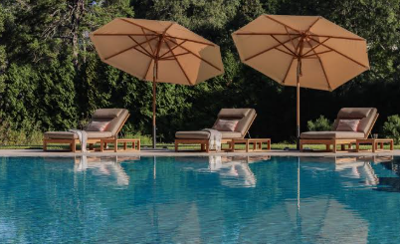

Refined outdoor living depends on materials that perform well and age gracefully. A well-made umbrella provides shade, defines a seating area, and adds structure without blocking the surrounding architecture. Teak contributes warmth through visible grain, balanced color, and substantial joinery. Those qualities pair naturally with stone paving, woven seating, linen cushions, metal fixtures, and mature planting. The result is an outdoor room that feels considered, comfortable, and connected to its setting.
A Material With Presence
Outdoor furnishings influence how people use a terrace, pool deck, garden room, or hospitality area. Well-proportioned teak umbrellas establish a clear focal point while shielding occupants from direct solar exposure. Their timber frames provide visual weight without making a space feel crowded. Clean lines sit comfortably beside loungers, dining tables, planters, and architectural details. That balance gives the arrangement a settled, intentional appearance.
Natural Warmth, Lasting Character
Teak contains dense fibers and naturally occurring oils, properties that help it tolerate moisture, sunlight, and temperature changes. Its surface may retain a honey-colored tone or gradually develop a silver-gray patina. Neither finish looks out of place in a sophisticated setting. Periodic cleaning can preserve the original color, while controlled weathering creates a quieter, more relaxed character.
Proportion Shapes Comfort
Scale affects both shade coverage and movement. A compact square canopy may suit a small café table, while a broad rectangular model can protect a long dining arrangement. Hexagonal forms introduce gentle geometry without sharp visual breaks. Clearance requires equal attention. Guests should move around the pole easily, chairs should open without obstruction, and sightlines should remain clear across the terrace.
A Strong Architectural Accent
Teak frames relate especially well to permanent building materials. Pale limestone emphasizes golden wood tones, while charcoal paving creates a stronger contrast. Stucco walls, brick surfaces, and dense planting offer additional points of connection. The umbrella then reads as part of the architectural composition rather than a temporary accessory. That relationship becomes most effective when frame color, canopy tone, and nearby furnishings share a measured palette.
Hardware Adds Quiet Detail
Small fittings often separate ordinary construction from exceptional work. Marine-grade stainless steel offers a clean appearance and strong resistance to damp conditions. Solid brass introduces warmth and develops character through gradual oxidation. Finials, hubs, and fasteners should relate to nearby lighting, railings, and furniture frames. Repeated metal finishes create continuity, especially across a large patio with several functional zones.
Handcrafted Construction Matters
Construction quality affects stability, operation, and long-term appearance. Precisely milled timber produces cleaner transitions across the pole, ribs, and joints. A dependable opening mechanism simplifies daily use around dining tables and lounge seating. Base selection also deserves attention. Weighted steel models suit fixed positions, while caster-equipped models allow staff or homeowners to adjust coverage as sunlight shifts.
Refinement Through Simplicity
Luxury rarely depends on excessive decoration. A streamlined teak frame can gain distinction through grain, proportion, and surface finish alone. Straight edges, restrained fittings, and balanced canopy lines keep attention on the building and garden. This approach works within modern villas, traditional courtyards, boutique hotels, and private clubs. The umbrella contributes character while leaving the wider composition visually calm.
Placement Supports Social Living
Umbrellas help organize how an outdoor area functions throughout the day. A centered canopy can anchor meals and encourage conversation around a table. Several units may separate dining, reading, and resting areas without the need for walls or screens. Placement should account for seasonal sun angles, door swings, circulation paths, and prevailing breezes. Good positioning improves comfort while preserving openness.
Maintenance Protects Value
Basic care protects both appearance and mechanical performance. Fabric should be cleaned according to its care instructions, then dried completely before storage. Timber requires regular inspection around joints, ribs, and moving components. Protective covers reduce dust and moisture during inactive periods. Seasonal checks can reveal loose fittings, worn cord, or surface damage early, allowing straightforward repairs before more serious deterioration occurs.
Teak umbrellas suit refined outdoor living because they combine dependable shade with material character. Dense timber, thoughtful proportions, durable fabric, and suitable hardware contribute to comfort across residential and hospitality settings. Placement also matters, since coverage should support movement, conversation, and changing sunlight. With sensible maintenance, a teak frame can age beautifully while remaining functional. Beside a pool, dining terrace, or garden lounge, it creates a composed foundation for outdoor life.

(0) comments
We welcome your comments
Log In
Post a comment as Guest
Keep it Clean. Please avoid obscene, vulgar, lewd, racist or sexually-oriented language.
PLEASE TURN OFF YOUR CAPS LOCK.
Don't Threaten. Threats of harming another person will not be tolerated.
Be Truthful. Don't knowingly lie about anyone or anything.
Be Nice. No racism, sexism or any sort of -ism that is degrading to another person.
Be Proactive. Use the 'Report' link on each comment to let us know of abusive posts.
Share with Us. We'd love to hear eyewitness accounts, the history behind an article.