
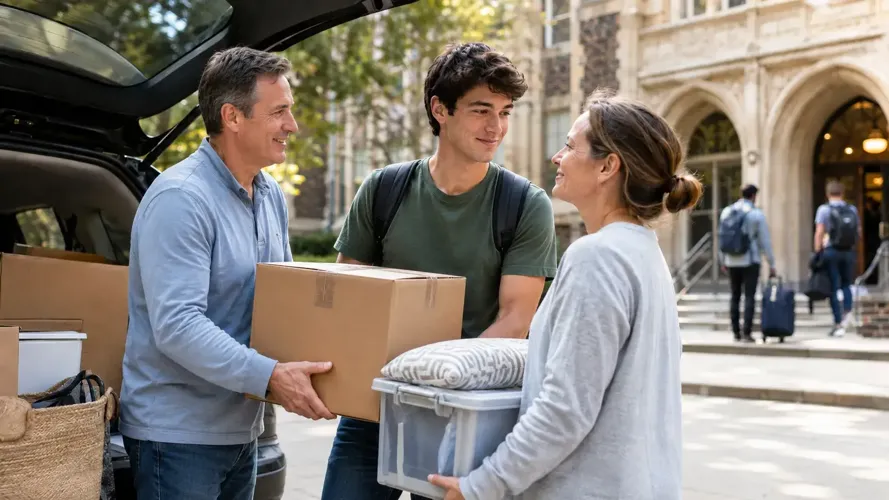
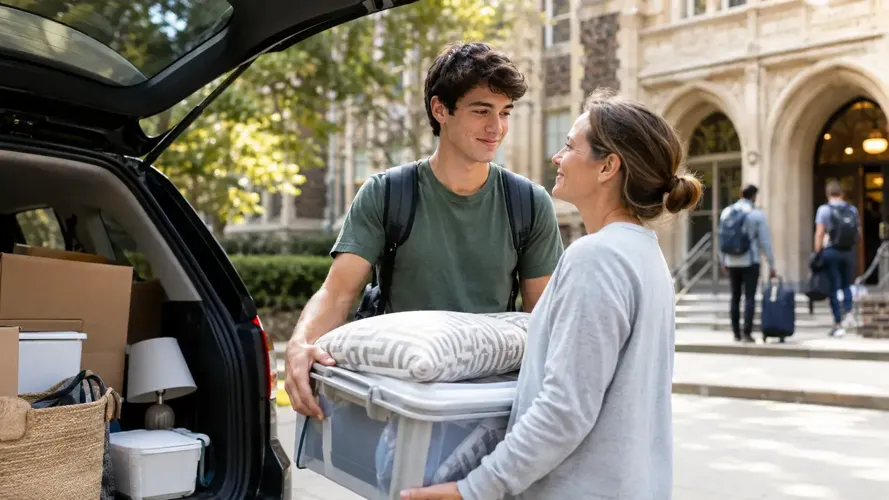

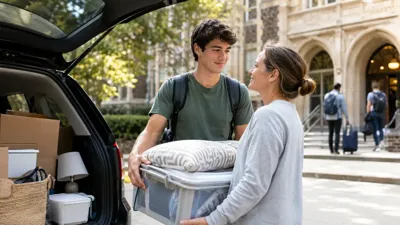

Dropping a child off at college is one of those parenting milestones that manages to be exciting, expensive, chaotic, and emotional all at once. There are sheets to buy, boxes to pack, tuition portals to navigate, and an astonishing number of things that apparently qualify as dorm-room necessities.
But some of the most important college preparation has nothing to do with buying an extra-long twin comforter.
Before the family car joins the parade toward freshman move-in, take care of a few details that can make the transition to college considerably easier. From medical information and money to dorm-room logistics and the inevitable "What if something goes wrong?" conversation, these are five things worth handling before saying goodbye in the residence hall parking lot.
1. Get the Medical Details Sorted Out Before They Get Sick
Nobody wants to spend move-in weekend discussing insurance cards and prescription refills. Unfortunately, discovering that your college student does not know where their insurance information is located while they have a 102-degree fever is considerably less enjoyable.
Make sure your student has digital and physical access to their health insurance information, knows the location and operating hours of the campus health center, and understands what to do when the health center is closed. Refill regular prescriptions before departure and transfer prescriptions to a pharmacy near campus when appropriate. Students should also review their school's immunization requirements. Many colleges require documentation of meningococcal vaccination, and the CDC recommends MenACWY vaccination for first-year college students living in residence halls who are not already up to date.
This is also a good moment to begin shifting some responsibility. Rather than keeping every medical detail in a parental filing cabinet, let your student know what medications they take, how to schedule an appointment, where to find their insurance card, and whom to call if something feels genuinely wrong. Independence is much easier to practice before there is an actual emergency.
2. Have the Money Conversation Nobody Finds Particularly Fun

College creates a strange financial environment. A student can understand advanced calculus while simultaneously discovering that ordering dinner through an app four nights a week is capable of vaporizing an impressive amount of money.
Before move-in, agree on what parents are paying for and what the student is expected to cover. Discuss books, meals outside the dining plan, rideshares, entertainment, clothing, travel home, and genuine emergencies. If the student does not already have an appropriate checking account, this is also the time to establish one and make sure mobile banking, direct deposit, fraud alerts, and account recovery information are working.
Set up a small emergency cushion as well. It does not need to become an unlimited "something came up" fund. It simply needs to cover the sort of unexpected expenses college inevitably produces without forcing everyone into a frantic money transfer at midnight.
There is another paperwork detail parents frequently discover after college begins. Under FERPA, rights involving a student's education records generally transfer to the student when the student turns 18 or enrolls in a postsecondary institution at any age. Parents should therefore discuss ahead of time how the student wants to handle access to academic and financial information rather than assuming Mom or Dad can simply call the college and request it.
3. Shop for the Dorm Room You Actually Have
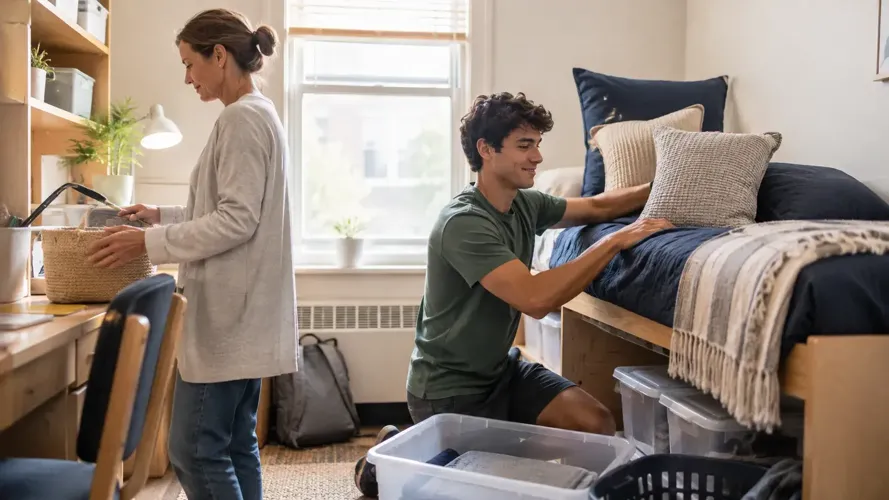
Dorm shopping can get out of hand quickly. A beautifully styled display filled with coordinating storage, furniture, lamps, rugs, appliances, and approximately 47 decorative pillows bears little resemblance to the square footage most freshmen are actually moving into.
Before buying, check the university's official housing information for room dimensions, furniture already provided, approved appliances, prohibited items, and move-in instructions. Residence halls can have surprisingly different rules, even on the same campus. Students should also coordinate with roommates before someone arrives with two mini fridges, three floor lamps, and absolutely no place to put a suitcase.
Then concentrate on items that make everyday life easier. Good bedding, a laundry solution, compact storage, a useful desk setup, chargers, a basic first-aid supply, and a dependable backpack generally earn their space.
For students who will be moving between classes, the library, gym, coffee shops, and weekend trips, the Samsonite Better Than Basic Backpack is particularly practical. A well-designed backpack that can handle a laptop, chargers, notebooks, and everyday necessities will probably be used more frequently than half of the decorative things that seemed essential during dorm shopping.
For more ideas, see our guide to Campus Lifestyle Essentials Every Student Needs for a Successful Year.
4. Set Up the Phone for Campus Life, Not Just Social Life

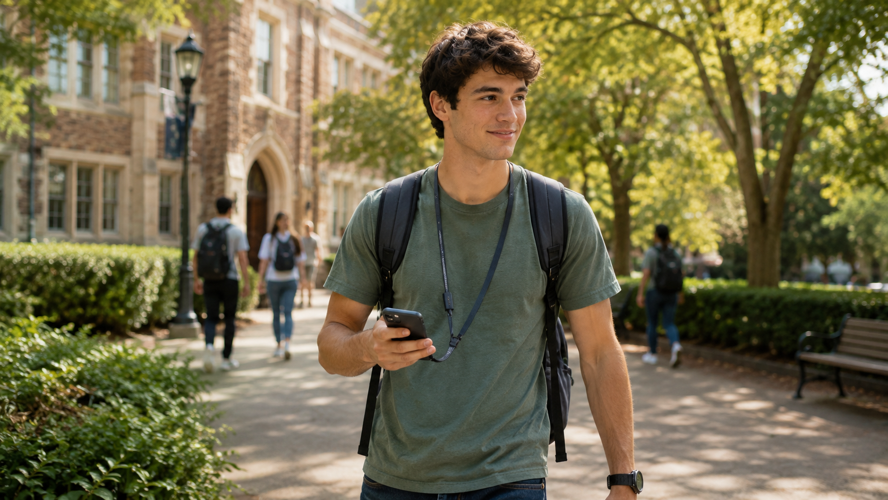
For a college student, a phone is now an identification tool, campus map, payment method, rideshare connection, emergency resource, class organizer, and occasional device for actually calling a parent.
Before move-in, make sure emergency contacts are current, phone tracking and device-recovery settings are configured appropriately, campus emergency-alert notifications are activated, and important numbers are saved. Students should know how to contact campus security, request a late-night escort or shuttle if offered, and get home without depending entirely on a friend or date.
A portable charger belongs in the backpack, especially for students who spend long days away from the dorm. Wearable phone accessories from Bandolier can also make sense for campus life because they keep a phone accessible while leaving hands free for bags, coffee, keys, or the inevitable armful of things being carried across campus.
The goal is not to turn a student's phone into a parental tracking device. It is to make sure the technology they already carry can actually help when plans change.
We recently covered this subject in greater detail in College Safety Essentials Every Student Should Have Before Move-In Day.
5. Talk About What Happens When Things Go Wrong

This may be the most valuable preparation of all, and it costs nothing.
College students are going to make decisions without their parents. Most will be perfectly ordinary. Some will be questionable. Occasionally, something will go genuinely wrong.
Before leaving campus, establish one rule that matters more than curfews, grades, spending limits, or parental disappointment: if you are in trouble, call.
That can mean a car will not start, a roommate situation becomes uncomfortable, someone drinks too much, a ride disappears, a student feels unsafe on a date, anxiety becomes overwhelming, or they simply realize they have made a bad decision and need help getting out of it.
Students are far more likely to make that call when they know the first response will be solving the immediate problem rather than delivering the lecture.
There can be plenty of discussion the following morning.
College is supposed to create independence. The objective before drop-off is not to eliminate every possible problem or make every decision in advance. It is to give students enough information, practical tools, and confidence to handle the smaller problems themselves—and enough trust to ask for help when the problem is bigger than they expected.
Then unload the car, take the obligatory dorm-room photograph, give them a hug, and leave before anyone decides another trip to the home store is necessary.

(0) comments
We welcome your comments
Log In
Post a comment as Guest
Keep it Clean. Please avoid obscene, vulgar, lewd, racist or sexually-oriented language.
PLEASE TURN OFF YOUR CAPS LOCK.
Don't Threaten. Threats of harming another person will not be tolerated.
Be Truthful. Don't knowingly lie about anyone or anything.
Be Nice. No racism, sexism or any sort of -ism that is degrading to another person.
Be Proactive. Use the 'Report' link on each comment to let us know of abusive posts.
Share with Us. We'd love to hear eyewitness accounts, the history behind an article.