
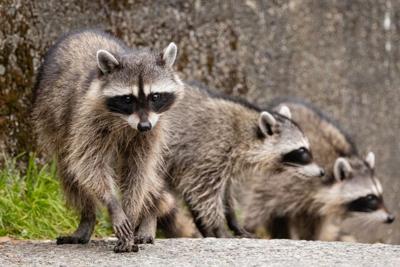

No homeowner wants to wake up in the morning and come face to face with an unwelcome wild animal. And when it’s in the middle of the night, what can we say? It’s ten times worse! So this is why we’re writing this article - showing you how you can protect your San Diego home from wild animals in easy and humane ways. Often, people assume they need complex traps or repairs on their homes to ward off unwanted houseguests, but the reality is much simpler than that. Let us show you how.
1. First of all, you need to understand what animals you’re most likely to deal with.
This will vary from area to area. Some places are more prone to have a snake problem, while others encounter more raccoons. Usually, it’s a brilliant idea to read up a little on the area you’re living in, or at the very least, reach out to some neighbors, to get an idea of what’s fair to expect and what isn’t.
Next, you need to acquaint yourself with common attraction points for the animals in question. For example, raccoons may be attracted by the presence of open trash cans, easily toppled, from which they can get free food. On the other hand, Snakes will be attracted by dark crawl spaces and the presence of other animals, such as rats, which they can feast on.
Finally, understand the type of damage each animal is likely to cause, so you can correctly identify an animal by the damage it has caused. Bats, for example, are known for their droppings (also known as guano), which tend to be corrosive by nature. On the other hand, Rats will chew through things like insulations, structures, and so on. To learn about rat damages in your home, visit rat-damage.com.
2. Call a professional wildlife removal company.
The next step in protecting your home from unwanted wild intruders is to call a wildlife removal company, like MR Wildlife Removal, to inspect your property. This may sound like an unnecessary cost, but trust us, it will pay off in the end! You could use an expert opinion because these people are trained to spot weaknesses and potential attraction points for wildlife. They’ll be able to advise you on how to prevent a wild animal invasion or spot an attack you weren’t aware of.
All in all, it’s a wise idea to have your home regularly inspected by a qualified professional to protect it from wild animals.
3. Fence it up.
Regardless if you’ve chosen to do it yourself or ask for the help of a qualified professional, it’s always a good idea to fence up your property. This will help with many different wild animal problems, from snakes to coyotes and everything in between. Do you want our advice? Opt for a type of fence that keeps out as many different kinds of animals as possible. Ideally, install a wire mesh over your fence to prevent animals like snakes or mice from sneaking through the gaps.
A fence is also ideal for keeping your home and pets safe from coyotes and other larger animals. So especially if you know this type of animal has caused problems in the past around your property, we strongly recommend fencing your property to avoid unwanted wild intruders.
4. Remove sources of food.
It doesn’t matter what type of wild animal you’re worried about; they’ve all got one thing in common - a propensity for food. The large majority of wild animal invasions happen because the animal in question is prowling for sustenance. This is why you want to make your home as unappealing as possible, which means taking open food sources seriously.
Open trash cans are a big favorite, especially among raccoons and rats, so you might want to swap your existing cans for sealable ones that can’t be toppled over or opened quickly. Animals are agile and determined, but usually, if they find it difficult to access your trash, they’ll probably quit and move on to another property.
Consider pet food. It’s not uncommon to leave pet food bowls outdoors overnight, but that’s also one of the leading points of attraction for a wide array of wild animals. And once the animal in question has identified your home as a great canteen, they’ll probably keep returning. So before you go to bed, bring pet food indoors and pick up fallen fruit (if you’ve got fruit trees in your yard).
Lastly, do not forget water! Just like humans, animals need a constant water supply to settle in any one place. So not only are they attracted to readily available sources of food, but also water. This, again, can include pet bowls, birdbaths, ponds, pools, and so on. You’ll want to remove those as well, or limit them as much as possible, particularly at night, to minimize the risk of attracting wild animals.
5. Bring in, natural predators.
Many unwanted wild animals, like rats, mice, squirrels, and even snakes, are less likely to frequent a home that has a pet, mostly a dog or a cat. While there’s much to be said about allowing pets to interact with wild animals, they can make an efficient “watchdog” in some cases. Wild animals aren’t stupid, and if they feel a big dog or cat guards a home, they’ll likely keep away.
However, this shouldn’t mean you rely on your pet to guard your home or kill a wild animal in case of an invasion. Allowing your pet to interact with a wild animal can lead to infection with many severe diseases and can even prove fatal in some cases. If you suspect you’ve got a wild animal on your property, the best thing to do is to call a professional wildlife removal service and allow them to handle it. All the while, make sure to keep your pets and your family safely away from the wild animal!

(0) comments
We welcome your comments
Log In
Post a comment as Guest
Keep it Clean. Please avoid obscene, vulgar, lewd, racist or sexually-oriented language.
PLEASE TURN OFF YOUR CAPS LOCK.
Don't Threaten. Threats of harming another person will not be tolerated.
Be Truthful. Don't knowingly lie about anyone or anything.
Be Nice. No racism, sexism or any sort of -ism that is degrading to another person.
Be Proactive. Use the 'Report' link on each comment to let us know of abusive posts.
Share with Us. We'd love to hear eyewitness accounts, the history behind an article.