

Luxury has always been easy to recognize when it announces itself in beautiful stone, bespoke furniture, handcrafted finishes or a spectacular kitchen. The more interesting version of luxury may be the one a homeowner barely notices: the drawer exactly where the keys naturally land, the coffee station that disappears when breakfast is over and the wardrobe designed around the way someone actually gets dressed.
That idea is changing the conversation around luxury home organization. Rather than treating storage as something to solve after the architecture is finished, designers are increasingly considering cabinetry, closets and built-ins as part of the architecture itself. Rafael Vera, Technical Design Director of Febal Casa USA, says that decision can affect everything from wall placement and ceiling heights to usable counter space and the sightlines through a home.

Good Organization Begins Before the Cabinets Are Installed
When storage is left until the end of a project, the compromises tend to show. Vera explains that freestanding pieces may be squeezed into rooms that were never planned for them, appliances can consume counter space that might have been preserved, and even a tidy room can feel cluttered because everyday belongings never received a deliberate home.
Planning cabinetry from the outset changes the equation. Walls can be designed deeply enough to recess storage, floor-to-ceiling millwork can be incorporated intentionally and open spaces can maintain cleaner visual lines. It is a philosophy supported by broader design trends. The National Kitchen & Bath Association's 2026 Kitchen Trends Report identifies whole-home continuity, personalized design and storage maximization among the themes shaping today's kitchens. NKBA 2026 Kitchen Trends Report
Open-Plan Homes Need Quiet Architecture
Open-plan living removed many of the boundaries between kitchens, dining rooms and living spaces. That created brighter, more social interiors, but it also gave cabinetry another job: defining where one area ends and another begins without rebuilding the walls homeowners wanted removed.
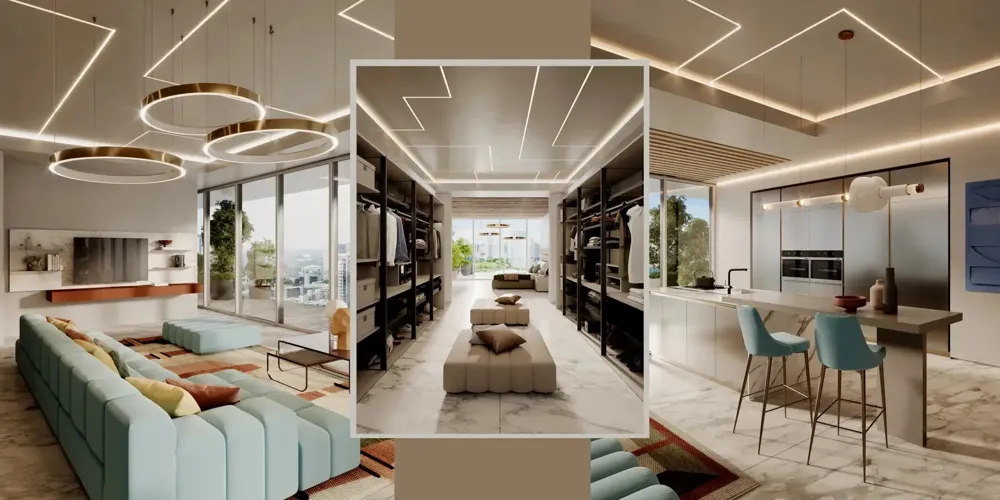
Vera calls cabinetry “the quiet architecture that walls once provided.” A run of millwork can transition from kitchen storage into a media console, while shelving can divide spaces without sacrificing light or views. Repeating wood species, hardware finishes, door profiles and other details allows adjoining areas to remain visually connected even as their functions change. Febal Casa extends that concept throughout the home, connecting kitchens, living areas and bedrooms through a consistent language of materials, finishes and proportions.
The Most Useful Luxury Details Are Often the Least Obvious

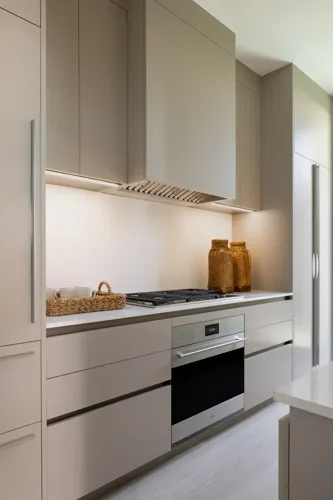
A beautifully organized home is not defined by the number of cabinets it contains. The better question is whether those cabinets anticipate everyday behavior. Vera points to vertical dividers for trays and sheet pans, appliance garages with integrated power and pull-out racks for oils and spices beside the range. Near an entrance, even a drawer designed specifically for keys, sunglasses and mail can keep a kitchen island from becoming the household catch-all.
The same thinking applies to increasingly streamlined kitchens. Hiding appliances and pantry goods behind uninterrupted cabinetry creates a serene architectural look, but concealment becomes frustrating if frequently used items are difficult to reach. Coffee equipment, cutting boards and everyday dishes should remain accessible in a single motion, Vera says, while pocket doors, full-extension hardware and pull-out pantry shelves can make hidden storage genuinely practical. A pristine countertop only feels luxurious if keeping it that way does not become another job.
The Walk-In Closet Is Becoming a Room for Ritual
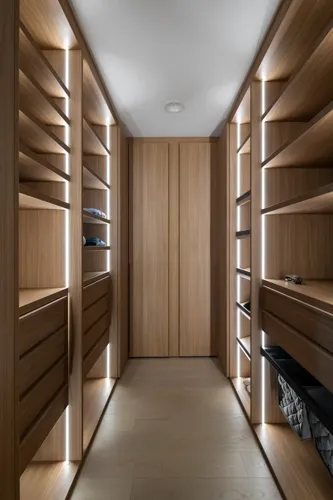
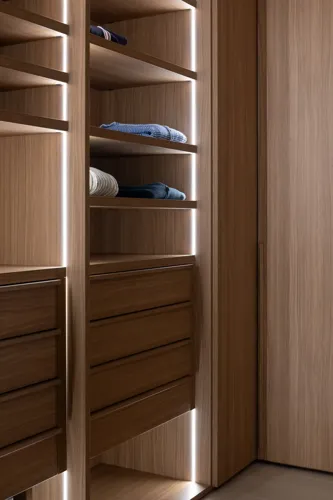
The luxury wardrobe is evolving beyond maximum storage capacity. Vera says clients are increasingly asking how they want to feel when they get dressed rather than simply how much they can fit. That shift is bringing central islands, seating, lined jewelry and watch drawers, boutique-style open hanging and layered lighting into personalized dressing spaces. Couples may also have individual zones that respond to different routines while maintaining one cohesive design language.
His process gets surprisingly practical. Rather than beginning with a clothing inventory alone, Vera asks clients to describe an actual morning. What do they reach for first? Do they prepare an outfit the night before? Do they try on several options? Where does the laundry really end up? Those questions explain why two people with similar wardrobes may need completely different layouts. Personalization, in this case, is less about decorative customization and more about designing around human behavior.
Miami Is Expanding the Idea of Whole-Home Design

At Febal Casa Miami, South Florida living is pushing that thinking beyond traditional interiors. Vera says clients increasingly want cabinetry and storage to flow into outdoor kitchens, covered terraces, pool areas and entertaining spaces, with finishes that relate naturally to those used indoors. Flexible rooms are also becoming more important as homes accommodate guests, work and multigenerational living without making those spaces feel temporary.
Perhaps more significant is the move away from solving storage one room at a time. Homeowners are increasingly considering the pantry, wardrobes, mudroom, laundry room, office and even garage together from the beginning. At the brand's Miami flagship, complete room settings allow clients to explore finishes and modular systems while projects progress from layout and 3D renderings through installation. The advantage is not simply visual consistency. It is the chance to solve dozens of small daily frustrations before they become permanent parts of the house.
The New Status Symbol Is a Home That Works
There will always be room in luxury design for dramatic stone, collectible furniture and beautiful finishes. Yet the homes that feel most considered are often distinguished by something quieter. Their rooms anticipate movement. Frequently used objects are easiest to reach. Items that create visual noise have somewhere logical to disappear. Storage supports the architecture instead of competing with it.
That is what makes this approach to luxury home organization more than another decluttering trend. It replaces the idea of organizing a home after the fact with something more permanent: designing order into the home itself. When architecture supports the way people actually cook, dress, entertain, work and live, organization stops feeling like a task. It simply becomes part of the house.
Related Articles You May Enjoy From FINE Magazine
For more ideas on creating a kitchen that works around everyday life, read How Kitchen Islands with Seating Improve Home Value, which explores the importance of storage, proportion and functionality when planning one of the home's hardest-working features. How Kitchen Islands with Seating Improve Home Value
For a closer look at cabinetry as both a functional and architectural feature, see Why Fine Cabinetry Design Still Defines Beautiful and Functional American Homes. Why Fine Cabinetry Design Still Defines Beautiful and Functional American Homes
(0) comments
We welcome your comments
Log In
Post a comment as Guest
Keep it Clean. Please avoid obscene, vulgar, lewd, racist or sexually-oriented language.
PLEASE TURN OFF YOUR CAPS LOCK.
Don't Threaten. Threats of harming another person will not be tolerated.
Be Truthful. Don't knowingly lie about anyone or anything.
Be Nice. No racism, sexism or any sort of -ism that is degrading to another person.
Be Proactive. Use the 'Report' link on each comment to let us know of abusive posts.
Share with Us. We'd love to hear eyewitness accounts, the history behind an article.