


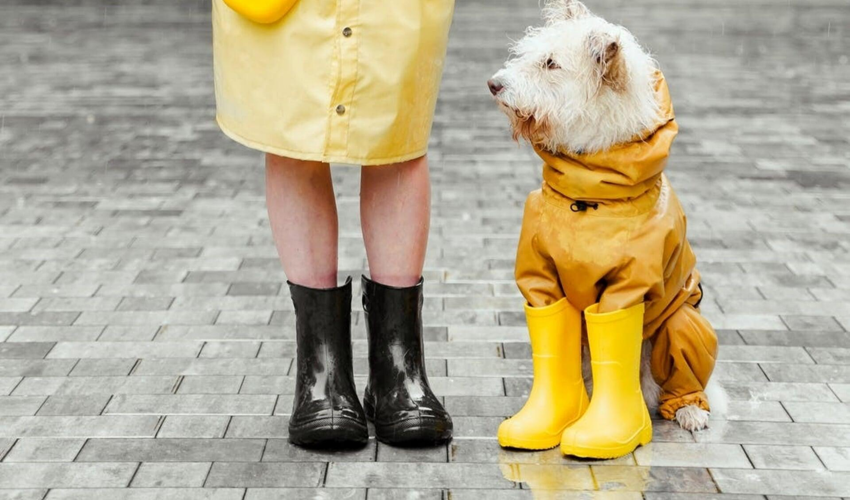

From countryside classics to polished city looks, how British fashion turns unpredictable weather into an opportunity for personal style.
There is a particular kind of elegance to a rainy afternoon in London. The pavements glisten, umbrellas appear almost instinctively, and the streets become a moving collection of trench coats, leather boots, beautifully layered knitwear, and people who seem remarkably unbothered by the weather.
It is a scene that reveals something interesting about British fashion. Where others might regard a rainy forecast as an inconvenience, the British have developed an entire style vocabulary around it. Practical clothing is not something to hide beneath a better outfit. Often, it is the outfit.
From the familiar silhouette of a trench coat to the sturdy Wellington boot, some of Britain's most recognizable fashion pieces began with a purpose far removed from the runway. They were designed to withstand changing weather, muddy countryside paths, and the demands of everyday life. Over time, those practical beginnings became part of an enduring approach to dressing.
The result is a distinctive balance of tradition, personality, and understated polish. And the beauty of British rainy-day fashion is that its lessons travel rather well, even to places where the rain is considerably less predictable.
Why the British Have Made an Art of Dressing for Rain
Britain's relationship with rain has shaped far more than its conversations about the weather. It has influenced the way people dress, the fabrics they favor, and their appreciation for clothing that can move comfortably between different settings.
Consider the trench coat. Its military origins gave it practical details that remain recognizable today: a double-breasted front, adjustable belt, storm flaps, and a shape designed to offer protection without restricting movement. As the Victoria and Albert Museum's exploration of the Burberry trench coat demonstrates, the garment evolved from protective outerwear into one of fashion's most enduring icons.
The waxed cotton jacket tells a different story. Rooted in outdoor pursuits and country living, it offers a more relaxed silhouette, often with roomy pockets, sturdy fastenings, and a naturally weathered appearance that can become more appealing with age. It was never designed to look particularly glamorous, which may be part of its charm.
Then there is the Wellington boot, arguably one of Britain's most recognizable contributions to practical dressing. Once associated primarily with muddy fields, gardens, and country pursuits, wellies have also found their way into festival wardrobes and contemporary casual style.
What connects these pieces is their refusal to choose between usefulness and appearance. The best examples are not fashionable despite their practical qualities. Their practicality is part of what makes them attractive.

From the English Countryside to the City Streets
To understand British rainy-day style, it helps to imagine two very different settings.
The first is a weekend in the English countryside. A waxed jacket is worn over a wool sweater, trousers are tucked into sturdy boots, and an oversized scarf provides warmth as well as a little personality. Nothing looks excessively planned, yet the combination feels completely at ease in its surroundings.
The second is a rainy weekday in London. The waxed jacket gives way to a tailored trench, the heavy boots become polished waterproof ankle boots, and the countryside sweater is replaced by fine knitwear. The setting has changed, but the underlying idea remains remarkably similar.
This ability to balance practicality with personality has influenced generations of British designers and clothing brands. Burberry's Kensington Heritage Trench Coat illustrates the enduring appeal of structured tailoring and shower-resistant cotton gabardine, while the Barbour Classic Beaufort Waxed Jacket represents a more relaxed country tradition, with its practical pockets, corduroy collar, and distinctive waxed finish.
Joules introduced a more playful interpretation. Founded by Tom Joule in 1989, the brand became known for bringing color, distinctive prints, and unexpected details to traditional country clothing. It's printed Wellington boots offer an alternative to the idea that functional clothing must always be subdued.
It was a small but meaningful shift. A raincoat could be practical without being plain, and a pair of waterproof boots could express something about the person wearing them.
That spirit of individuality may be one of the most appealing aspects of British style. Tradition provides the foundation, but it rarely demands complete obedience.
The Secret to Looking Polished Is in the Silhouette
Of course, the difference between a beautifully dressed rainy-day look and an outfit assembled in a hurry often comes down to proportion.
A well-cut raincoat should create a flattering shape without fighting the clothing underneath. A longer trench worn over tailored trousers or straight-leg denim gives an outfit a clean, continuous line, while a shorter jacket can work beautifully with wide-leg pants, skirts, and dresses.
There is also something appealing about allowing a practical outer layer to do much of the styling. A navy raincoat over cream knitwear and dark denim feels quietly sophisticated. A belted trench over a simple dress can make an ordinary afternoon outfit look considerably more intentional.
This is the same principle behind FINE's exploration of fall coats and jackets that make everyday outfits look more polished. The right outerwear should improve what is already in your wardrobe rather than demand an entirely new one.
But appearance is only half the equation.
A traditional cotton trench may be perfectly adequate for light showers while offering limited protection during sustained rain. For wetter climates, a genuinely waterproof coat with a protective membrane or coating and appropriately sealed seams is a more dependable investment.
As REI's guide to choosing rainwear explains, water-resistant clothing can manage light precipitation, while waterproof garments are intended to withstand more demanding conditions. Understanding that distinction prevents an unfortunate discovery halfway through a rainy afternoon.
The cleverest approach is to choose the weather protection you genuinely need, then find a silhouette that complements the rest of your wardrobe.
A Little British Eccentricity Goes a Long Way
British fashion has never been entirely serious, and rainy-day dressing is no exception.
A bright scarf beneath a dark coat, a pair of forest-green Wellington boots, or a surprising patterned lining can give an otherwise understated outfit a distinctive character. These details are often more effective than attempting to make every garment a statement piece.
Imagine a classic camel trench worn with dark trousers and a fine black sweater. The combination is elegant but familiar. Add a beautifully patterned silk scarf, perhaps in burgundy and olive, and suddenly the entire look feels more personal.
Accessories have a remarkable ability to change the character of familiar clothing without requiring an entirely new wardrobe. FINE explores this idea further in its feature on winter accessories that instantly elevate an outfit.
The same principle applies to footwear.
Traditional knee-high wellies are perfectly suited to muddy walks, wet gardens, and countryside weekends, but they are not always the most practical choice for city life. A sleek waterproof ankle boot, a carefully designed rubber Chelsea boot, or another weather-ready style with reliable traction can offer a more versatile alternative.
Color deserves consideration, too. Deep burgundy, chocolate brown, olive green, and navy work particularly well with the earthy palette associated with British country dressing. Brighter shades can be equally appealing when used sparingly.
The trick is knowing when to stop. A patterned raincoat, colorful boots, printed umbrella, and oversized scarf can become rather enthusiastic company when they all arrive together.
A little eccentricity is charming. Too much, and the outfit starts competing with the weather for attention.

Making British Rainy-Day Style Your Own
The most useful thing about British-inspired dressing is that it does not require living in Britain.
A coastal California wardrobe, for example, may have little need for heavy insulated rainwear, but a lightweight trench, breathable waterproof jacket, and reliable boots can still be valuable during the wetter months. In a colder, rainier region, the priorities change toward more substantial weather protection and adaptable layering.
The important thing is to dress for the climate you actually experience rather than an imagined afternoon wandering through the English countryside.
Layers play a particularly useful role. A fine-gauge sweater beneath a raincoat provides comfort without unnecessary bulk, while a breathable base layer can be more pleasant than heavy knitwear when temperatures are mild. Scarves, socks, and footwear can be adjusted according to the weather without changing the entire outfit.
For genuinely cold conditions, insulation becomes a separate consideration. FINE's feature onchoosing the right winter jacket explores the distinction between dressing for rain and protecting yourself from winter temperatures.
Equally important is choosing pieces that work beyond a single season. A beautifully made raincoat in navy, stone, or olive can complement office clothing, casual weekend outfits, and travel wardrobes. Waterproof boots should be comfortable enough to wear for more than the short walk between a car and a café.
Quality matters, but so does care. Waxed jackets may require periodic rewaxing, while technical rainwear needs cleaning and maintenance according to its fabric and finish. A well-maintained garment is more likely to remain useful and attractive for years.
Perhaps that is the most enduring lesson British style offers: dressing well is less about owning an impressive number of clothes and more about choosing pieces with a purpose.
The FINE Take
There is something refreshing about a fashion tradition that does not require perfect weather to look beautiful.
British rainy-day dressing has always understood that practicality and elegance are not opposites. A carefully chosen coat, comfortable boots, thoughtful layers, and a little personal flair can turn an otherwise inconvenient forecast into part of the day's charm.
The finest wardrobes are built around the lives we actually lead. They accommodate unexpected showers, long walks, changing temperatures, and the occasional afternoon when the weather refuses to cooperate.
And perhaps that is what makes British rainy-day fashion so enduring. It is not concerned with looking perfectly arranged at every moment. It is about being comfortable, prepared, and quietly confident in whatever the day brings.
After all, a little rain should never be enough to ruin a good outfit.


(0) comments
We welcome your comments
Log In
Post a comment as Guest
Keep it Clean. Please avoid obscene, vulgar, lewd, racist or sexually-oriented language.
PLEASE TURN OFF YOUR CAPS LOCK.
Don't Threaten. Threats of harming another person will not be tolerated.
Be Truthful. Don't knowingly lie about anyone or anything.
Be Nice. No racism, sexism or any sort of -ism that is degrading to another person.
Be Proactive. Use the 'Report' link on each comment to let us know of abusive posts.
Share with Us. We'd love to hear eyewitness accounts, the history behind an article.