
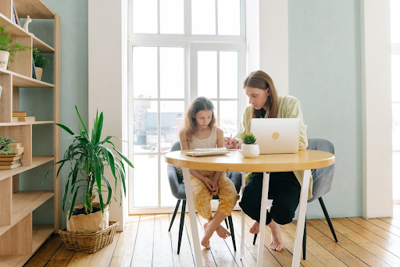
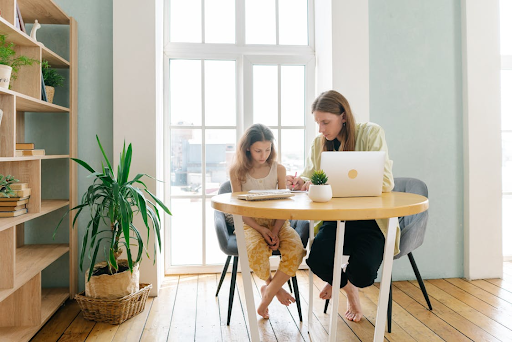
Thinking about setting up a learning nook at home?
Every parent knows those after school battles over homework and productivity.
Kids fidget and complain, don't want to sit still, and can't concentrate.
But what most parents don't realise…
The environment plays a much bigger role in improving those outcomes than simply trying to exert control.
One of the most under appreciated elements of any home is the basic concept of accessibility. This means that if a child is having to constantly change their position or stretch to reach a desk or counter, this could have a subtle impact on their focus. Some households have dealt with this on a basic level that promotes posture as well as their child's interactions with their surroundings. Chairs and custom step stools for children are some of the most common choices
Educational professionals have spent years refining classroom design. Schools already know the secrets of helping children stay focused.
The good news?
Those same principles can be adapted for home use.
What you'll learn:
How Classroom Design Impacts Productivity at Home
The Seating Secret Schools Already Know
Must-Have Elements for an Effective Learning Nook
Lighting and Space Elements
Setting Boundaries and Routines
How Classroom Design Impacts Productivity at Home
Professional educators aren't just randomly placing desks and whiteboards.
They design their classrooms intentionally to maximise student engagement and minimise disruption and distraction.
The same learning principles hold true whether that child is in algebra class or sitting at the kitchen table doing homework.
But here's the problem:
Very few parents give their home study spaces the same consideration or forethought that schools do.
Most homes shoehorn desks and chairs into the nearest available corner, whether that's a dining room chair, the edge of a bed, or a little table wedged next to a wall.
Yet research has repeatedly shown that the environment can directly affect academic outcomes.
In fact, in one article by Inside Higher Ed, 81% of students reported an improvement in concentration and productivity when working in properly designed spaces compared to makeshift arrangements
When it comes to classroom chairs and seating choices, the differences are even more significant. Proper chairs for school classroom environments are purpose built to support body posture, reduce the need to fidget, and keep students engaged for longer periods.
Think about it:
Schools don't just grab any old furniture and dump it in a classroom.
Educators invest in seating that's specifically designed to promote and enhance learning.
Your home study space should be no different.
The Seating Secret Schools Already Know
And this is where most parents go wrong…
They focus on the desk but completely ignore what their children are actually sitting on.
Research shows students in properly fitted, ergonomic chairs remain focused and engaged for significantly longer periods of time than their peers using standard household furniture.
One study reported educators observed a 42% decrease in posture-related distraction after making the switch to chairs with integrated lumbar support.
So why is seating so important?
After 15-20 minutes in an incorrect posture, discomfort starts to set in.
Discomfort leads to fidgeting.
Fidgeting leads to distraction.
Distraction leads to half-finished homework, nagging kids, and a nagging parent.
The classroom seating design principles centre on three key elements:
Height - feet flat on the floor and knees bent at 90 degrees.
Back Support - specially designed lumbar support integrated into the backrest.
Freedom of Movement - The ability to shift and flex a little so kids don't become stiff and uncomfortable while sitting still for longer periods.
Schools get this. That's why they invest in furniture designed for periods of extended focus.
Must-Have Elements for an Effective Learning Nook
A well-designed, functional learning nook doesn't need to cost a fortune.
It simply needs to apply the same principles professional educators rely on.
First and most important:
Desk and seating. Make sure these work together and the other pieces will fall into place.
Your child's elbows should rest naturally at a 90-degree angle when using the desk, and the chair should support the back, keep the feet on the floor and free them from straining to remain upright.
The problem:
Most household chairs are made for adults. And that means they're too high, too deep, and provide zero support for growing children.
Kids slouch, lean forward, and shift in and out of the chair. They can't maintain the correct posture to sit still and be productive for extended periods
The result? A homework assignment that should take 30 minutes can easily become an hour of distraction and frustration.
Educators recommend:
Adjustable seating that will grow with the child.
A defined workspace that's separate from play areas.
Desk height that matches the seating choice.
Storage within easy reach so kids don't need to get up.
Clear mental (and physical) boundary lines between study and relaxation modes.
The psychology behind all of this is very simple. When your child sits in their designated study area, their brain triggers "work time" mode. Their body and mind prepare for productivity and productivity routines become reinforced.
Lighting and Space Elements
Seating is the tip of the iceberg when it comes to classroom design solutions.
Lighting also plays a crucial role in both maintaining concentration and avoiding eye strain. Natural light is always best, but it's not always an option. If the learning space has to use artificial lighting, make sure it's positioned to reduce shadows and glare on the work area.
Temperature also matters:
There's research to show the ideal learning space sits around 22°C. Hotter and students become lethargic. Cooler and they become distracted by the cold.
Noise control is just as important:
Results from controlled studies have found students in quieter spaces performed significantly better than those who worked in noisy conditions. The difference was clear and consistent.
This doesn't mean complete silence is the best approach. In fact, some children find they focus better with some soft background noise. But general household noise (TV, conversations, other siblings playing) all create a cognitive barrier that interferes with learning.
There are easy ways to address each of these factors:
Positioning the nook away from heavy foot traffic areas.
Soft furnishings to absorb noise.
Household quiet hours that can be observed when your child is working.
Noise-cancelling headphones for older children.
Setting Boundaries and Routines
This is something schools are fantastic at but many homes struggle with…
Setting clear activity transitions.
Schools have bells and move from one clearly defined activity to the next. Come to class, sit down, and work begins.
Homes don't usually have those hard and fast transitions. Learning spaces blur into living spaces with that same lack of definition.
The solution:
Define physical and psychological boundaries.
If possible, choose a dedicated space as an exclusive work area. It doesn't need to be an entire room. A well-planned corner with the right seating and a dedicated desk will work just fine.
The trick is consistency. Same desk, same expectations, same routine.
Bringing It All Together
It really isn't that difficult to create an effective learning nook.
Schools have already done all the testing and research. They've experimented with different classroom layouts to identify what maximises student focus, comfort, and engagement.
So here's a quick recap:
Invest in appropriate seating designed for focus and comfort.
Match the desk height to the seating.
Ensure good lighting, comfortable temperature, and minimise distractions.
Set clear boundaries between work and play spaces.
Create a consistent routine around the nook.
The differences between a makeshift, throw-it-together-here homework spot and a well-designed, planned learning nook are real and meaningful.
A better environment improves focus. Better focus leads to faster work. Faster work completion means happier kids and less stressed parents.
And that's a win for everyone.
And it all starts with the seating.
Get that right, and everything else becomes so much easier.

(0) comments
We welcome your comments
Log In
Post a comment as Guest
Keep it Clean. Please avoid obscene, vulgar, lewd, racist or sexually-oriented language.
PLEASE TURN OFF YOUR CAPS LOCK.
Don't Threaten. Threats of harming another person will not be tolerated.
Be Truthful. Don't knowingly lie about anyone or anything.
Be Nice. No racism, sexism or any sort of -ism that is degrading to another person.
Be Proactive. Use the 'Report' link on each comment to let us know of abusive posts.
Share with Us. We'd love to hear eyewitness accounts, the history behind an article.