
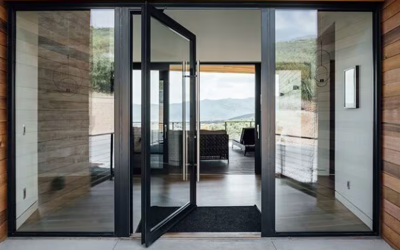

Architects lean toward choices that blend purpose with visual strength. Contemporary homes rely on clean lines and bold gestures, so a door that moves with a smooth, centered motion feels right at home. It sets the stage for a space before anyone steps inside. It creates a sense of flow that pairs well with open layouts and wide sightlines.
In these projects, architects value the flexibility and presence that pivot doors bring to an entryway or interior passage. Their balanced movement feels calm and intentional. They give designers room to shape an entrance that feels generous and inviting, even in compact settings.
A Strong Architectural Statement
A pivot door makes an immediate impression. Its larger proportions create an entrance that feels stately without leaning on ornate details. This gives architects a clean tool to shape character. The simple geometry works well with stone, concrete, metal, or warm wood surfaces.
This type of door draws interest through its motion and balance. It moves from a central axis that feels smooth and steady. Guests sense a controlled shift rather than a basic swing. That motion supports the serene temperament that many contemporary homes strive for.
Flexibility In Size And Proportion
Architects appreciate freedom in dimensions, and these doors open possibilities that standard hinges limit. Their structural design supports wider and taller panels, which lets designers create airy thresholds or dramatic entries that feel suited to the scale of the home. Larger doors also strengthen the indoor-to-outdoor connection.
The proportional range also helps interior spaces. A tall, slim door that pivots can frame a hallway with crisp geometry. A wide version can guide someone into a living room with an inviting sweep. This level of control helps architects shape room transitions that stay true to the home’s overall style.
Versatility With Materials
Architects have broad freedom in selecting materials for these doors. Wood, steel, aluminum, and glass each bring unique tones and textures. That range supports a wide variety of design intentions. The door can appear bold, warm, sleek, or transparent.
Material versatility also helps architects create harmony between the entry and the surrounding architecture. A glass door can draw soft daylight into the foyer. A metal panel can add a refined edge that pairs well with modern cladding. A timber finish can soften minimalist spaces with subtle warmth.
A Supportive Fit For Indoor And Outdoor Transitions
Contemporary homes place strong emphasis on seamless transitions, and pivot doors help support that intention. Their larger openings create a generous flow between patios, courtyards, and interior rooms. The wide clearance helps people move comfortably while keeping the environment visually open.
This type of door also frames outdoor views in a dramatic way. When open, the door becomes part of the surrounding architecture rather than a barrier. It turns circulation zones into meaningful connections that enrich the experience of moving from one area to another.
Architects choose pivot doors because they blend beauty, scale, and ease in a way that suits contemporary homes. They support clean architecture with movement that feels calm and measured. They also give designers freedom to shape distinct entries without crowding a space. Their versatility with materials strengthens harmony across the home. Their sense of presence makes every threshold feel intentional and welcoming.


(0) comments
We welcome your comments
Log In
Post a comment as Guest
Keep it Clean. Please avoid obscene, vulgar, lewd, racist or sexually-oriented language.
PLEASE TURN OFF YOUR CAPS LOCK.
Don't Threaten. Threats of harming another person will not be tolerated.
Be Truthful. Don't knowingly lie about anyone or anything.
Be Nice. No racism, sexism or any sort of -ism that is degrading to another person.
Be Proactive. Use the 'Report' link on each comment to let us know of abusive posts.
Share with Us. We'd love to hear eyewitness accounts, the history behind an article.