

The music industry is one of the hardest businesses to break into and work in. It’s said that if you want to work in it, "don’t quit your day job." Breaking out and creating a name for yourself is the goal musicians strive to achieve, and for Scott Bradlee and his Postmodern Jukebox, it’s happened. When Scott was in the 3rd grade, he was tapped for the part of the piano player in a school play; at the time he only knew one song. Within a couple of years he discovered the sound of New Orleans–style jazz. Before he even knew anything about jazz, he knew it was for him. After honing his craft for a decade, he moved to New York—ready to be discovered.
But the harsh reality of life soon kicked in. He found it was a city where there was not enough work to go around and Jazz musicians were treated little better than the background music they were often asked to play. In 2006, Scott made a video of 1980’s songs played in a Ragtime style and posted it to YouTube. He soon discovered the power of social media.
Still looking for a way to share his passion for jazz, he was playing a gig one night and decided to stream it over the internet. While playing in front of a live crowd, he was also interacting with his online crowd and taking requests from people thousands of miles away.
On the internet, Scott found the platform he was seeking. It was a place where he could engage and interact with people from around the world in realtime and let them influence what he played. It was the perfect position for his improvisational style. At the same time, he was turning his live performances into social media events and gaining new fans. By taking live requests, Scott began to create mash–ups of contemporary tunes and jazz or Ragtime which became the genesis of Postmodern Jukebox.

Post Modern Jukebox
FM: What musicians were your greatest influences when you were growing up?
Scott Bradlee: Rhapsody in Blue (George Gershwin) was the catalyst, but from there, I really got into the New Orleans sound—Jelly Roll Morton, in particular. I used to go to the library and borrow CDs of all those great musicians and then sit by the piano and try to pick out what they were doing. It was time consuming, but it wound up being the perfect education for the stuff that I do.
When did you first conceive the idea of mashing up contemporary pop with arrangements from the 20’s through the 50’s, and from there, how long did it take to form Postmodern Jukebox?
In the early days of my YouTube channel, I played occasional gigs and taught children’s music classes. I was broke and living in Queens when I decided to post the first video [on YouTube]. Only about 100 people saw it, but one of them was award–winning novelist Neil Gaiman. He tweeted about it to his millions–strong Twitter following. Within a week, more people had seen that video than had seen me play live my entire life. The covers gradually picked up steam online, and before long, I was able to focus entirely on them. It only took 7 years.
How do you decide which songs to cover?
Sometimes I’ll have an idea for an arrangement and then go find the musicians and vocalist(s) that I think would be a perfect fit for a song […] Other times, singers will come to me and pitch their ideas and then we’ll make it happen. What I look for is a song that is familiar to a lot of people—that way, the contrast to the original is readily apparent—done in a style that still fits the lyrics or subject matter. For instance, in the "Sweet Child O’ Mine" cover, the framework of the lyrics are similar to the framework of old blues and folk songs: verse, refrain, verse, refrain, etc. So, I brought in Miche Braden to sing it Bessie Smith-style and turned it into a New Orleans blues song about a child.
Who writes the arrangements?
I guide the creative process and typically write a big chunk of the arrangements, but I’m a strong believer in collaboration and incorporating ideas from other talented musicians. So it varies by arrangement. I almost always come up with the reharmonizations and horn section parts, but I like to leave enough space for others to do what they do so well.

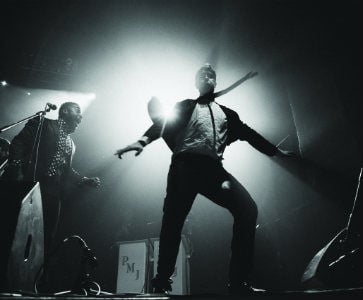
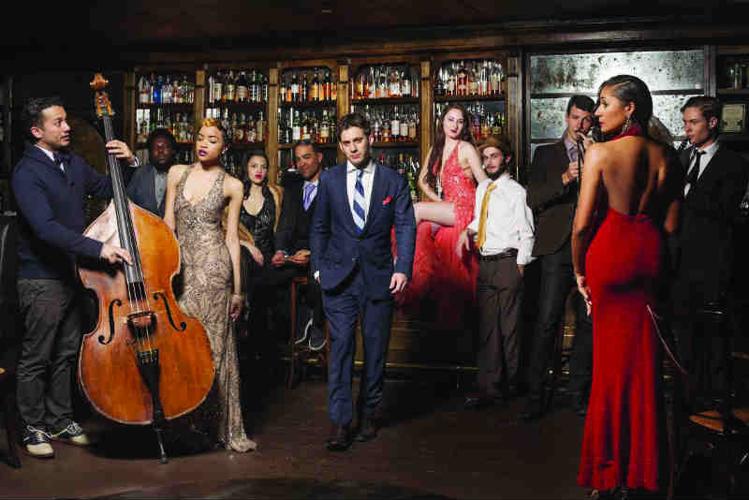
Scott Bradlee and Postmodern Jukebox
PMJ is having a breakout year with four albums released, coming off the first part of a world tour and currently making a lap around the United States. When do you find time to compose new material and hit the studio?
The first part—the idea stage—takes the most time. It’s unpredictable; sometimes I get writer’s block (or cover’s block, or whatever). Writing the arrangements could take a few hours or a few days, depending on what I have in mind. The recording process always takes 2–3 hours, oddly enough.
PJM is now in the top 25 channels on YouTube and climbing. Does this explosive growth surprise you?
I started Postmodern Jukebox when I was living in a basement apartment, and now we have 1.5 million subscribers, all acquired through word–of–mouth sharing through fans. Although the music industry ignored us for a long time, with some even calling the project a "gimmick," they can’t ignore us anymore, now that we’ve had sold out shows all over four continents.
What can we look forward to in 2016?
My goal right now is to bring the Postmodern Jukebox touring act to the entire world, so that everyone can get to experience it. The show is just so FUN—we tour with a dozen amazing musicians that really bring the arrangements to life and I’m really passionate about sharing their talents with the world. We’ve already done that with the videos, so expanding the tours is the next step.
PMJ will play in California in early December with a stop at San Diego’s House Of Blues on the 9th. If you have not heard the amazing sounds of PMJ yet, you’re missing out! Check them out at postmodernjukebox.com, follow them on Facebook and watch their videos on their YouTube channel.

(0) comments
We welcome your comments
Log In
Post a comment as Guest
Keep it Clean. Please avoid obscene, vulgar, lewd, racist or sexually-oriented language.
PLEASE TURN OFF YOUR CAPS LOCK.
Don't Threaten. Threats of harming another person will not be tolerated.
Be Truthful. Don't knowingly lie about anyone or anything.
Be Nice. No racism, sexism or any sort of -ism that is degrading to another person.
Be Proactive. Use the 'Report' link on each comment to let us know of abusive posts.
Share with Us. We'd love to hear eyewitness accounts, the history behind an article.