
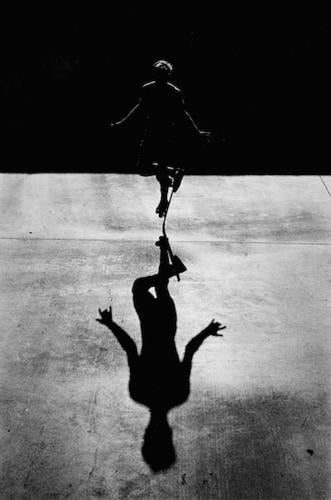
It takes the snap of a shutter and a flash of bright light to producing stunning photos. It’s an art form, something that takes years of practice, an accomplished eye and lessons in tricks of the trade. Nowadays, burgeoning photographers receive lessons in Photoshop and graphic design, turning darkroom manipulation and hard film into a thing of the past. While the digital age has spawned a wave of talented young photographers, there’s something to be said about producing vintage photos the old-school way.
Enter J. Grant Brittain, an accomplished photographer known for producing high-quality skateboard shots. While working at the recently opened Del Mar Skate Ranch in 1979, Brittain accidentally fell in love with photography, and he’s never looked back. Since then, Brittain has become one of the foremost leaders in skateboard photography
and helped launch not one but two magazines devoted to the sport: TransWorld SKATEboarding in 1983 and The Skateboard Mag in April of 2004.
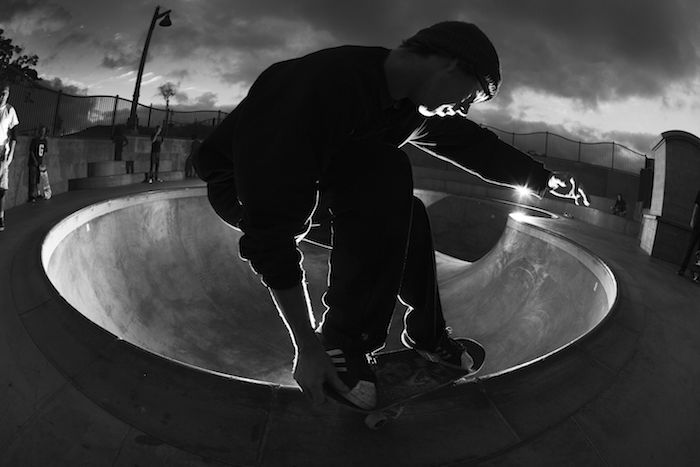
Zane Timpson, 2016
Zane Timpson, 2016
With experience capturing and publishing photos both digitally and on film, Brittain understands the benefits of the digital revolution—especially in publishing for The Skateboard Mag—yet he still finds time to shoot photos on real film and develop them in his own darkroom. Operating out of a studio in Encinitas run by The Artist Odyssey, Brittain works hard to maintain his darkroom—barely the size of a large closet—tucked away in the back of the building. Brittain’s artistic eye and deep love for skateboarding have helped him capture some unforgettable images of professional athletes like Tony Hawk and Jay Adams over the years, both digitally and with real film. Yet despite being a pioneer in the world of skateboard photography, Brittain maintains a humble, relaxed demeanor and a genuine enthusiasm for skating. FINE Magazine sat down with J. Grant Brittain to discuss his artistic beginnings, the digital revolution and why he will always love using hard film.
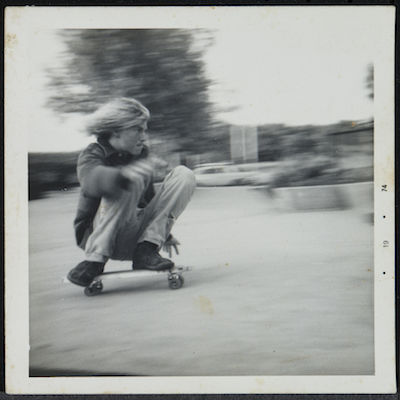
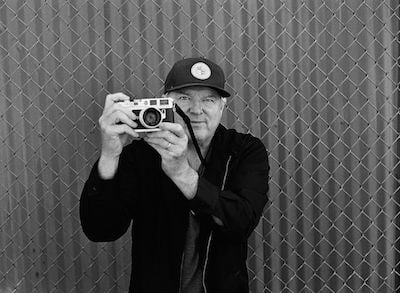
Grant Brittain
Grant Brittain, 1974
How did you get started in photography?
In 1978 I got a job at the Del Mar Skate Ranch, which used to be down by the miniature golf course on Via de la Valle. The skate park had just opened—I lived in Cardiff—and I was 23. My next-door neighbor was a pro skater named Tom Inouye. He got me a job there the second day they opened. About eight months into working there, I shot my first photo with my roommate’s camera. I was just working the snack bar at the skate park and sweeping out the pools, skating there with my friends. So I borrowed my roommate’s camera and shot one of the local skaters named Kyle Jenson, who still skates. That was in 1979, in the film days, with no computers or anything.
About a year into shooting, my next roommate took me into the darkroom and we printed some of my negatives, and that’s when I went, "Wow. I want to do photography." I changed my major [at Palomar College] from art to photography and started shooting. I started with skateboarding and then learned how to shoot other things—portraits, landscapes, things like that.
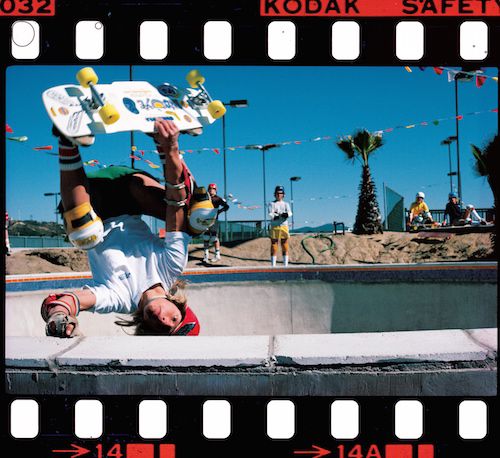
Kyle Jensen, 1979
Kyle Jensen, 1979
When did you decide to try and make a living as a photographer?
There was no way to make a living back in those days. There was Skateboarder Magazine—it turned into Action Now—and they went out of business. Then Thrasher started in 1981, and still there was no such thing as a skateboard photographer that was making money. It wasn’t a job. Because I was living down south—Thrasher was in San Fransisco—they would ask me for photos every now and then. I never got paid, I was never on staff. Just to get your photo in a magazine was cool; there was only one [skateboard] magazine at the time.
In 1983, Larry Balma, who owned Tracker Trucks, started what he said was a newsletter. He asked for photos for
this newsletter because he knew me. I gave him a bunch of photos, and when I went to look at the newsletter, it was actually a 40-something page magazine. That was the beginning of TransWorld SKATEboarding and TransWorld Publications. Slowly, over the next few months, I kept giving photos. I started working on layouts. Everything was done by hand back in those days. It was all cut and paste, exacto knives. It was very hands on, and we were all just learning. We started the magazine in ’83; I quit working at the skate park in ’84. We’d just started TransWorld from scratch.
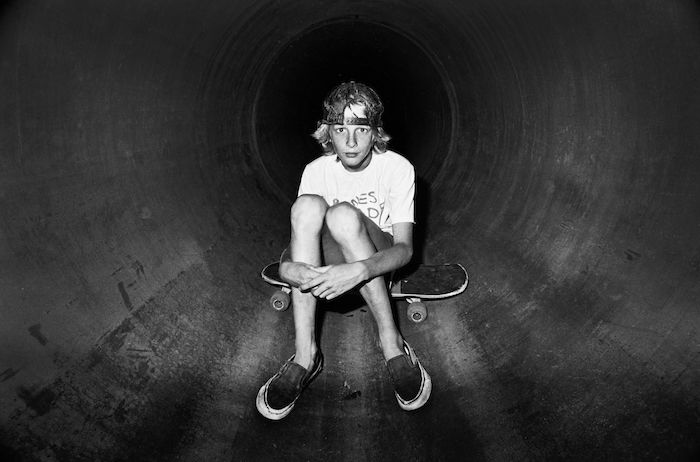
Tony Hawk 1982
Tony Hawk, 1982
You worked through the transition from using actual film to digital photography. What was it like?
It was tough because I have to see everything... The first computers we had were for word processing; we couldn’t do photos on them. Everything switched over to digital photography in 1999, and it was out of necessity because we were wasting so much film on sequences. Skateboarding went to the streets and it got really technical. It was like gymnastics. It was all about starting a run with one trick and coming out in another trick. If you didn’t make the trick, you couldn’t run [the photo].
I think I was the second skate photographer to shoot digital... It became a necessity; it cut our film budget down radically. You shoot twenty rolls of film on one trick. You’re talking $8 a roll back then, and getting it developed [costs more]. You thought, maybe I’ll pull one shot out of this sequence, so you’d get that developed. We’re talking $16 a roll, so the accountants hate you. They go, "Why do you guys shoot so many photos?" But they don’t understand skateboarding.

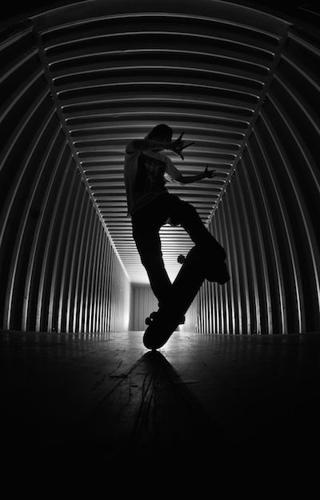
Rodney Mullen, 2013
Rodney Mullen, 2013
What was the biggest challenge in making the switch to digital photography?
There was a time before we switched to digital when we were doing frame grabs off of video. At first I was photographing each frame on a trick, and I’d have 30 shot sequences. You could see all of the pixels, and we were running that. I’d have to shoot vertically with my video camera so I wouldn’t have to turn [the photos]. It was a mess!

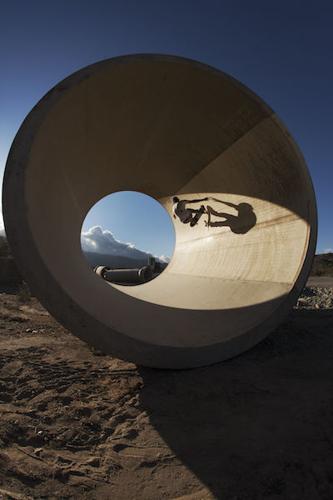
Chris Miller, 2016
Chris Miller, 2016
What equipment do you use now? Do you only do digital photography?
I use Canon 5D Mark II. I shoot film still for certain things, like portraits, and I use the darkroom once every few weeks. You’ve got to mix all of the chemicals—that’s the hard part; you’ve got to make a day of it... [The darkroom] is kind of a lost art. A lot of photographers know how to do it, but they don’t have darkrooms anymore.
I got all of the old darkroom equipment from TransWorld. After 20 years, at the end of 2003, we left TransWorld and started The Skateboard Mag. A few years ago, a friend of mine over there called me about the darkroom that I set up in ’86. They were getting rid of it because they only wanted to do digital, and they asked if I wanted it. I hadn’t printed in 13 years... It’s like riding a bike, once you know how to print you’ve just got to pick it up again. There’s a rhythm in printing.

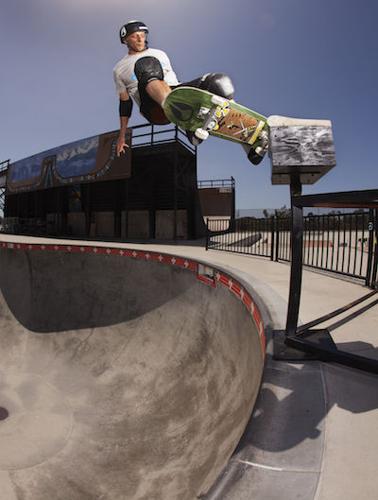
Tony Hawk
Tony Hawk, 2016
How does using the darkroom work?
You put the negative up in the carrier and a light shines through the negative and projects it onto an easel, and you focus it. You’re working under red lights that don’t fog the paper. If you turn on a light when you have the paper out, it’ll be black. So the light shines through the negative and everything that is black on the negative is white—it’s the opposite of a real photo. You can dodge and burn areas [by waving your hands]. Dodge means to keep light out of areas to make them lighter. For burning, [if ] you burn in the edges, you cover up the whole photo except for a corner and you move your hand so it’s a fuzzy burn instead of a line. It’s just like Photoshop, where you can dodge and burn, but you’re using your hands and a timer.
I think there’s an attraction for me to bring the darkroom back. It’s an art. I don’t know if Photoshop is an art. Right now, [the darkroom] has more meaning and validity because you went in the darkroom. It’s like handmade furniture... People like handmade. It’s a digital backlash, too. When I put prints up—real, vintage prints I did in the ‘80s—I’ll put them up on Instagram and people go nuts because it’s from the darkroom.
I sell my vintage stuff in my shop online because people like stuff from the ‘80s. I don’t have ‘70s stuff because I started right at the end of the ‘70s and I wasn’t very good. It took me about a year and a half to really get good so that I was noticing a difference and evolving. I think the darkroom teaches you a lot about photography too, and how light and film work.

Rodney Mullen 1985
Rodney Mullen, 1985
How did you get into your current studio space in Encinitas? Why do you love TAO?
This organization is called TAO, which is The Artist Odyssey. This guy Chris Fessenden was friends with the person that owns the building, and they’ve been trying to sell it or lease it out... There’s been a revolving group of artists [working here]. Some people have moved out, they are interviewing more people to come in... It’s all about having artists working in the same space here, maybe collaborating. It’s about trying to get people together, making it personal and non-digital. Anything goes.
For Related Articles Try:

(0) comments
We welcome your comments
Log In
Post a comment as Guest
Keep it Clean. Please avoid obscene, vulgar, lewd, racist or sexually-oriented language.
PLEASE TURN OFF YOUR CAPS LOCK.
Don't Threaten. Threats of harming another person will not be tolerated.
Be Truthful. Don't knowingly lie about anyone or anything.
Be Nice. No racism, sexism or any sort of -ism that is degrading to another person.
Be Proactive. Use the 'Report' link on each comment to let us know of abusive posts.
Share with Us. We'd love to hear eyewitness accounts, the history behind an article.