
Fall Fashion Week is one of the most highly-anticipated events of the year. Fashion fiends travel to New York, London, Paris, and Milan as designers showcase their latest collections.
Fashion Week has a long and rich history. Formally known as Press Week, Fashion Week began its humble origins in New York City in 1943. At the time, Paris was highly-regarded for setting the fashion trends. Charles Frederick Worth is considered the person to set the foundation for fashion week. Regarded as the Father of Haute Couture, Worth was a notable fashion designer, opening his own business in 1858. According to Laura Cohen, Worth began to show clients "a pre-prepared selection of original designs in Paris," thus forming the idea of a collection. In addition, Cohen claims that Worth showcased his clothing by using live models, not only causing an uproar but also "creating the role of models."
This concept eventually found itself in New York when Enrich Brothers, a shop in New York, decided to host their first fashion show in order to attract their female customers. Shortly thereafter, many department stores followed suit by hosting their own fashion shows. Up until the 1940s, U.S. designers heavily relied on Parisian couture for inspiration. The Nazi occupation of France, however, prevented U.S. journalists from traveling for Paris Fashion Week. Yet, Eleanor Lambert, a fashion publicist for the New York Dress Institute, took this opportunity to showcase American designers by inviting the media to Press Week in New York. At the event was Ruth Finley, who later created the first Fashion Calendar, which detailed the week’s events in a comprehensive guide. In 1962, Lambert founded the Council of Fashion Designers of America (CFDA), with a simple mission: spotlighting designers and putting their name and work on the map.
Eventually, other cities caught on and created their own fashion week, starting with Milan, which was founded in 1958, Paris, founded in 1973, and London, founded in 1984. Known as "the big four," New York, Milan, Paris, and London are considered the fashion capitals of the world. For decades, New York Fashion Week was held in several places, such as lofts, galleries, and nightclubs. That all changed in 1990. During Michael Kors’ show, a piece of plaster fell from the ceiling, prompting the CFDA to take initiative. Led by Fern Mallis, who was then-executive director of the CFDA, she united designers under "tents" at Bryant Park to showcase their work. Eventually, the crowds outgrew, moving the venue to the Lincoln Center in 2010 where the New York Fashion Week was held until 2015. Since then, New York Fashion Week is held throughout the city, allowing designers to choose their venues.
Because of its long history, Fashion Week has undergone various changes. Most recently, technology has helped make Fashion Week more accessible for guests. According to Colleen Kratofil, Burberry’s Fall 2010 Collection became the first "global fashion show," live-streaming the show online, "reaching over 100 million viewers."
In keeping up with making fashion trends accessible, FINE magazine put together some of this fall’s fashion trends.

Womens-Designer-Fashion-Trends-Fall
LEATHER
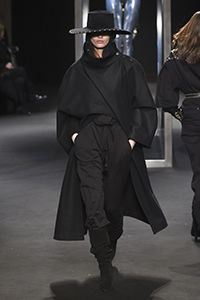
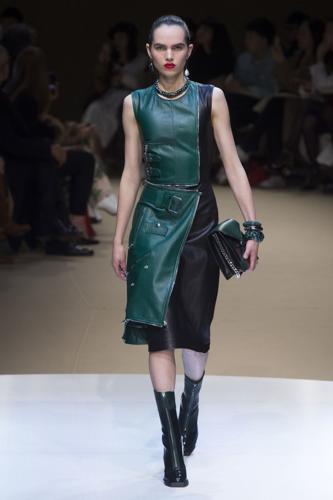
According to Ella Alexander, leather is the most dominant fabric. From jackets, skirts, and boots, leather appeared in various collections and different colors. Alexander McQueen, for instance, featured a black and emerald leather dress. Modeling for Miu Miu, Edie Campbell appeared wearing an amaranth red leather pencil skirt.
The recent trend of pop culture nostalgia may have had played a role in inspiring many designers to use in their collection. As Eric Wilson so eloquently puts it, "Prepare for a black maxi reboot as designers mine the dark underworld of modern corporate America for a look that’s one-part The Matrix and one-part McKinsey & Co."
ANIMAL PRINT

Womens-Designer-Fashion-Trends-Fall
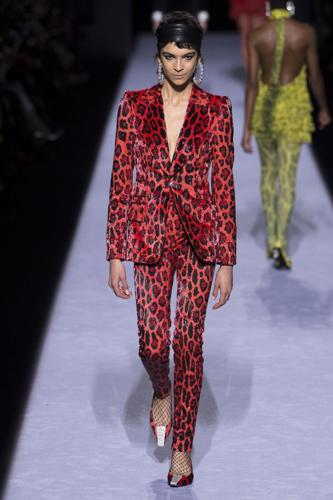
In his Women’s Autumn/Winter 2018 Collection, Tom Ford featured several captivating looks. Ranging from colors as subtle as black to more vibrant colors such as yellow and red; animal print is all about making a statement. Tom Ford is not the only designer that used animal print in their collection. Victoria Beckham also used animal print but in a more understated manner. As part of her this 2018 Ready-to-Wear collection, her Split-Sleeve Fitted Coat, for example, features a leopard print. Made with chenille jacquard material, the coat also features a wide lapel, pockets, and belt, giving off a clean look.
INTO THE WEST
Designers such as Chloé, Coach, and Fendi are contributing to Western wear. Ella Alexander reports that Isabel Marant opened her show with models wearing prairie dresses and cowboy boots. In her collection, Marant also featured a fringe detail to a coat and blouse. Prairie dresses were typically paired with leather boots to complete the look.
STATEMENT TIGHTS
Tom Ford and Victoria Beckham are not the only designers that utilized leggings and tights in their collection. Apart from these two, R13 relied on hosiery to make a statement. As Ellie Pithers states, R13 used hosiery as "a canvas for environmental comment, digitally printed with landscapes to go hand-in-hand with hoodies depicting scenes protesting the construction of the Keystone pipeline in Utah."

(0) comments
We welcome your comments
Log In
Post a comment as Guest
Keep it Clean. Please avoid obscene, vulgar, lewd, racist or sexually-oriented language.
PLEASE TURN OFF YOUR CAPS LOCK.
Don't Threaten. Threats of harming another person will not be tolerated.
Be Truthful. Don't knowingly lie about anyone or anything.
Be Nice. No racism, sexism or any sort of -ism that is degrading to another person.
Be Proactive. Use the 'Report' link on each comment to let us know of abusive posts.
Share with Us. We'd love to hear eyewitness accounts, the history behind an article.