
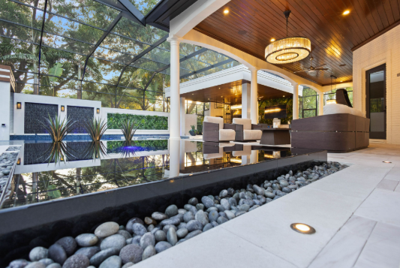

Proper site preparation is the foundation of every high-end outdoor space. Without it, even the most expensive materials and the most talented designers can't save a project from long-term failure. Grading, drainage, soil compaction, and utility planning done right before anything else is installed - that's what separates a backyard that ages gracefully from one that starts falling apart after the first heavy rain season.
Most homeowners spend months choosing pavers, pergola styles, and pool finishes. But the work that happens before any of that - clearing, leveling, drainage mapping, soil testing - is what actually determines whether the finished space will hold up. It's unglamorous, it's mostly invisible once the project is done, and it's the single biggest factor in the quality of the outcome.
What does "site preparation" actually mean?
Site preparation is the process of getting land ready for construction or landscaping. It includes land clearing, grading, compaction, drainage installation, erosion control, and sometimes utility work. Before a single paver gets set or a pool shell gets poured, the ground underneath needs to be properly shaped, stabilized, and drained.
Think of it this way: a luxury outdoor kitchen sitting on improperly graded soil will shift, crack, and settle within a few years. The same kitchen on a properly prepared base can last decades without a single repair call. The difference isn't the kitchen - it's everything that happened underneath it before the build started.
Companies like Site Prep LLC handle exactly this kind of foundational work, taking on the unglamorous but critical steps that make everything above ground possible. Their expertise covers the full range of prep work - from initial land clearing through final grading - so that the decorative and functional elements installed on top actually perform the way they're supposed to.
Why most outdoor projects fail without it
Water is the most common enemy of outdoor spaces, and poor drainage is the most common site prep failure. When a yard isn't properly graded, rainwater pools in the wrong places. That moisture works its way under patios, softens the base beneath pavers, and causes frost heave in colder climates. A patio that looked perfect at installation develops a low spot after one winter. A retaining wall begins to bow because there's nowhere for the water pressure to go.
Soil compaction is the second major issue. Loose or inconsistently compacted soil settles unevenly over time. Structures built on top of it crack, tip, and shift. It's not unusual for homeowners to spend tens of thousands of dollars on landscaping only to see it visibly deteriorate within three or four years - not because the materials were cheap, but because the ground beneath them wasn't prepared to carry the load.
The third issue is slope management. Luxury outdoor spaces often involve multiple levels - terraced gardens, elevated patios, sunken fire pit areas, infinity pool decks. Each of those transitions has to be properly engineered into the terrain from the start. Retrofitting slope corrections after a project is built is extremely expensive and often requires tearing out finished work.
The key steps in professional site preparation
Here's what a proper site prep process looks like before a high-end outdoor project breaks ground:
- Land clearing - removing trees, stumps, brush, and debris that would interfere with construction or cause long-term soil instability;
- Rough grading - shaping the overall terrain to establish correct slope, elevation changes, and water flow direction away from structures;
- Soil testing and amendment - identifying weak or reactive soils and treating them before they become a problem under load;
- Compaction - mechanically compacting sub-base layers to create a stable, consistent foundation for hardscaping and structures;
- Drainage system installation - French drains, catch basins, swales, or dry creek beds depending on the site's water management needs;
- Utility marking and routing - identifying existing underground lines and planning new utility runs before the ground is disturbed;
- Erosion control - stabilizing disturbed soil during the build phase to prevent washout and sediment migration;
- Fine grading - final shaping of the surface before landscaping, hardscaping, or turf installation begins.
Each of these steps builds on the one before it. Skipping or cutting corners on any one of them creates problems that compound over time.
How site prep directly affects the luxury features homeowners want
Pools and spas
A pool shell requires an extremely stable base. Soil that shifts after installation creates stress fractures in concrete or fiberglass, and in severe cases, can crack the shell entirely. Proper excavation, sub-base compaction, and drainage around the pool's perimeter are non-negotiable for a pool that stays watertight for decades.
Natural stone patios and pavers
High-end pavers - bluestone, travertine, flagstone - are heavy and unforgiving. They need a properly compacted gravel base and a sand or concrete setting bed that won't shift. Without correct drainage underneath, the base gets saturated and the stones move. Even a minor variation in the sub-base translates to visible unevenness and tripping hazards on the surface.
Outdoor kitchens and fire features
Outdoor kitchens are essentially small buildings. They're heavy, they have gas and electrical connections, and they generate heat. The pad they sit on needs to be level, stable, and rated for the load. An improperly prepared base leads to cracking countertops, doors that won't close properly, and in worst-case scenarios, gas line stress from structural movement.
Retaining walls
Retaining walls fail when the drainage behind them isn't handled correctly. Hydrostatic pressure - water pressure built up in the soil - is what causes walls to bow, lean, and eventually collapse. Proper backfill drainage, gravel packing, and weep holes have to be built in from the start. A beautiful dry-stack stone wall that wasn't properly drained will look great for two or three seasons and then start moving.
Artificial turf and lawn areas
Even a simple lawn area benefits from proper site prep. Sub-grade grading, drainage, and weed barrier installation determine whether an artificial turf installation stays flat, drains properly after rain, and resists the root intrusion that causes surface irregularities over time.
What happens when homeowners try to skip it
The short answer: they pay twice. The longer answer involves watching a high-end outdoor project age poorly and then deciding whether to live with it or tear it out and start over with the preparation that should have been done the first time.
A common scenario plays out like this: a homeowner gets competitive bids on a patio project. One contractor includes proper grading and drainage in the scope. Another gives a lower number by skipping that work. The homeowner goes with the lower bid. Three years later, they have a patio with visible settlement, pooling water, and a crack running across the middle that the contractor says is a warranty issue - but since that contractor is no longer in business, they're on their own.
The cost to repair or redo improperly prepared outdoor work is typically higher than the cost of doing it right the first time, because now there's finished work on top that has to come out before the underlying problem can be fixed.
How to evaluate a contractor's approach to site prep
When vetting contractors for a major outdoor project, site preparation is one of the clearest ways to tell the difference between someone who knows what they're doing and someone who's focused on getting the job as cheaply as possible.
Ask specifically about their drainage plan. A good contractor will be able to tell you exactly how water will move across the finished site and where it will exit the property. If they can't answer that clearly, that's a red flag. Ask about their compaction methods and what equipment they use. Ask whether they do soil testing. Ask how they handle the transition zones between different surface types.
Working with a dedicated local site preparation expert like «Site Prep» means you're working with someone whose entire business is built around getting groundwork right - not a landscaping or paving company treating prep as a sideline to the work they actually care about. Specialists bring equipment, technique, and experience that generalists simply don't have.
The long-term return on proper site preparation
Luxury outdoor spaces done right add real, measurable value to a property. Real estate studies consistently show that high-quality outdoor living spaces return strong percentages of their cost in home value. But that return depends entirely on the quality and durability of the installation - and that quality starts underground.
A well-prepared site extends the life of every element built on top of it. Pavers stay level. Walls stay plumb. Pool shells stay intact. Drainage works the way it's supposed to. The homeowner gets to enjoy the space instead of managing problems with it.
The contractors and designers who build the best outdoor spaces in any market know this, which is why they either do thorough site prep themselves or work with dedicated prep specialists before they bring their own crews in. The visible, photogenic part of a luxury outdoor project is what gets shared on social media and featured in home tours. But the invisible work - the grading, the drainage, the compaction - is what makes all of it possible and keeps it looking good year after year.
If you're planning a significant outdoor project, don't let a lower bid that skips proper site preparation tempt you. The few thousand dollars saved at the front end of a project rarely justify the repair costs, the frustration, and the shortened lifespan of work that was never set up to succeed.

(0) comments
We welcome your comments
Log In
Post a comment as Guest
Keep it Clean. Please avoid obscene, vulgar, lewd, racist or sexually-oriented language.
PLEASE TURN OFF YOUR CAPS LOCK.
Don't Threaten. Threats of harming another person will not be tolerated.
Be Truthful. Don't knowingly lie about anyone or anything.
Be Nice. No racism, sexism or any sort of -ism that is degrading to another person.
Be Proactive. Use the 'Report' link on each comment to let us know of abusive posts.
Share with Us. We'd love to hear eyewitness accounts, the history behind an article.