
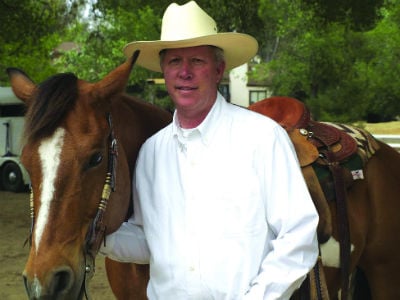
San Diego–based landscape architect Tim Smith has a special niche. He creates spaces for horses and people, and is one of only a few landscape architects in the country who specializes in designing equestrian environments. Equestrian landscaping is something that goes back to Smith’s roots. "Equestrian work is something that I’ve always loved. I grew up in an equestrian family and lived part of my life on a horse farm in Kentucky."
Smith gained practical experience while working at his father’s farm, Pegasus Stud, in Lexington, Kentucky—the renowned equestrian capital of the country. Add to that his experience working at the Keeneland and Fasig–Tipton auctions and studying the many farms for which his father, an equine veterinarian, worked, and you can understand Smith’s passion for the equestrian lifestyle and its landscape.
Today, Wynn–Smith Landscape Architecture, founded by Kelly Wynn and Tim Smith in 1993, keeps it in the family. Smith’s practical experience is compounded by advice from his brother Jeff Smith, a farm manager in Versailles, Kentucky, and his father, Dr. James D. Smith, a retired veterinarian of equine medicine at Hagyard Equine Medical Institute.
While Smith was studying landscape architecture at the University of Arizona, it dawned on him that he had a unique skill. Understanding horses as well as he does, he knew he could provide special insight into the equestrian world that most landscape architects are missing. "And so I realized that I could work with horses, be around horses and also work as a landscape architect," he said. And being a landscape architect gives Smith the opportunity to do what he loves: integrate his love of art, design, the environment and horses, all in a day’s work.

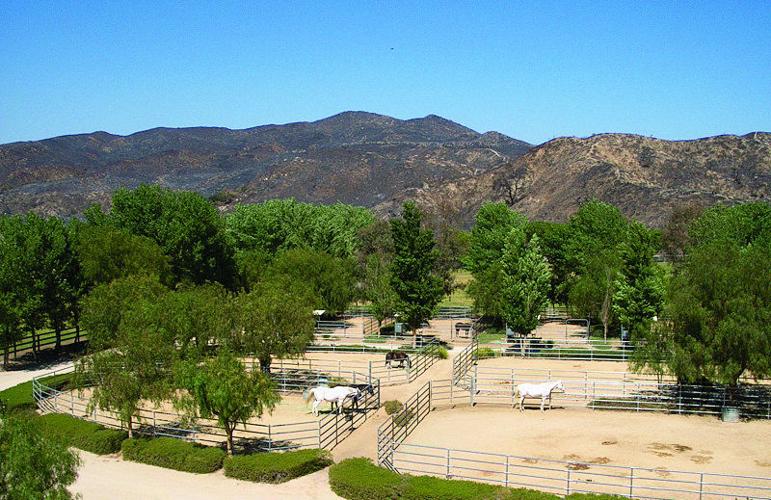
Peacefield Farm Wynn-Smith
"Horse farms are a wonderful opportunity because I get to do large–scale master planning, sometimes a thousand acres, and detailed design of the smaller spaces as well. I get large–scale site planning and the scale of residential all in one."
Designing a horse farm is like designing a little community; you have to understand everything that happens on a horse farm. That usually includes a boarding facility, pastures, paddocks, corrals and roads to plan. Roads have to take into account the circulation of pedestrians, horses, cars, delivery trucks—people who may not always be paying attention. And then there are different types of barns and at least one residence, plus housing for employees on the larger farms.
There are also different scenarios you have to plan for depending on which type of horse is on the farm, as well as their purpose. Is it a boarding facility or a training facility? Is it a public or private boarding place? Is it for racing thoroughbreds or training Arabians? How do you hide some of those necessary, but unattractive, pieces while keeping them conveniently located? And don’t forget about the smell. And poisonous plants. And drinking water.

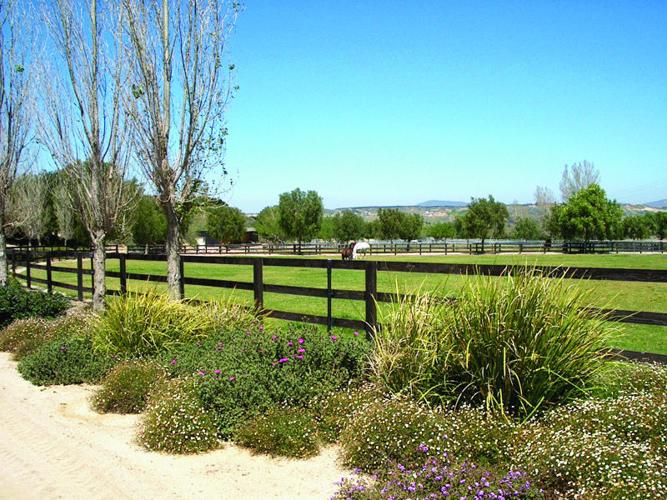
Peacefield Farm Wynn-Smith
Smith realizes that for every horseman, there’s a different opinion about how to do something. On most projects, Smith is the lead design consultant who starts the project, doing all of the sensitive site planning—safety, efficiency and aesthetics, as well as environmental sensitivity—before bringing in architects, engineers, biologists and artists as needed. Throughout the design process, it’s important to Smith that the client remains involved so that the project reflects not only his vision, but meets the needs and desires of the people who will be using it. "As our interaction with the client expands, and after studying the site’s natural characteristics, such as locale, soils, vegetation, terrain, winds, sounds, smells and views, the vision for the project begins to unfold uniquely to that site," says Smith.
Wynn–Smith has long recognized the need for landscape architects who are not only creative with site planning and design, but also understand the behavior and needs of horses and those who work with them. "Each site has its own unique conditions, and the more you appreciate the nuances, the more the project becomes about sculpting than about impacting the land. It’s about working with the natural environment and its natural beauty."
One of the things Smith has found is that often the success of the design isn’t about what he implemented, but what he left out. "Sometimes our clients will tell us they need something and after a good discussion about why, they may realize they don’t need it after all. For example, in areas with great climate, a barn may not even be needed, depending on what type of activities will take place. Barns really aren’t the healthiest places for horses, so if you don’t really have to have them, I suggest solving that need in other ways."
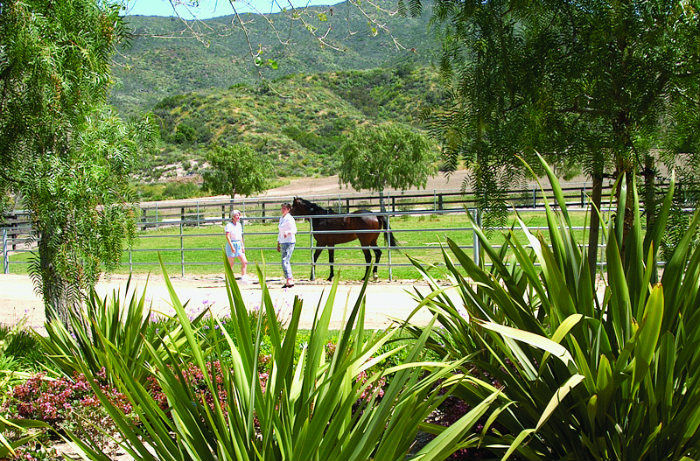
Peacefield Farm Wynn-Smith
A local example of Smith’s work is Peacefield Farm in Temecula, California. Working with owners John and Jerry Amerman and their daughter, Anne Amerman, Wynn–Smith created the original master plan for Peacefield Farm in 1995 and continues to work with them on each new phase of development. Sitting on 63 acres, Peacefield Farm specializes in rehabilitating race and performance horses that come to them from all over the country. Horses stay at Peacefield for two to three months and sometimes longer. Some of these horses even live on the farm year–round.
There are currently 60 horses enjoying the quiet, restful environment at Peacefield. The farm was designed to promote improvement in physical and mental health. Throughout the site you’ll find areas for visitors to stop and enjoy garden spaces while watching their horses. The gardens are botanical displays of native and drought–tolerant plantings fed by efficient irrigation systems. As he grows in his understanding of horses, Smith admits, "I have learned how incredibly sensitive they are. They are so tuned in to us and their surroundings, and we must appreciate that as we create homes for them. I just feel so fortunate (and a great sense of responsibility) that I get to be out in this beautiful environment working with the most incredible animals."


(0) comments
We welcome your comments
Log In
Post a comment as Guest
Keep it Clean. Please avoid obscene, vulgar, lewd, racist or sexually-oriented language.
PLEASE TURN OFF YOUR CAPS LOCK.
Don't Threaten. Threats of harming another person will not be tolerated.
Be Truthful. Don't knowingly lie about anyone or anything.
Be Nice. No racism, sexism or any sort of -ism that is degrading to another person.
Be Proactive. Use the 'Report' link on each comment to let us know of abusive posts.
Share with Us. We'd love to hear eyewitness accounts, the history behind an article.