
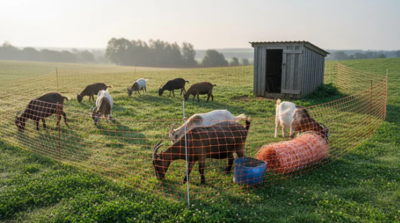

Rotational grazing depends on frequent paddock changes that protect leaf area and keep animals settled. Any barrier must go up quickly, follow uneven ground, and stay upright without heavy hardware. Electric netting meets that job by pairing a visible grid with a brief, memorable deterrent. With a clear plan for move timing and rest periods, it supports steadier pasture recovery, more predictable intake, and fewer chores that strain hands and backs.
Portable Boundaries That Match Pasture Recovery
Pasture growth rarely follows a calendar. An electric netting fence lets managers shift a line based on sward height, soil softness, and herd demand, rather than fixed corners. That freedom helps limit selective grazing, spreads hoof pressure, and keeps green leaf available for regrowth. Over repeated rotations, flexible spacing turns a written grazing plan into a routine that stays realistic.
Clear Visual Barrier Reduces Stress
Animals settle faster when the boundary is easy to read. Netting forms a consistent outline, which young stock can track without confusion. A stable line reduces corner crowding and reduces escape attempts, lowering injury risk. Calm movement supports intake because grazing stays steady rather than being interrupted by pacing. Handlers also gain control, since cattle, sheep, goats, or birds tend to respect a visible limit.
One Tool, Many Species
Different livestock challenge fences in different ways. Netting provides height, structure, and multiple live strands in one piece. That combination helps keep birds in place, guides smaller ruminants, and supports mixed groups with fewer equipment changes. Move speed stays similar across setups, which matters when daily chores stack up. A single system also simplifies training, since animals learn one consistent signal.
Poultry and Small Stock
Poultry benefits from frequent shifts that protect grass cover and limit manure buildup. Small openings help keep birds inside while discouraging common predators. Short stays reduce parasite exposure by limiting time on one patch. Daily lane changes also keep scratch zones from turning into bare soil. For caretakers, a quick roll-and-reset routine makes consistent movement easier to maintain.
Sheep, Goats, and Mixed Groups
Goats test weak lines with steady pressure and quick jumps. Sheep may push under loose strands, especially near feed. Netting adds rigidity plus multiple energized points, which improves respect without constant retraining. Mixed groups often move better with a clear, upright barrier that reduces bunching. That control helps keep grazing even, which protects regrowth and reduces thin spots.
Better Forage Use per Acre
Tighter temporary paddocks help control bite depth and grazing time. Netting makes small allocations practical, which can reduce waste of mature stems and keep diet quality higher. Even use limits patchy overgrazing and supports a more uniform recovery pattern. Planned trampling can leave litter that shades the soil and slows surface drying. Over the course of a season, steadier forage access can support body condition with fewer feed surprises.
Supports Soil Health Through Managed Impact
Soil responds well to short exposure followed by rest. Brief grazing bouts can reduce compaction risk on damp ground, since pressure does not linger. Manure distribution often improves because animals spread out instead of camping near a single spot. More even nutrient return supports microbial activity and reduces fertility streaks. With adequate recovery time, roots extend deeper, and water entry can improve across repeated cycles.
Set Up Speed Lowers Labor Load
A grazing plan fails when moving a fence takes too long. Netting can be carried, set, tensioned, and re-rolled with minimal parts. Less hardware means less lifting, fewer sore shoulders, and fewer pieces to misplace. Fast setup supports consistent timing, even during calving, hay work, or extreme weather. When moves stay on schedule, pasture rest stays protected, and emergencies decline.
A Practical Safety Check for Reliable Performance
Reliable control depends on consistent voltage and clean contact points. Low strands touching tall grass can drain charge, so a quick trim helps. Grounding should match soil moisture, especially during dry spells when the current return weakens. Regular checks reduce weak sections that invite testing. A simple habit, walking the perimeter, confirming charge, and clearing shorts, helps protect animals, handlers, and the grazing plan.
Electric netting supports rotational grazing by combining a clear visual boundary with portable control that makes frequent moves easier to manage. That consistency protects leaf area, encourages more even grazing, and supports soil recovery through planned rest. With routine attention to grounding, vegetation contact, and charge strength, performance stays dependable across seasons. For operations that need flexible paddocks without permanent posts, netting can bring structure to daily management.

(0) comments
We welcome your comments
Log In
Post a comment as Guest
Keep it Clean. Please avoid obscene, vulgar, lewd, racist or sexually-oriented language.
PLEASE TURN OFF YOUR CAPS LOCK.
Don't Threaten. Threats of harming another person will not be tolerated.
Be Truthful. Don't knowingly lie about anyone or anything.
Be Nice. No racism, sexism or any sort of -ism that is degrading to another person.
Be Proactive. Use the 'Report' link on each comment to let us know of abusive posts.
Share with Us. We'd love to hear eyewitness accounts, the history behind an article.