
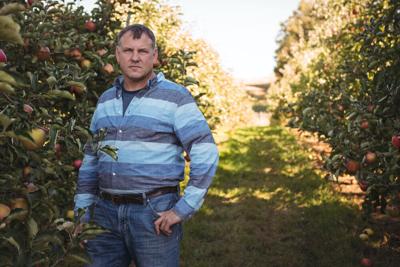

The procedure of starting an orchard starts by design and planting it afterwards. This requires investing time, energy, and money resources and it is crucial to follow the right guidelines. When you use the right tips such as spacing, irrigation and protection systems to plant your orchard, you will get the desired results.
It is important to note that planting fruit trees takes time and if you are not patient enough, it will amount to waste. In this article, we will evaluate the vital procedures that must be followed to design an orchard, and how to plant and maintain it.
DESIGN AN ORCHARD: THE FIRST STEP
You need to make use of a sufficient area in your garden or in a location depending on your preference.
· Locate a spot that offers exposure to sunlight, protection from strong winds, and shade.
· Ensure you take time to check the soil. Good soil is great for cultivation, with an even particle size, and it must be moderate.
· Choose the best varieties of fruit trees.
· Ensure a proper arrangement of the trees as spacing is important when you want to plant these trees.
· If you want to plant crops that will be harvested within a short time, check for features such as climate, resistance of the plants to diseases, and the soil features. It is better to consider pollination if you want to combine a mixture of fruit trees in your orchard.
BEST TIME TO PLANT YOUR ORCHARD
It is advisable to plant an orchard around October and November. You can use potted plants that are around 3-4 years old for easy transplanting.
HOW TO PLANT TREES IN YOUR ORCHARD
· Ensure the land you want to use for your orchard is well cleared and make sure the soil is tilled.
· Apply manure or compost or organic fertilizer after using a basal dressing along the orchard rows.
· If required, you can install support poles for shade, anti-hail and anti-insect netting.
· Dig a deep hole at least 50 cm wide for each fruit tree, and ensure the excavated topsoil is separated from the deeper soil.
· You can go ahead to insert the plant and cover the roots with the soil you dug out, and mix the topsoil with the compost or fertilizer.
· Use a brace into the ground if you plant a whip to serve as a guard for the plant. Do not forget to add water to the plant properly.
· Fill the hole with the residual soil.
IRRIGATION IN YOUR ORCHARD
If your orchard is a big and expansive one, it is better to install a drip irrigation system. Your irrigation system could be underground or placed on the surface of the earth. However, small orchard owners with few fruit trees can use a hosepipe or watering can.
MAINTAINING YOUR ORCHARD
Apply mulch at the base of fruit trees after planting your orchard by spreading mulch sheets around the tree stems to a height of around 1m. When you apply mulch, it ensures your plants are not disturbed by weeds, and your plants get the water required for their growth. Mulch also makes the soil around your plant trees softer and promotes grass cover-cropping which nourishes the soil with organic matter.
When the climate is warm, make sure you clean the inter-rows by mowing the grass with a riding lawn mower. To make sure that you can keep working throughout the day and even during those hours when the sun is the strongest, you should definitely install a riding lawn mower canopy.
MONITORING
As a steward taking care of the orchard, your responsibility is to walk through the orchard numerous times within a week during the growing season to monitor the tree plants. This will give you an idea of the growth pattern of the plants and inform you of the next steps to take.
WATERING
It is important to apply to your plant trees in the orchard regularly. When there is a shortage of rainfall during the summer season, it is advisable to water your plants. During the first year of planting trees cultivated in the spring season, ensure you apply water for the first three week, and apply water twice in a week for the second three weeks. However, plant trees cultivated during the fall season should be watered twice a week till the end of November.
WEEDING
Most weeds compete with the orchard plants for nutrients, light, and water. You need to ensure that weeds are properly uprooted from their roots so your plants can thrive.
PRUNING
Pruning can be defined as the control of plant growth by cutting and removing tree branches. Good pruning ensures an improved production and makes your orchard plants resistant to pests and diseases. However, it is important to prune your fruit trees in the later winter season as it helps your trees to have excellent structure in their first few years of cultivation.
PEST & DISEASE CONTROL
It is crucial to monitor the growth of your orchard trees by eliminating pests and diseases. However, you need to understand that your orchard will be a breeding ground for insects. Talk to an expert before you apply pesticides on your farm.
You can use your riding lawn mower with canopy to work on your orchard. Having this equipment helps you stay under a shade while you work and protect your skin from the sunlight. It is a cost-effective tool that ensures efficiency and makes you feel comfortable.

(0) comments
We welcome your comments
Log In
Post a comment as Guest
Keep it Clean. Please avoid obscene, vulgar, lewd, racist or sexually-oriented language.
PLEASE TURN OFF YOUR CAPS LOCK.
Don't Threaten. Threats of harming another person will not be tolerated.
Be Truthful. Don't knowingly lie about anyone or anything.
Be Nice. No racism, sexism or any sort of -ism that is degrading to another person.
Be Proactive. Use the 'Report' link on each comment to let us know of abusive posts.
Share with Us. We'd love to hear eyewitness accounts, the history behind an article.