
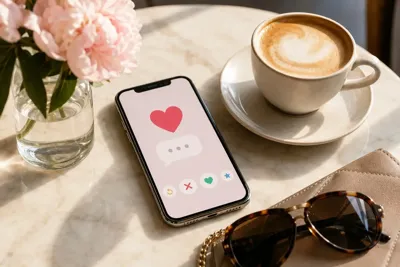

Online dating has introduced millions of people to partners they might never have encountered at work, through friends, or while pretending to compare heirloom tomatoes at the farmers market. It has also created an entirely new category of social confusion.
How quickly should you respond? Is “hey” a sufficient opening line? When does enthusiasm become excessive? At what point should two people stop exchanging messages and make actual plans?
The technology may be modern, but good dating etiquette remains surprisingly traditional. Show interest without applying pressure. Ask questions without conducting an interview. Be honest about what you want, and remember that a match is a person—not another profile waiting to be evaluated.
Online dating works best when messaging creates enough comfort and curiosity to move the connection forward. It should not become an endless audition, a guessing game, or a part-time administrative position.
Do Read the Profile Before Sending a Message
A thoughtful opening message does not need to be elaborate. It simply needs to show that you noticed something beyond the first photograph.
Mention the restaurant they visited, the dog attempting to steal the spotlight, the book on their nightstand, or the place they would return to tomorrow. A specific question gives the other person something meaningful to answer and immediately separates your message from the parade of “hi,” “beautiful,” and inexplicable flame emojis.
Avoid trying too hard to sound clever. A natural question about something in the profile is usually more attractive than a rehearsed line that has probably been sent to several other people that evening.
Don’t Open With a Comment About Their Body
Compliments are welcome. Immediate evaluations of someone’s body generally are not.
There is a considerable difference between saying, “You have a wonderful smile,” and beginning a conversation with an intimate observation that would feel inappropriate coming from a stranger in a hotel elevator. Attraction may be part of the reason people use dating apps, but respect should arrive before familiarity.
The same rule applies to sexual jokes, explicit questions, and unsolicited photographs. A match does not equal consent, and flirtation should develop mutually rather than being imposed on someone before a conversation has begun.
Do Ask Questions That Invite a Real Answer
The most successful messages create room for personality. Instead of moving mechanically through occupation, hometown, siblings, and preferred brunch beverage, ask questions that reveal how someone thinks or lives.
“What has been the best part of your summer?” will usually produce a better conversation than “What do you do?” Asking what someone is looking forward to, what destination surprised them, or what they enjoy doing when they have an entirely free day provides more insight than a rapid exchange of résumé facts.
Questions should also be reciprocal. Do not make the other person carry the conversation while offering one-word answers and no curiosity in return. Interest is demonstrated through participation.
Don’t Turn Messaging Into an Interview
Curiosity is appealing. Interrogation is exhausting.
Sending five questions at once can make a promising conversation feel like an application process. Ask one or two things, respond to the answer, and allow the exchange to develop naturally. People want to feel understood, not assessed for immediate advancement to the semifinal round.
It is equally important to share something about yourself. Good conversation has rhythm: a question, an answer, a related detail, perhaps a little humor, and then another opening. It should feel less like gathering evidence and more like discovering whether two personalities enjoy being in the same room—even when that room is temporarily digital.
Do Match the Other Person’s Communication Pace
There is no universal rule requiring a response within a particular number of minutes. Adults work, travel, exercise, sleep, care for families, and occasionally place their phones facedown.
Respond when you have time to contribute something worthwhile. Deliberately waiting three hours because a dating expert on social media declared it mysterious is unnecessary. So is sending four follow-up messages because someone has not answered since lunch.
Pay attention to the general pattern. When both people reply thoughtfully and initiate conversations, interest is probably mutual. When one person repeatedly disappears, answers minimally, or never asks a question, the connection may not have enough momentum to pursue.
Clarity is usually kinder than strategy.
Don’t Demand Constant Access
Matching with someone does not create an obligation to provide continuous updates, immediate replies, or explanations for every period of silence.
Messages such as “Where did you go?” or “I guess you’re too busy for me” can feel controlling when two people have barely exchanged surnames. Early communication should leave room for anticipation, not create pressure to prove interest every hour.
A person who respects your time before the first date is more likely to respect it afterward. The reverse is also worth noticing.
Do Move Toward Meeting in Person
Messaging should help determine whether an in-person meeting feels worthwhile and comfortable. It should not continue indefinitely because both people are waiting for the other to make a decision.
Once conversation is flowing, suggest a simple plan: coffee, a drink, a walk through a busy public area, or another low-pressure activity. Be specific enough to make the invitation real.
“Would you like to meet for coffee Saturday morning?” is easier to answer than “We should hang out sometime.”
Some people prefer a telephone or video call first. That can be a useful middle step, particularly when distance, busy schedules, or personal safety concerns make an immediate meeting impractical. Still, repeated cancellations and elaborate reasons someone can never appear on camera or meet in person deserve caution.
Don’t Create False Intimacy
Frequent messaging can make a new connection feel more established than it is. Within a few days, two people may know each other’s childhood ambitions, favorite meals, former relationship disappointments, and preferred side of the bed—without having established whether they enjoy ten minutes together in person.
Stay open, but keep the relationship in proportion. Affection that escalates dramatically before meeting can be emotionally manipulative, particularly when paired with declarations of destiny, urgent personal crises, or requests for financial help.
The Federal Trade Commission’s guidance on romance scams is unequivocal: never send money or gifts to an online romantic interest you have not met in person. Requests involving wire transfers, gift cards, payment apps, cryptocurrency, medical emergencies, travel expenses, or investment opportunities should end the conversation rather than deepen it.
Do Be Honest About Your Intentions
Not every person on a dating app wants the same thing. Some are looking for marriage, others want companionship, and some are interested in casual dating.
No preference is automatically wrong. Misrepresenting that preference is.
You do not need to announce a five-year relationship plan in your first message, but you should avoid pretending to seek commitment when you know that is not your intention. Honest expectations help both people decide whether continuing makes sense.
For a broader look at modern dating fatigue and intentional connection, read Love in the Age of the Swipe.
Don’t Ghost When a Brief Message Will Do
Not every conversation requires a formal closing statement. If two people exchanged three forgettable messages six weeks ago, neither needs to commission a farewell address.
Once there has been consistent conversation, a phone call, or a date, however, disappearing without explanation is usually unnecessary. A short message is sufficient:
“I enjoyed getting to know you, but I don’t think we’re the right match. I wish you well.”
Avoid inventing excuses that invite negotiation. Do not say you are “too busy right now” when you mean you are not interested. Polite directness may be briefly disappointing, but ambiguity often keeps someone waiting much longer.
Do Protect Your Privacy and Personal Safety
Do not rush to share your home address, workplace details, financial information, passwords, or intimate photographs. Keep early conversations on the dating platform until you feel comfortable moving elsewhere, and report behavior that appears threatening, fraudulent, or abusive.
When meeting, choose a public place, arrange your own transportation, and tell a trusted person where you will be. RAINN’s safer dating recommendations also suggest sharing your plans and maintaining control over when and how you leave.
These precautions are not an accusation against the person you are meeting. They are sensible habits for spending time with someone you do not yet know.
Remember That Good Etiquette Is Really Good Judgment
Online dating etiquette is not about following arbitrary rules or manufacturing the perfect level of availability. It is about making digital interaction feel human.
Read before responding. Show genuine curiosity. Respect boundaries. Communicate clearly. Know when to suggest meeting, when to step back, and when to end the conversation altogether.
The right message cannot manufacture compatibility, but it can reveal consideration, confidence, humor, and emotional maturity. Those qualities remain attractive whether two people meet through an app, at a dinner party, or while reaching for the same suspiciously expensive tomatoes.
Related Articles You May Enjoy From FINE Magazine
- Love in the Age of the Swipe
- How to Narrow Down Your Relationship Search
- Date Night Ideas You’re Going to Love
(0) comments
We welcome your comments
Log In
Post a comment as Guest
Keep it Clean. Please avoid obscene, vulgar, lewd, racist or sexually-oriented language.
PLEASE TURN OFF YOUR CAPS LOCK.
Don't Threaten. Threats of harming another person will not be tolerated.
Be Truthful. Don't knowingly lie about anyone or anything.
Be Nice. No racism, sexism or any sort of -ism that is degrading to another person.
Be Proactive. Use the 'Report' link on each comment to let us know of abusive posts.
Share with Us. We'd love to hear eyewitness accounts, the history behind an article.