
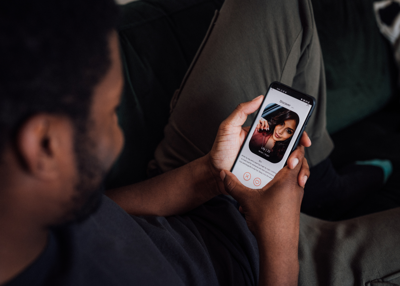

Why More Singles Are Logging Off Dating Apps This Valentine’s Day
Valentine’s Day has always carried expectations. Candlelit dinners, grand gestures, carefully chosen words the cultural script is familiar. Yet in the era of dating apps, the holiday arrives with something new: a quiet pressure created not by one person, but by thousands of potential ones.
Instead of wondering whether someone special will call, many singles now wonder why no one meaningful has stayed.
Clinicians say this shift is contributing to a growing emotional pattern known as dating app burnout, a cycle of hope, scrolling, matching, and disappointment that leaves people feeling more exhausted than connected.
When Choice Stops Feeling Romantic
Dating apps promise abundance. In theory, more options should make finding a connection easier. In practice, the constant availability of alternatives can make every interaction feel temporary.
Many users describe a familiar rhythm: conversations fade, matches disappear, and people are “ghosted” without explanation. Over time, the experience becomes less about meeting someone and more about managing rejection in small repeated doses.
Research from Flinders University has found that frequent dating app users report poorer mental well-being than non-users, including higher levels of anxiety and depressive symptoms. The emotional fatigue is not usually caused by one negative experience, but by the accumulation of many small ones.
The result is a paradox — the search for connection begins to create loneliness.
The Psychology Behind Dating App Burnout
According to Dr. Hannah Nearney, clinical psychiatrist and UK Medical Director at Flow Neuroscience, the problem intensifies around Valentine’s Day because people measure themselves against a cultural timeline.
“When we feel pressure to find connection, we risk entering relationships simply to validate ourselves rather than because they genuinely fulfill us,” she explains.
The behavior often becomes cyclical. A study published in the British Medical Journal found that many users repeatedly delete and reinstall dating apps, a pattern associated with impulsivity and worsening mood. Each return carries renewed optimism, but the repeated resets can reinforce emotional dependence on the platform.
What begins as a tool gradually becomes a source of self-evaluation.
People start asking not “Do I like them?” but “Why wasn’t I chosen?”
Why Holidays Amplify the Feeling
Romantic holidays intensify awareness of relationship status. Social media fills with celebrations, couples become more visible in daily life, and solitude feels more defined.
Some studies even show measurable changes in emotional distress around romantic holidays, suggesting expectations — not just experiences — shape mood.
For dating app users, the contrast can feel sharper. The presence of many potential matches makes the absence of meaningful connection feel personal, even when it isn’t.
Turning Toward Self-Connection
Clinicians are not suggesting people abandon dating entirely. Instead, they encourage stepping back when the process begins to harm well-being.
Dr. Nearney emphasizes that connection should not come at the cost of self-worth. Investing in friendships, hobbies, and real-world interactions often improves emotional resilience far more than continuous swiping.
Healthy relationships tend to form when individuals are not searching for validation, but sharing stability.
That means sometimes the healthiest romantic decision is temporary disengagement — allowing interest to return naturally rather than compulsively.
Redefining Valentine’s Day
The holiday traditionally celebrates romantic love, yet its deeper meaning is connection in all forms. For many people, this year may be less about finding someone new and more about rebalancing expectations.
A dinner with friends, time offline, creative pursuits, or simply a quieter evening can shift the day from evaluation to appreciation.
The modern dating landscape offers unprecedented access to people, but emotional closeness still follows older rules: patience, presence, and authenticity.
In a culture that encourages constant searching, choosing to pause can be its own kind of progress — a reminder that love is not only discovered through matches, but also through understanding what makes us feel whole before we share it.
(0) comments
We welcome your comments
Log In
Post a comment as Guest
Keep it Clean. Please avoid obscene, vulgar, lewd, racist or sexually-oriented language.
PLEASE TURN OFF YOUR CAPS LOCK.
Don't Threaten. Threats of harming another person will not be tolerated.
Be Truthful. Don't knowingly lie about anyone or anything.
Be Nice. No racism, sexism or any sort of -ism that is degrading to another person.
Be Proactive. Use the 'Report' link on each comment to let us know of abusive posts.
Share with Us. We'd love to hear eyewitness accounts, the history behind an article.