
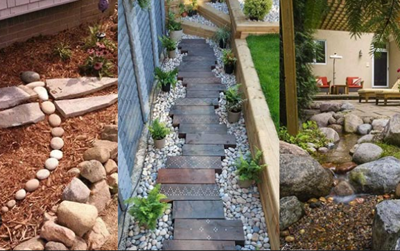

In Texas, where landscapes range from the arid Hill Country to humid coastal plains, incorporating rocks and stones into front yards enhances durability and visual interest while addressing challenges like heat, drought, and soil erosion. These natural elements create low-maintenance features that thrive in the state's varied climates, from Zone 8a in Central Texas to Zone 9 along the Gulf. Homeowners in areas like Houston, Dallas, and Austin use stones for pathways that guide visitors, borders that define garden beds, and accents that add texture and height.
This approach not only boosts curb appeal but also promotes water conservation, as rocks reduce the need for irrigation compared to turf. With native materials like limestone and sandstone readily available, these designs integrate seamlessly with local flora, supporting pollinators and reducing upkeep.
Pathway Designs for Functional and Aesthetic Flow
Pathways made from stones provide practical routes while elevating a yard's entrance. In Texas, flagstone is a popular choice for its flat, irregular shapes that form stable walkways resistant to the state's expansive clay soils and heavy rains. For a rustic look in North Texas homes, large flagstones laid closely connect driveways to front doors, often spaced 18-24 inches apart to allow grass or groundcover to peek through, blending hardscape with greenery. In Southeast Texas, where humidity is high, pea gravel combined with stepping stones offers drainage and prevents mud, with gravel depths of 2-4 inches stabilizing the path.
Decomposed granite, common in Central Texas, creates fine-textured paths that compact well under foot traffic, ideal for curving designs around native plants like yucca or agave. For added appeal, edge these paths with larger cobbles to prevent material spread, ensuring longevity in freeze-thaw cycles experienced in Panhandle regions. These selections guide movement naturally, drawing eyes toward the home while withstanding summer highs over 100 degrees Fahrenheit.
Border Ideas to Define and Enhance Garden Beds
Borders using rocks and stones create clean separations between lawns, beds, and hardscapes, adding structure to Texas yards prone to weed invasion. Moss rock, with its natural lichen-covered surface, stacks into low walls 6-12 inches high for a native Hill Country vibe, suitable for retaining soil in sloped Dallas properties. Chopped stone, cut into uniform blocks, offers a polished edge for formal borders in Houston suburbs, often layered two courses high to frame flower beds with salvias or lantanas.
River rocks in sizes from 1-3 inches provide smooth, rounded borders that deter erosion in rainy East Texas, pairing well with mulch to retain moisture around drought-tolerant perennials.
For variety, mix sizes: larger 6-8 inch stones anchor the base, with finer pebbles filling gaps, creating texture that complements xeriscaping in arid West Texas. These borders not only outline spaces but also add height variance, making flat lots in coastal areas appear more dynamic and inviting from the street.
Accent Features for Visual Interest and Focal Points
Accents like boulders and rock clusters transform ordinary yards into eye-catching displays. In Texas, limestone boulders, quarried locally, serve as natural focal points, placed strategically near entrances or amid native grasses to evoke the state's rugged terrain. Position a 2-3 foot boulder beside a pathway in Austin gardens to anchor plantings, surrounded by smaller stones for a clustered effect that mimics natural outcrops.
Colorado River rock, with its warm tones, accents dry creek beds in San Antonio, channeling rainwater while adding color contrast to green foliage. For subtle highlights, scatter 4-6 inch canyon gray stones around tree bases in Fort Worth, enhancing shade gardens without overwhelming the space.
Rock gardens with mixed sizes boost appeal in small front yards, incorporating succulents for low-water needs, ideal for urban Dallas where space is limited. These elements draw attention, increasing property value by creating layered, textured landscapes that stand out in neighborhoods.
Selecting Materials Suited to the Texas Climate
Choosing rocks and stones adapted to Texas's extremes ensures lasting results. Porous limestone and sandstone absorb heat slowly, preventing scorch in 100+ degree summers, and resist cracking from occasional freezes in North Texas. For coastal humidity, opt for non-absorbent river rocks to avoid moss buildup, while decomposed granite suits inland areas for its compaction in clay soils.
Native options like Llano rock offer unique pinkish hues and durability, perfect for accents in Central Texas. Consider color: lighter stones reflect sunlight in hot South Texas, reducing yard temperatures, while darker basalt adds contrast in shaded East Texas spots. Size matters—larger boulders for stability in windy Panhandle regions, finer gravel for drainage in flood-prone Houston. Suppliers like The Grass Store provide a range of these materials, ensuring access to quality selections for local projects.
Installation Tips for Durable Results
Proper installation maximizes the benefits of rock and stone features. For pathways, excavate 4-6 inches deep, lay a weed barrier fabric, then add a 2-inch base of crushed stone before topping with gravel or flagstone to ensure stability on Texas's shifting soils. Borders require digging a shallow trench 4 inches deep, placing stones snugly, and backfilling with soil to secure them against erosion.
For accents, bury boulders one-third deep for natural appearance and stability, grouping in odd numbers like three or five for balanced aesthetics. In sloped yards common in Hill Country, use larger stones at the base to prevent shifting. Tools like levels and tampers help achieve even surfaces, and starting in spring allows settling before summer heat. Professional consultation for larger projects ensures compliance with local drainage regulations in cities like Dallas.
Maintenance Strategies for Long-Term Appeal
Maintaining rock and stone landscapes in Texas keeps them pristine with minimal effort. Rinse pathways quarterly with a hose to remove dust and debris, preventing weed growth in gravel; for flagstone, sweep joints and reseal annually to combat staining from oak leaves. Borders benefit from occasional repositioning after heavy rains, and applying a pre-emergent herbicide in spring controls invasives without harming natives.
Accents like boulders require little beyond clearing fallen leaves to avoid moisture traps that could foster algae in humid areas. In drought-prone West Texas, mulch around stones conserves soil moisture, while in wetter regions, ensure good airflow to prevent mildew. Regular inspections for shifting due to soil expansion—common in clay-heavy soils—allow timely adjustments. These practices sustain curb appeal year-round, making rock features a smart investment for Texas homeowners.

(0) comments
We welcome your comments
Log In
Post a comment as Guest
Keep it Clean. Please avoid obscene, vulgar, lewd, racist or sexually-oriented language.
PLEASE TURN OFF YOUR CAPS LOCK.
Don't Threaten. Threats of harming another person will not be tolerated.
Be Truthful. Don't knowingly lie about anyone or anything.
Be Nice. No racism, sexism or any sort of -ism that is degrading to another person.
Be Proactive. Use the 'Report' link on each comment to let us know of abusive posts.
Share with Us. We'd love to hear eyewitness accounts, the history behind an article.