
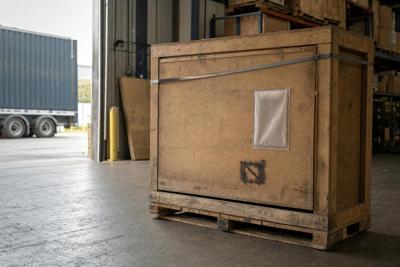

You find a marble table in Italy. A sofa is being built by hand in Portugal. A small studio in the Czech Republic is blowing glass for a chandelier. Sourcing is the creative part. The next challenge is getting every piece to a home in Los Angeles or Atlanta, undamaged and on a date that works for the client, contractor, and installers.
A freight forwarder plans and books that movement while coordinating the related paperwork. The process doesn't have to feel mysterious. Here is what a forwarder handles, how to build a realistic calendar, which U.S. rules may apply to wood and furniture, and what to ask before choosing a provider.
Why global sourcing can strengthen a project
Overseas sourcing gives designers access to distinctive materials, specialist workshops, and finishes that may not be available through domestic showrooms. Those details can help a home feel personal rather than assembled from familiar collections.
The trade-off is a longer and less predictable supply chain. Treat shipping as a project phase rather than an afterthought. Set installation dates around realistic transit windows, and avoid promising an exact arrival day. Weather, port congestion, customs reviews, and local delivery schedules can all affect timing.
What a freight forwarder handles for designers
Think of a forwarder as the coordinator between the maker's workshop and the client's receiving location. Services commonly include:
- Pickup from the overseas studio or factory, including guidance on packing and crating.
- Export documentation at the shipment's origin.
- Booking space with an ocean carrier or airline.
- Coordinating customs entry when the goods arrive.
- Moving containers from the port and arranging delivery to a warehouse or job site.
- Scheduling final delivery with the receiving team or installers.
A customs broker has a separate role. This licensed party classifies the goods and files the entry with U.S. Customs and Border Protection. Some forwarders provide brokerage in house, while others work with an outside broker. Either arrangement can work, but confirm who is responsible and whom you should contact if an entry is held.
Choosing a transport mode and building the timeline
When importing furniture, the transport mode shapes the schedule. Ocean freight generally suits heavy, bulky, and non-urgent items such as stone tables, casegoods, tile, and large upholstered pieces. Air freight is faster and may suit smaller, high-value, or delayed items, but it costs considerably more per pound.
Navia lists illustrative windows on its website, including approximately 14 to 19 days on the water from Shanghai to Los Angeles and about 39 to 45 days from Shenzhen to the U.S. East Coast via Panama. Its example for express air is approximately four to eight days door to door. Treat provider estimates as planning references, not guaranteed delivery dates.
A full container load may make sense when furnishing an entire house or importing several large pieces. For a smaller order, less than container load service places the goods in a shared container and is often more economical. Ask how the shipment will be consolidated, where it will be unpacked, and whether additional handling could affect fragile items.
Plan backward from installation day. Include production, pickup, origin handling, international transit, customs clearance, warehouse receiving, inspection, and final delivery. Add a buffer rather than relying on the shortest quoted transit time. When comparing options,Navia, freight forwarder in the USA, is one U.S.-based provider to ask about your actual lanes, cargo dimensions, receiving location, and installation dates.
Your compliance checklist in plain English
Import rules vary by material and product type, and requirements can change. Use this list to prepare questions for your customs broker rather than as legal advice.
- Lacey Act declaration. Many plant-based products require a declaration giving the scientific name, genus and species, of every plant component plus its country of harvest. Generic entries such as "wood" or "various" are not accepted, which matters for pieces with inlays or mixed species. The Phase VII expansion added furniture categories that were not previously covered. As of January 1, 2026, applicable declarations must be filed electronically through ACE or LAWGS rather than on paper forms.
- Wood packaging. Regulated wooden crates and pallets must be treated and marked according to ISPM 15 requirements.
- Importer Security Filing. For ocean shipments, required data generally must be submitted no later than 24 hours before the container is loaded at the foreign port.
- Entry basics. Commercial shipments may require an importer number, formal entry, and customs bond.
- Formaldehyde requirements. Furniture containing regulated composite wood may need a TSCA Title VI compliance statement and supporting records.
- Dresser stability. Clothing storage units manufactured after September 1, 2023 must meet the applicable CPSC stability standard under 16 CFR part 1261.
- Cargo insurance. Under COGSA, an ocean carrier's default liability may be limited to $500 per package unless a higher value is declared and recorded on the bill of lading. Separate coverage can be important for stone, glass, antiques, and custom furniture.
- Delay costs. Goods that are not entered on time can be moved to a General Order warehouse, while storage and terminal charges continue to build.
- Small parcels. Duty and de minimis rules for samples and small orders can change. Ask the broker to confirm current treatment before shipping.
Planning receiving and white-glove delivery
Many designers send imported pieces to a receiving warehouse rather than directly to the job site. The receiving team can check each item, open the crate, photograph its condition, note damage, and store it until the rest of the order arrives. Everything can then be delivered on one coordinated installation day.
This approach also allows the delivery team to plan protection for floors, walls, and doorways. Confirm whether placement, assembly, packaging removal, and debris disposal are included. Ask the forwarder whether it has a receiving and white-glove network in the installation market or whether those services need to be hired separately. For related guidance on importing custom furnishings, see high-end global shipping.
Budget items to discuss early
The landed cost includes more than the main freight charge. Common expenses include export packing and crating, ocean or air transport, cargo insurance, duties and taxes, port drayage, warehouse receiving, storage, final-mile delivery, and possible delay fees.
Duty depends on the product's classification, materials, value, and country of origin. Ask the customs broker for a written landed-cost estimate before purchase orders are signed. It won't eliminate every variable, but it can reveal missing charges and reduce budget surprises later.
How to choose a forwarding partner
Interview two or three providers and ask each the same questions. Find out whether customs brokerage is handled in house or through a partner. Confirm coverage in the origin country and installation market, the frequency of shipment updates, experience with fragile or unusually large pieces, and procedures for documenting damage. The provider should also understand the paperwork relevant to materials such as natural wood and composite wood.
One U.S.-based option is Navia, a freight forwarder in the USA with sea, air, and road coverage. Ask for a plan based on the actual shipping lanes, cargo dimensions, receiving location, and installation dates rather than relying on a generic rate sheet.
Navia reports offices in Los Angeles, Chicago, Atlanta, and Houston, along with shipment tracking through its NaviaHub platform. Compare those capabilities with the other providers on your shortlist. Responsiveness, clear responsibilities, realistic timelines, and experience with design cargo may matter as much as the initial quote.
The takeaway
Bringing distinctive pieces home from another country is largely a planning exercise. Establish the installation window, give shipping and clearance enough room on the calendar, and confirm who handles each document and handoff. A receiving warehouse can then gather and inspect the order before a coordinated delivery. When those steps are planned early, the logistics stay in the background and the finished design receives the attention.
FAQs
Do I need a customs broker?
Often, yes. Confirm who classifies goods and files the U.S. entry before booking.
When should ISF details be ready?
For ocean freight, prepare them before the foreign port loading deadline.
Should furniture go straight to the job site?
A receiving warehouse can allow inspection and coordinated delivery.
What documents should I keep?
Keep invoices, packing lists, bills of lading, and material records.

(0) comments
We welcome your comments
Log In
Post a comment as Guest
Keep it Clean. Please avoid obscene, vulgar, lewd, racist or sexually-oriented language.
PLEASE TURN OFF YOUR CAPS LOCK.
Don't Threaten. Threats of harming another person will not be tolerated.
Be Truthful. Don't knowingly lie about anyone or anything.
Be Nice. No racism, sexism or any sort of -ism that is degrading to another person.
Be Proactive. Use the 'Report' link on each comment to let us know of abusive posts.
Share with Us. We'd love to hear eyewitness accounts, the history behind an article.