
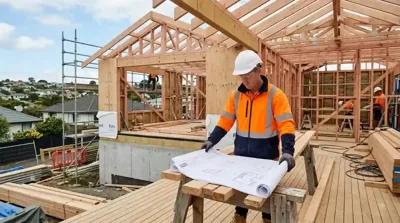

Building your own place in New Zealand is huge, and just as nerve-wracking as it is exciting. The moment you start browsing house plans or scouting sections, your head instantly gets filled with paint swatches, kitchen islands, and weekend DIY dreams. But before you get swept up in picking tapware, there are a few calls you need to make right out of the gate. Getting these early choices right sets the tone for your entire build and keeps you from pulling your hair out down the line. In fact, making key moves early saves you headaches and serious money later on in the project.
In this article, we’re looking at the crucial decisions you need to nail before the first spade hits the dirt. Let's get your dream home off the drawing board and onto the right track.
1. The Kind of Building Partner You Want
Your relationship with your builder may last a year or longer, and will involve different aspects of the project. So look beyond the lowest quote when searching for a partner. You need a team that listens carefully, explains costs clearly, and, most importantly, understands the conditions in your region. You can ask to see completed homes, visit a current site, and speak with previous clients.
Local knowledge is especially valuable in areas with varied terrain and weather. If you’re building in Dunedin or elsewhere in Otago, for example, Your Way Home builders offer customisable home designs, fixed-price contracts, and experience across coastal, urban and rural sites. These are useful qualities if you want informed advice about local conditions alongside greater cost certainty.
2. How Much You Can Really Afford
A builder’s price rarely represents the entire cost of creating a finished home. Your full budget may also need to cover the land, council charges, earthworks, utility connections, landscaping, window coverings, and temporary accommodation.
Site work, in particular, is a common source of surprises. For instance, a sloping section may require retaining walls, additional excavation, and more complex foundations. Because of this, talk with your lender early and keep a contingency for unexpected costs. Also, ask your builder to explain their exclusions, provisional sums, and allowances so you can compare quotes fairly.
3. The Section You’ll Be Building On
Learning about school zones and nearby amenities matters, but the physical characteristics of a section can also affect what you’re able to build. Before purchasing, arrange appropriate legal, planning, and geotechnical checks so you can investigate access, boundaries, services, soil conditions, and potential hazards such as flooding, erosion, slips, or liquefaction.
Additionally, consider sunlight and neighbouring development. A north-facing outdoor area, for instance, may look ideal today, yet future construction next door could affect its privacy or winter sun.
4. The Kind of Lifestyle the Home Needs to Support
Think several years ahead and imagine an ordinary Tuesday in your completed home. Your household may have grown or an older relative may be staying with you. Where will school bags land? Can someone work from home while another person watches television? Is there enough room for bikes or muddy boots?
In particular, decide what “comfortable” means to you since it can mean different things to different homeowners. So, tell your designer how you want the house to feel during a humid Auckland night, a frosty South Island morning, or a hot Hawke’s Bay afternoon. That would mean discussing insulation, glazing, airtightness, ventilation, heating, and summer shading before the drawings are finalised. Investing in the building envelope early is usually more practical than trying to improve it after moving in.
When your ideas are clear, sort them into essentials, strong preferences, and features that could be added later. This helps your designer protect the spaces that genuinely matter to you and improve daily life if the budget becomes tight.
5. Your Overall Design Plan
A standard plan can offer speed and greater price predictability, particularly on a straightforward section. Meanwhile, a modified plan provides more flexibility, although repeated changes can reduce the original savings. Finally, a custom design may suit an unusual site or a household with specific needs, but it generally requires more design work and early cost management.
Whichever route you choose, decide where to spend and where to simplify. A smart approach is to direct your budget towards elements that are difficult or expensive to change later. For instance, foundations, drainage, insulation, windows, room proportions, and electrical infrastructure deserve priority. Meanwhile, items such as elaborate landscaping are generally easier to upgrade in the future.
6. How Actively Involved You Want to Be
Some homeowners enjoy reviewing every fitting, while others prefer a streamlined process with fewer choices. It’s better to tell your builder which approach suits you and agree on a communication routine. However, it’s still a good idea to confirm who your main contact will be, how decisions will be recorded, and who can approve additional spending.
7. The Finishing Details Beyond Construction
A house may be ready for handover while the driveway, fencing, curtains, broadband or landscaping remain incomplete. So, before finalising the contract, ask what “finished” means. Budgeting for these items from the start gives you a more accurate move-in figure. You should also understand the process for final inspections, defect reporting, warranties, maintenance information, and the Code Compliance Certificate.
Build the Right Path to Your Ideal Home
The home you eventually enjoy will reflect choices made long before construction begins. So, take the time to make informed decisions early on to make sure that your new home comfortably suits the lifestyle and future you’re working towards.

(0) comments
We welcome your comments
Log In
Post a comment as Guest
Keep it Clean. Please avoid obscene, vulgar, lewd, racist or sexually-oriented language.
PLEASE TURN OFF YOUR CAPS LOCK.
Don't Threaten. Threats of harming another person will not be tolerated.
Be Truthful. Don't knowingly lie about anyone or anything.
Be Nice. No racism, sexism or any sort of -ism that is degrading to another person.
Be Proactive. Use the 'Report' link on each comment to let us know of abusive posts.
Share with Us. We'd love to hear eyewitness accounts, the history behind an article.