
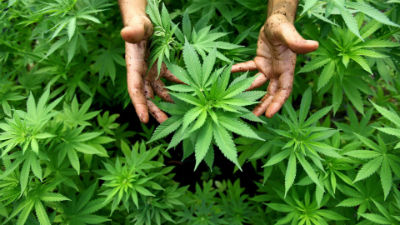
Marijuana. Cannabis. Mary Jane. Pot. Weed. Everyone knows what it is. You probably knew that group of kids in high school or college whose only hobby seemed to be smoking it. You may even have had a DARE agent come in and tell you to "Just Say No" to anyone offering marijuana, as if groups of adults were walking around offering weed to middle-schoolers every single day.
There has been a lot of buzz about the little green drug in the recent years as the debate rages over its legality, the punishments for having or smoking it, potential medical uses, and whether the voters of a state should have the right to decriminalize it. Just to be very clear, this is not going to an article praising marijuana as the chemical equivalent of Jesus that cures all aliments or talking about how the man won’t let the common people have it, nor will this be a piece railing against "kids these days" and how the Devil’s Grass is turning everyone into lazy hooligans. No, we will present both sides of the issue, look at the laws as they stand in California, and give a bit of history about why the drug is illegal in the first place.
In order to understand the recent push for legalization, you first have to understand why marijuana is illegal presently and, like so many things in American history, it unfortunately goes back to a fear of immigrants. At the turn of the 20th Century, the Mexican people rose up in protest against their dictator, Porfirio Diaz. This protest spiraled out of control until the entire country was wrapped up in a massive and bloody war of the people against the government. In an attempt to get away from the violence, huge numbers of Mexicans fled north into the states of Texas and Louisiana.
Cannabis had been a part of the Mexican culture for a long time, but it was a relatively new thing for "white" America at the time. The people in government (a ruling class of wealthy white Americans), were concerned over this great influx of people who didn’t look, talk, or believe like they did. The people in government needed a way to control this influx of immigrants. They needed a scapegoat to try and stifle the number of immigrants moving into the country, and marijuana turned out to be the perfect substance. This, by the way, is a pattern of the US government at the turn of the 20th century. A similar thing had happened earlier in places like San Francisco when the authorities outlawed opium to try and keep control of the Chinese immigrants.
Hearings and government meetings about the substance didn’t occur until the 1930s, but by then the media had whipped up the conservatives in American to a fever pitch about this dangerous drug smoked by minorities that made them "violent and solicit sex from white women." Public outcry over the drug caused for the passage of the Marijuana Tax Act of 1937, banning the use and sale of the drug. While this act would later be struck down, the 1970 Controlled Substances Act put marijuana as a Schedule I drug, meaning that it has zero medicinal benefits and there are no reasons to smoke/ingest it. For some perspective, other Schedule I drugs include: heroin, LSD, and methamphetamine. And that’s where marijuana has remained ever since, completely illegal on a federal level. Possession of any amount remains a federal offense that could get you locked up for anywhere from 15 days to one year for a first offense.
I can hear you say, "But hold on. If it’s federally illegal, how come states have medical marijuana laws or just sell it recreationally?" That’s because, despite what federal law may say, the Feds don’t have the time or resources to go after a hippie couple growing a half dozen pot plants in the California suburbs. They are more focused on the larger operations, mainly done by the cartels working in Mexico.
"So, if the Feds aren’t going to bust me, I can have as much weed on me as I want, right?" Not quite. In California, possession can still be a crime. If you have 1 ounce or less, you have to pay a fine ranging from $100 to $500. More than an ounce is considered a misdemeanor, which can mean up to six months in jail for repeat offenders. Note, if the police catch you with large amounts or believe you have an intent to sell, that is treated as a serious crime, and you could face potential felony charges. Also treated as felonies are cultivating without a medical marijuana card and transporting more than an ounce of the drug.
California has had medical marijuana laws on the books since 1996, but it was only in 2003 that laws were finally passed to allow the regulation and sale of medical marijuana through authorized dispensaries.In states like New York, for example, you have to obtain a New York medical marijuana card in order to buy from the dispensaries. This can be obtained from a doctor who believes that the drug will help with whatever condition you may have. Surveys have found that the most common ailment people sought the cards for was chronic pain. The pro-medical marijuana side also claims that the drug is helpful in treating pain in cancer patients.
So that brings up an interesting question: does marijuana actually have medical uses? We all have that friend on Facebook who shares news stories from blogs like "NewAgeSpiritScience" about how a four-year-old suffering from the worst disease possible was dying until he took a hit of weed and was mystically cured.
While it might not be the wonder drug some advocates claim it to be, there are some real medical uses for weed, or the chemicals inside of it. Studies have shown that taking THC, the chemical found in marijuana that gets you high, can help deal with seizures, anxiety, slow the progression of Alzheimer’s, treat Parkinson’s, and has been shown to help with PTSD. It should be noted that these claims are from limited studies. While, yes, there has been a study linking marijuana use with the slowing of cancer cells, saying that marijuana is a cure to cancer is hyperbolic and not helpful.
There are still some downsides to regular smoking of the drug, despite what proponents may claim. Frequently cited symptoms after smoking are increased anxiety or paranoia, memory impairment, and an impact on your respiratory system. Just because it isn't tobacco, that doesn’t mean you aren’t letting smoke get into your lungs. There is also the risk of addiction; a study found around 10 percent of frequent users become addicted. Frequent smoking also poses risks to minors whose brains haven't fully developed. Reports have found that exposure negatively effected teens’ brain structure, quality of the white matter in their brain, and some cognitive function.
There are positives and negatives to smoking marijuana and, at the end of the day, it remains your choice. Weed isn’t a wonder drug, and one hit isn’t going to cure someone’s depression just because they read about it online. Also, be careful. It’s still illegal in many places. Whether that should be the case is a matter of debate, but the law is the law.
It does seem like the country is shifting in the "pro-marijuana" direction. Twenty-three states and Washington D.C. have allowed for medical marijuana use, while four states allow recreational use. These numbers grow higher every year. There will undoubtedly be some holdouts who oppose legalizing marijuana, but it would surprise me if, in 15 years, you couldn’t recreationally smoke all across the country.
(0) comments
We welcome your comments
Log In
Post a comment as Guest
Keep it Clean. Please avoid obscene, vulgar, lewd, racist or sexually-oriented language.
PLEASE TURN OFF YOUR CAPS LOCK.
Don't Threaten. Threats of harming another person will not be tolerated.
Be Truthful. Don't knowingly lie about anyone or anything.
Be Nice. No racism, sexism or any sort of -ism that is degrading to another person.
Be Proactive. Use the 'Report' link on each comment to let us know of abusive posts.
Share with Us. We'd love to hear eyewitness accounts, the history behind an article.