
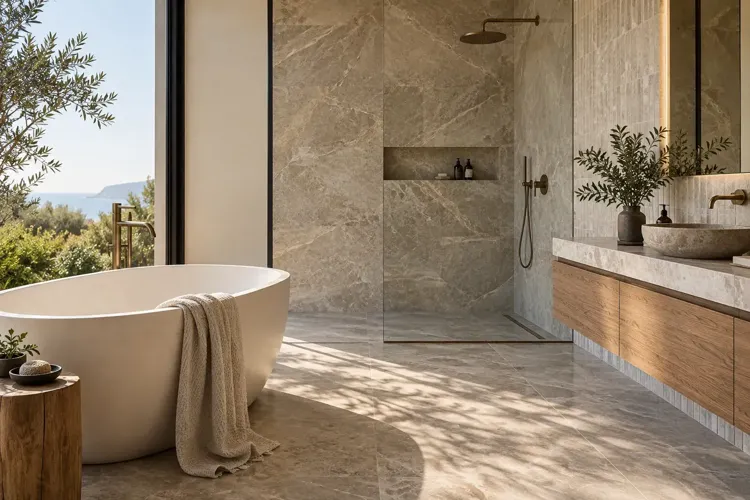
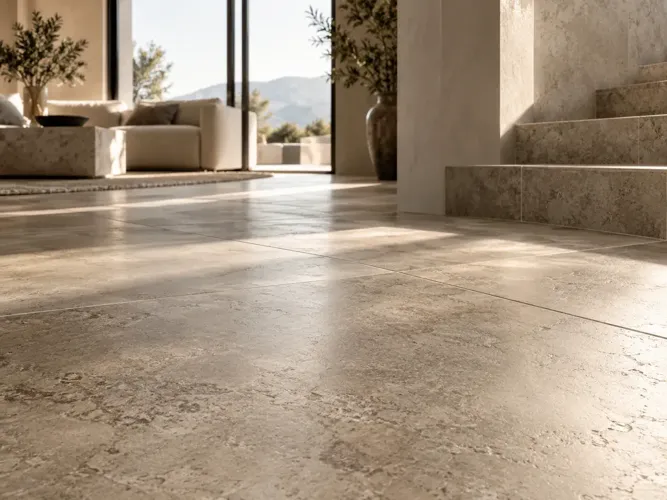
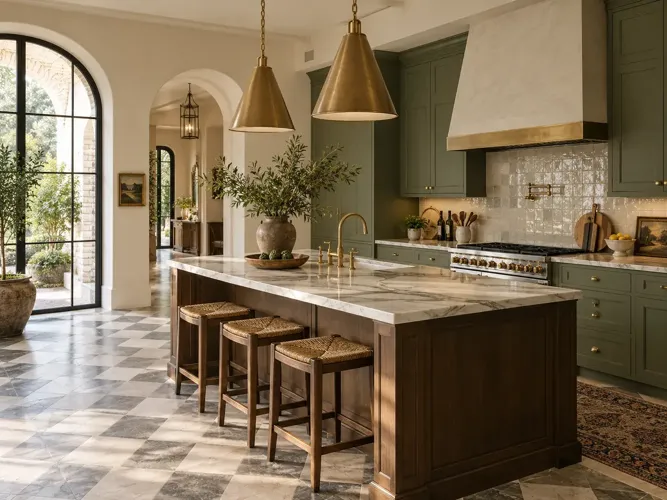

Choosing tile used to begin with fairly predictable questions. Porcelain or ceramic? Matte or polished? Neutral or dramatic? Small mosaic or oversized slab? Now there is another question increasingly appearing in showrooms and renovation plans: How sustainable is it? Unfortunately, that can be considerably harder to answer. A tile described as recycled, natural, eco-conscious or responsibly made may sound like an obvious environmental choice. But one appealing claim on a product label rarely tells the entire story. Raw materials, manufacturing, transportation, installation, durability and what happens when a room is remodeled all play a role. For homeowners investing in a kitchen, bathroom or whole-house renovation, the better goal is not finding a tile with the greenest marketing. It is choosing a surface that looks right, performs well and has enough credible information behind it to justify the environmental claims.
Recycled Content Is Only the Beginning
Recycled content can absolutely be valuable. Glass, ceramic and other tile products can incorporate materials that might otherwise become waste, reducing demand for some virgin resources. But the percentage and type of recycled material matter. A vague statement such as “made with recycled materials” tells a homeowner surprisingly little. Is the content 5 percent or 70 percent? Is it post-consumer material that has already served another purpose, or manufacturing scrap being returned to the production process? Both can have value, but they are not the same thing. This is where homeowners should become politely nosy. Ask manufacturers and showrooms for actual percentages and documentation rather than relying on leaves, earth-tone packaging or the word “green.”
Look for Verification Instead of Adjectives
One of the clearest ways to move beyond marketing is to look for independent standards. The Green Squared certification program, developed for tile and related installation materials, uses the ANSI A138.1 sustainability standard and independent third-party certification. Its criteria extend beyond recycled content to areas including manufacturing, raw materials, end-of-life management and corporate practices. That distinction matters. A manufacturer saying its own product is sustainable is a claim. An independent organization evaluating a product against a published standard provides considerably more information. No certification automatically makes a material perfect, and a product without one is not necessarily irresponsible. But documented standards give homeowners something more substantial to evaluate than advertising language.
Learn What an EPD Can Tell You

Another term worth knowing is Environmental Product Declaration, usually shortened to EPD. Think of an EPD less like an environmental gold star and more like a nutrition label for a building material. It reports environmental impacts using life-cycle assessment data and can include information connected to raw-material sourcing, manufacturing and other stages in a product's life. The presence of an EPD does not necessarily mean one tile is “greener” than everything beside it. Its value is transparency. It gives architects, designers and increasingly interested homeowners a way to examine environmental information using something more meaningful than a marketing slogan. For a major renovation, particularly one involving hundreds or thousands of square feet of material, asking whether a manufacturer provides an EPD is entirely reasonable.
Durability Deserves More Attention
Sustainability discussions sometimes become so focused on what a product contains that they overlook how long it will remain in the house. That is a mistake. A beautifully installed tile floor or shower that remains appropriate and functional for decades avoids the materials, transportation, demolition and installation associated with replacing a short-lived finish. Durability therefore belongs in the sustainability conversation alongside recycled content and manufacturing practices. It also makes timeless design surprisingly important. The acid-green geometric tile that dominates social media this month may be irresistible, but covering 900 square feet of an open-plan home with it is a different commitment. There is nothing wrong with personality. The more enduring strategy is often to use expressive tile where changing it someday would be relatively contained, while choosing longer-lived materials for large expanses. FINE's guide to the tile trends shaping San Diego homes explores how large-format porcelain, mosaics, texture and natural-material looks are currently being used without making every surface chase the same trend.
The Installation Is Part of the Environmental Equation

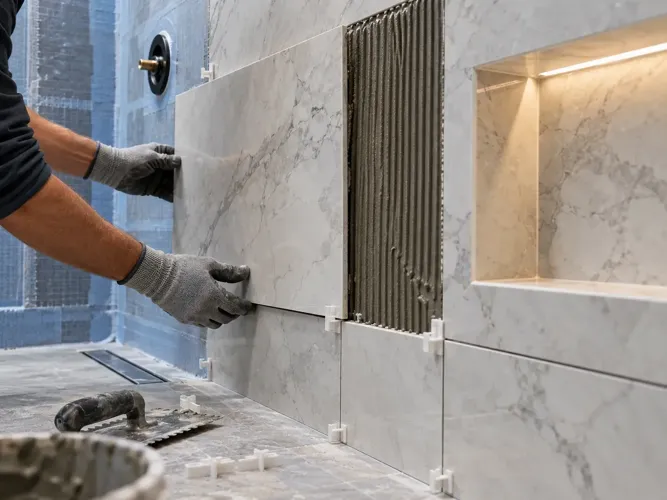
Homeowners understandably spend most of their shopping time looking at the tile itself. Yet a finished tile surface is a system. Mortar, grout, backer board, membranes, substrate preparation and waterproofing can all affect how long an installation lasts. Green Squared itself recognizes this broader picture by covering certain tile installation materials as well as tile. That matters especially in bathrooms. A responsibly manufactured tile installed over a poorly constructed shower assembly is not much of a sustainability victory if the room has to be demolished prematurely. Our guide to what separates a well-built bathroom from a merely beautiful one looks more closely at the waterproofing, plumbing and construction decisions hiding behind the finishes. Good installation is not glamorous. Neither is doing the same bathroom twice.
Do Not Assume Natural Automatically Means Sustainable
Material comparisons deserve nuance. Porcelain and ceramic can offer exceptional durability and increasingly sophisticated appearances. Glass tile may incorporate recycled content and work beautifully as an accent or feature surface. Natural stone offers qualities manufactured materials intentionally try to reproduce, but quarrying, processing, weight and transportation should also be considered. There is rarely one material that wins every environmental category. The more useful question is whether a particular material makes sense for the application, how long it is expected to last and what credible environmental information is available for that specific product. Transportation is one factor as well, but mileage alone should not be used to declare something sustainable or unsustainable. Manufacturing efficiency, raw materials, product life and shipping methods can complicate simplistic “local is always greener” assumptions.
Before You Buy Ask Better Questions
A homeowner does not need to become a materials scientist before selecting a backsplash. A few direct questions can reveal considerably more than a showroom tag. Ask what percentage of the product is recycled, whether that figure is documented, where the tile is manufactured, whether third-party sustainability certification exists and whether an EPD is available. Then move beyond environmental paperwork. Ask whether the tile is suitable for the intended location, what maintenance it requires, whether replacement pieces are likely to remain available and what installation system the manufacturer recommends. Finally, order enough attic stock to keep several matching pieces after installation. A few spare tiles stored in the garage can mean replacing one damaged piece years from now rather than confronting an unnecessary larger renovation because the original collection has disappeared. That may be one of the least glamorous sustainability tips in home design. It is also one of the easiest.
Luxury and Sustainability No Longer Need to Look Opposite

Sustainable interiors do not need to announce themselves with reclaimed wood, muted colors and an earnest-looking houseplant in every photograph. Today's tile market includes restrained stone looks, dimensional ceramics, jewel-like glass, architectural mosaics and expansive porcelain surfaces that can suit highly polished interiors. The environmental conversation has matured enough that homeowners should be able to expect both design and accountability. That is ultimately the standard worth pursuing. Choose materials you genuinely want to live with. Investigate the claims behind them. Install them properly. And whenever possible, select surfaces good enough that the next owner will see no reason to tear them out. Sometimes the most sustainable tile is simply the one nobody wants to replace.

(0) comments
We welcome your comments
Log In
Post a comment as Guest
Keep it Clean. Please avoid obscene, vulgar, lewd, racist or sexually-oriented language.
PLEASE TURN OFF YOUR CAPS LOCK.
Don't Threaten. Threats of harming another person will not be tolerated.
Be Truthful. Don't knowingly lie about anyone or anything.
Be Nice. No racism, sexism or any sort of -ism that is degrading to another person.
Be Proactive. Use the 'Report' link on each comment to let us know of abusive posts.
Share with Us. We'd love to hear eyewitness accounts, the history behind an article.