

A beautifully furnished room can still feel surprisingly uninviting under the wrong lighting. The furniture may be thoughtfully chosen, the colors perfectly coordinated, and the artwork carefully displayed, yet something feels unfinished.
Often, the missing element is light.
Good lighting does more than illuminate a room. It brings out architectural details, softens hard surfaces, creates atmosphere, and makes everyday activities more comfortable. The secret is rarely one spectacular chandelier or an expensive collection of fixtures. It is knowing how to combine different sources of light.
That is where layered lighting design makes all the difference. By considering how a room is used, where light is needed, and which features deserve attention, homeowners can create spaces that feel as inviting in the evening as they do during the day.
What Is Layered Lighting Design?
Layered lighting is the practice of combining different types of illumination to create a room that is both functional and visually balanced.
Most effective lighting plans incorporate three essential layers:
- Ambient lighting: General illumination from ceiling fixtures, recessed lights, or wall-mounted fixtures that makes a room comfortable to navigate.
- Task lighting: Focused light for activities such as reading, cooking, working, or applying makeup.
- Accent lighting: Directional or decorative illumination that highlights artwork, architectural details, shelving, and other features.
Decorative fixtures, including chandeliers and sculptural pendants, can also serve as a fourth layer, adding character even when switched off.
The most successful rooms rarely rely on one layer alone. A ceiling fixture might provide the foundation, but a table lamp creates a softer pool of light, a picture light draws attention to artwork, and a dimmer allows the atmosphere to change throughout the evening.
Living Room Lighting: Create Warmth at Different Heights
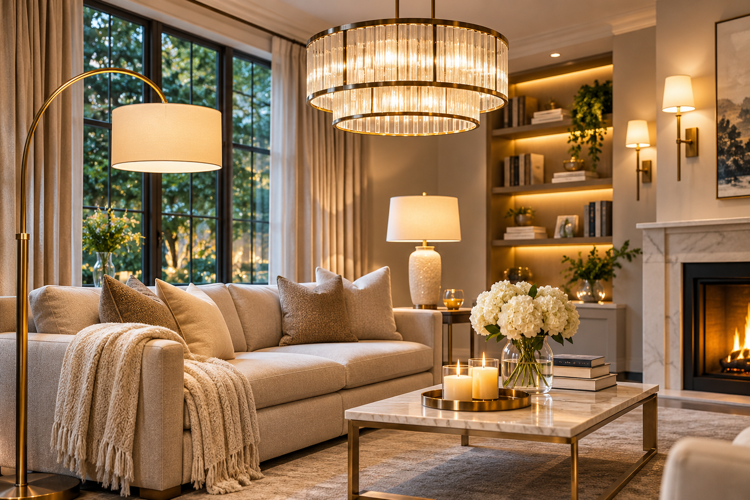
Living rooms rarely serve just one purpose. They accommodate conversations, television, reading, entertaining, and quiet evenings, making flexible lighting especially important.
Begin with comfortable ambient illumination from a ceiling fixture, recessed lighting, or wall sconces. Then introduce table lamps on consoles or side tables and a floor lamp beside a reading chair. These lower light sources create inviting pockets of warmth rather than flooding the entire room with brightness.
For a living room that needs a dedicated reading light, the Arbor Floor Lamp from Schoolhouse offers a useful combination of function and understated design. Its linen shade softens the light, while its hand-turned wood base brings a natural material into the room. Positioned beside a lounge chair or at the edge of a seating arrangement, it provides a more intimate source of illumination than an overhead fixture alone.
Avoid positioning lamps where their bulbs reflect directly onto television screens. The goal is a room that feels welcoming with several lights switched on, without requiring every fixture to operate at full brightness.
Kitchen Lighting: Combine Practicality with Elegance

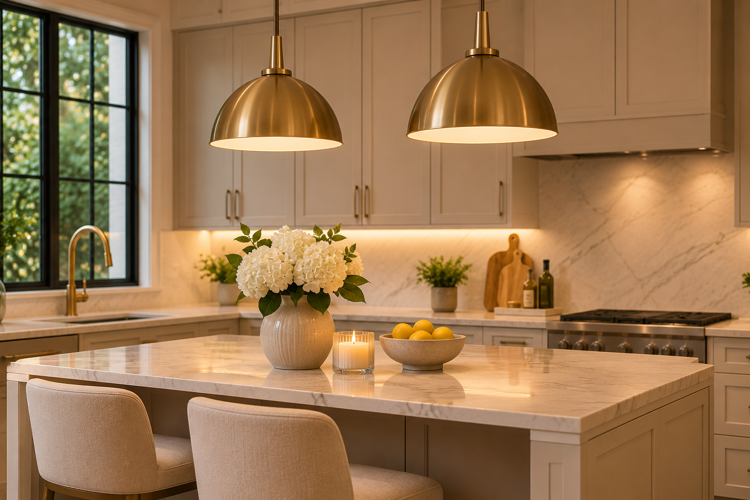
Kitchen lighting must work particularly hard. It needs to support food preparation while making cabinetry, countertops, and dining areas feel thoughtfully designed.
Start with ceiling lighting that distributes illumination across the room. Pendants above an island can introduce a decorative focal point, but they should not be the only source of light. A well-proportioned pendant or chandelier can give the kitchen a stronger visual identity, especially when its finish complements cabinet hardware, faucets, and other details.
Under-cabinet LED strips are particularly useful because they illuminate preparation surfaces that overhead fixtures may leave in shadow. For a smart lighting option, the Philips Hue Solo Lightstrip 10 Ft offers app-controlled illumination that can be used to introduce a discreet accent along cabinetry or shelving. Its flexible strip format makes it worth considering for areas where a concealed line of light is preferred over a visible fixture. Check the installation instructions and placement requirements before using any strip lighting in a kitchen.
Choose diffused lighting for a more continuous glow and position fixtures to minimize reflections on polished countertops.
Where possible, control island pendants, ceiling fixtures, and under-cabinet lighting separately. This allows the kitchen to transition from a bright workspace during meal preparation to a softer gathering place afterward.
Bedroom Lighting: Design for Comfort and Relaxation
Bedroom lighting should feel restful without sacrificing functionality.
A softly diffused ceiling fixture provides general illumination, while bedside lamps or wall-mounted reading lights create more intimate lighting. Wall sconces are especially effective in smaller bedrooms because they free up valuable nightstand space. When choosing them, consider whether the light is directed toward the bed, the wall, or the reading area, since each creates a different effect.
Consider placing bedside lights on independent switches so each person can control their own lighting. A small lamp on a dresser can provide a gentle evening glow, while discreet lighting inside wardrobes makes clothing easier to find.
Warm-toned bulbs are often more comfortable in bedrooms than harsh, cool-white lighting. Dimmers are also useful, allowing the room to move from brighter illumination while getting dressed to a softer setting before bed.
For additional inspiration, FINE’s guide to interior design without breaking the bank explores how thoughtful lighting choices can refresh a room without requiring expensive renovations.
Dining Room Lighting: Let the Fixture Set the Mood

A dining room offers an opportunity to make lighting part of the architecture.
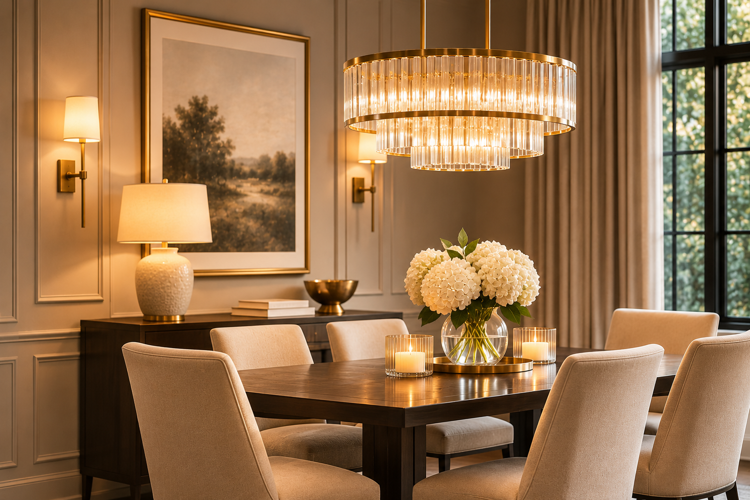
A chandelier or pendant above the dining table can anchor the space visually, but proportion and placement matter more than extravagance. The fixture should relate to the size and shape of the table, leave enough visual breathing room, and provide comfortable illumination for the people seated beneath it.
For a more sculptural statement, the Hampton Medium Chandelier by AERIN for Visual Comfort offers an organic, bowl-shaped silhouette with sculpted metal leaves. Its design allows light to filter through the structure, making it an interesting focal point for a dining room or a living space with sufficient ceiling height.
As a starting point, position the bottom of a hanging fixture approximately 30–36 inches above the tabletop, adjusting for ceiling height, fixture size, and sightlines. Guests should be able to see one another comfortably across the table.
Supplement the central fixture with wall sconces or a lamp on a sideboard to prevent the surrounding room from disappearing into darkness.
A dimmer is particularly valuable here. The same room can feel bright and cheerful for breakfast, then warm and intimate during an evening dinner.
Bathroom Lighting: Eliminate Unflattering Shadows
Bathrooms need a balance between clear visibility and a comfortable atmosphere.
One overhead fixture directly above the mirror can cast shadows across the face. Instead, consider placing sconces on either side of the mirror or using an evenly illuminated vanity mirror for more balanced facial lighting.
Recessed ceiling fixtures can provide general illumination, while a separate light near the shower improves visibility. In larger bathrooms, a decorative fixture can add character, provided it is suitable for the location and installed according to applicable electrical requirements.
Choose fixtures with appropriate damp- or wet-location ratings depending on their placement. A fixture suitable for a dry bedroom or hallway should not automatically be assumed appropriate for a bathroom or shower area.
For larger bathrooms, separate controls for vanity, ceiling, and decorative lighting can make the space more versatile. A brighter setting may be useful during a morning routine, while softer illumination can make an evening bath feel more relaxing.
Entryways, Hallways, and Home Offices
Smaller or transitional spaces deserve the same attention as primary living areas.
In an entryway, a pendant or flush-mount fixture provides a welcoming first impression. A console lamp or pair of sconces can add warmth, particularly when paired with artwork or a mirror. The scale of the fixture matters: a large chandelier can overwhelm a narrow entrance, while a small flush mount may disappear in a generous foyer.
Hallways benefit from evenly spaced illumination that avoids alternating bright and dark patches. Picture lights can make a long corridor feel more like a gallery, especially when used to highlight a collection of photographs or artwork. Rejuvenation’s Cabinet Maker’s Picture Light is one option for bringing focused illumination to a favorite piece.
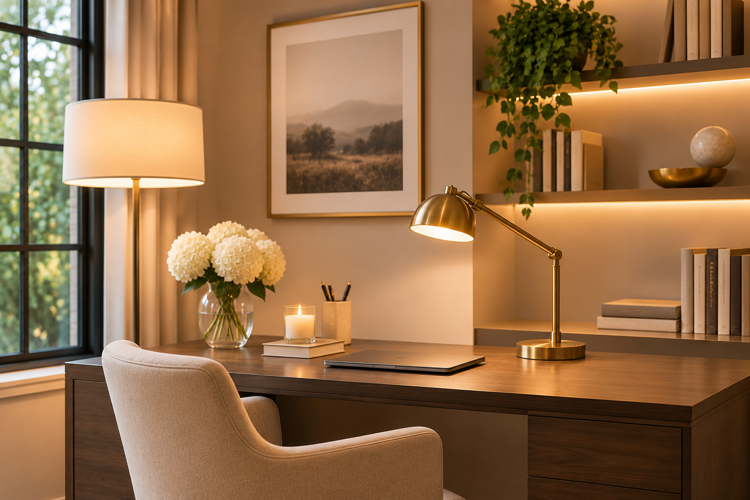
For home offices, combine general lighting with an adjustable desk lamp. Position the lamp to illuminate paperwork without creating glare on computer screens. A well-planned arrangement provides focused light where it is needed without making the entire room excessively bright.

How to Choose the Right Color Temperature
Even beautiful fixtures can disappoint when fitted with unsuitable bulbs.
Color temperature, measured in Kelvin (K), describes whether white light appears warm or cool. The right choice depends on the room’s purpose, the materials in it, and the atmosphere you want to create.
- 2700K–3000K: Warm white light, often suitable for living rooms, bedrooms, and dining areas.
- 3500K–4100K: Neutral to cooler white light, which may suit kitchens, workspaces, and task-focused areas.
- 5000K and above: Cooler, daylight-like illumination, useful for certain tasks but potentially stark in relaxed residential settings.
For a cohesive interior, avoid mixing dramatically different color temperatures within the same visual area without a clear design reason. Consistency is particularly important in open-plan rooms, where the kitchen, dining area, and living room are visible together.
Color rendering also deserves attention. A bulb with good color rendering can help artwork, textiles, paint colors, and natural finishes appear closer to their intended shades. This matters in rooms where carefully selected materials are part of the design.
Dimmers and Smart Lighting: Small Changes, Greater Flexibility
One of the simplest improvements to a lighting plan is giving homeowners more control.
Dimmers allow the brightness of a room to change according to the activity or time of day. A dining room can move from bright, practical illumination to a softer evening setting, while a living room can have separate levels for reading, entertaining, and watching television.
For a straightforward wall-control option, the Diva Smart Dimmer from Lutron offers a familiar paddle-style design with connected lighting control when used as part of a compatible Caséta system. It can be useful for homeowners who want to adjust brightness and create lighting scenes without changing the appearance of their existing wall controls.
Smart bulbs and compatible lighting systems can add schedules, preset scenes, and adjustable brightness without necessarily requiring a major renovation.
Not every LED bulb works with every dimmer, however. Check compatibility between the bulb, fixture, and control before installation. Electrical modifications should be handled by a qualified electrician.
Common Lighting Mistakes That Make Rooms Feel Less Inviting
Even carefully decorated interiors can suffer from a few avoidable lighting mistakes.
Relying on one overhead light. A single ceiling fixture often creates a flat appearance and leaves useful areas poorly illuminated. Add lamps or accent lights at different heights to create depth.
Choosing fixtures based only on appearance. A dramatic chandelier may look beautiful but provide insufficient light for everyday activities. Consider its output, placement, and the other light sources in the room.
Ignoring glare and shadows. Exposed bulbs, reflective surfaces, and poorly positioned downlights can make a room uncomfortable. Diffusers, shades, and thoughtful positioning can help.
Using mismatched light temperatures. Combining very cool and very warm bulbs without intention can make a space feel visually inconsistent.
Overlooking daylight. Artificial lighting should complement natural light, not compete with it. Window placement, curtains, and reflective finishes all influence how a room feels throughout the day.
FINE’s guide to creative lighting ideas that transform home design offers additional inspiration for combining practical illumination with decorative details.
How to Improve Your Lighting Without Renovating
Creating a beautiful lighting scheme does not always require rewiring ceilings or investing in expensive fixtures.
Start by observing each room after sunset. Notice where shadows fall, which activities need more illumination, and whether the existing light feels too harsh.
Then make a few strategic changes:
- Add a floor lamp beside a reading chair.
- Replace overly cool bulbs with warmer alternatives where appropriate.
- Introduce table lamps at different heights.
- Install suitable plug-in or rechargeable picture lights.
- Add under-cabinet lighting to improve kitchen visibility.
- Consider compatible dimmers or smart bulbs for greater control.
These smaller improvements can create a noticeable difference before more substantial upgrades become necessary.
The FINE Take
The most successful lighting schemes are not necessarily the brightest or most expensive. They are the ones that make a room feel comfortable, functional, and considered.
A softly illuminated painting, a warm pool of light beside a favorite chair, or a beautifully positioned pendant above the dining table can change how an entire space is experienced.
By combining ambient, task, accent, and decorative lighting with thoughtful controls, homeowners can create interiors that feel just as beautiful in the evening as they do in daylight.
Ultimately, good lighting should not demand attention. It should make everything around it look and feel better.

(0) comments
We welcome your comments
Log In
Post a comment as Guest
Keep it Clean. Please avoid obscene, vulgar, lewd, racist or sexually-oriented language.
PLEASE TURN OFF YOUR CAPS LOCK.
Don't Threaten. Threats of harming another person will not be tolerated.
Be Truthful. Don't knowingly lie about anyone or anything.
Be Nice. No racism, sexism or any sort of -ism that is degrading to another person.
Be Proactive. Use the 'Report' link on each comment to let us know of abusive posts.
Share with Us. We'd love to hear eyewitness accounts, the history behind an article.