
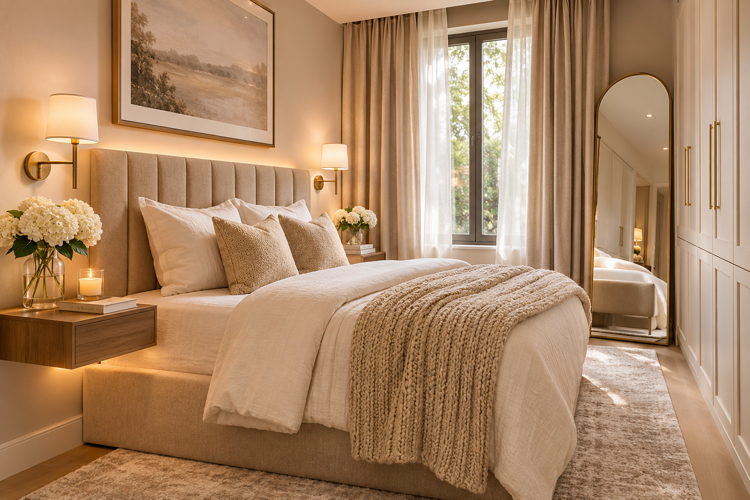
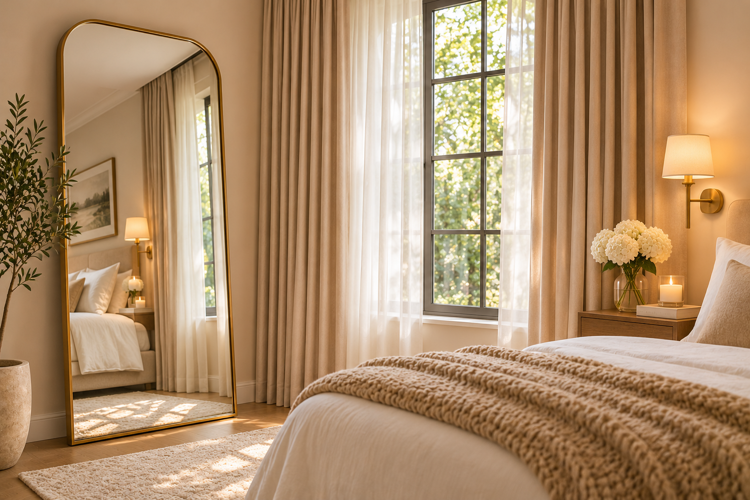

A small bedroom does not have to feel like a compromise. In fact, some of the most inviting bedrooms are defined not by their square footage, but by how thoughtfully every detail has been considered. A beautifully upholstered headboard, carefully chosen lighting, tailored window treatments, and furniture that fits the room can create an atmosphere that feels both comfortable and quietly luxurious.
The secret is to approach a compact bedroom as a complete design project rather than a storage problem. Instead of filling every available corner with another cabinet or shelf, focus on proportion, visual balance, and details that make the room feel intentional. Think of the calm, layered atmosphere of a boutique hotel suite, where everything has a purpose and nothing feels crowded.
With the right layout, considered storage, and a few well-chosen finishes, even a modest bedroom can feel more spacious, polished, and personal.
Create a Layout That Gives Your Bedroom Space to Breathe
Before choosing furniture or finishes, consider how the bedroom functions. The bed is usually the largest piece in the room, so its position should guide the rest of the layout.
Where possible, place the bed against the main wall and give it enough space on either side for comfortable movement. A symmetrical arrangement can make the room feel more considered, even when the bedside tables are small. In a particularly narrow bedroom, however, a slightly asymmetrical layout may be more practical than forcing furniture into a configuration that restricts movement.
Measure the room, including door swings, wardrobe access, window placement, and the clearance needed to walk around the bed. A floor plan can help identify whether a queen or king bed is realistic, or whether a smaller frame would create a more comfortable arrangement.
Furniture should feel proportionate to the room. A bulky bed frame with an oversized footboard can make a compact bedroom feel crowded, while a streamlined frame with a visually lighter profile can help preserve a sense of openness. The goal is not to make everything miniature, but to choose pieces that fit comfortably together.
Choose a Bed That Works Harder

In a small bedroom, the bed is both the visual centerpiece and one of the best opportunities to introduce concealed storage.
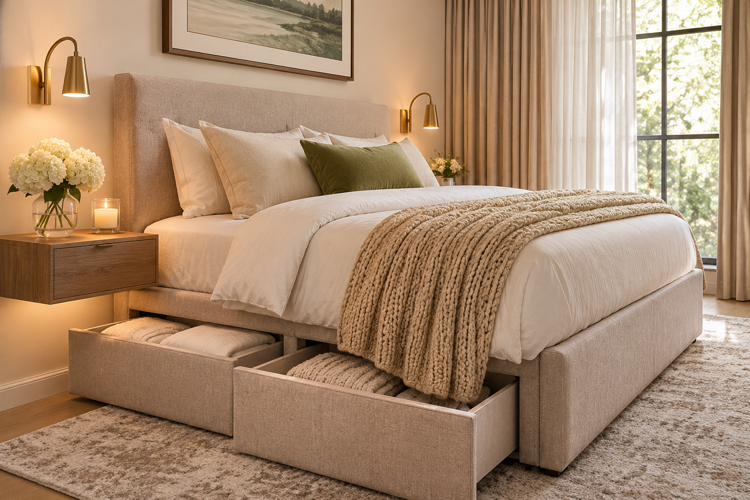
An upholstered storage bed can bring softness and function to the room, particularly when it includes a lift-up base or drawers beneath the mattress. These compartments can accommodate spare bedding, seasonal clothing, and extra pillows without requiring another freestanding cabinet.
A good example is the Carmel Upholstered Platform Storage Bed by Pottery Barn, which features four spacious drawers beneath the frame. A design like this can help keep everyday essentials out of sight while maintaining the look of a finished upholstered bed.
A bed with built-in drawers can be especially useful when there is enough clearance along the sides to open them fully. For tighter layouts, a lift-up storage base may be more practical because it does not require drawer space along the floor.
The frame itself deserves attention, too. Choose a design with clean lines, a tailored upholstered finish, or a refined wood detail. A low-profile bed can help a room feel less visually heavy, while a carefully proportioned headboard gives the space a finished appearance.
Make Built-In Wardrobes Feel Like Part of the Architecture
Freestanding wardrobes can take up valuable floor space and interrupt the visual flow of a compact bedroom. Built-in wardrobes offer a more seamless alternative, particularly when they extend from floor to ceiling.
Rather than leaving an awkward gap above a standard wardrobe, custom joinery can use the full height of the wall for hanging space, drawers, shelves, and concealed compartments. This also creates a cleaner visual line, making storage feel like part of the room’s architecture rather than an additional piece of furniture.
Consider finishes that complement the walls. Painted cabinetry in a similar shade can blend into the background, while natural wood introduces warmth and texture. Handleless doors or discreet hardware can further simplify the appearance.
Inside the wardrobe, thoughtful organization matters just as much as the exterior. Adjustable shelves, pull-out trays, dedicated shoe storage, and double hanging rails can make better use of the available space. If a full built-in installation is not possible, a well-planned modular wardrobe can achieve a similar sense of order.
Free Up Floor Space With Floating Nightstands

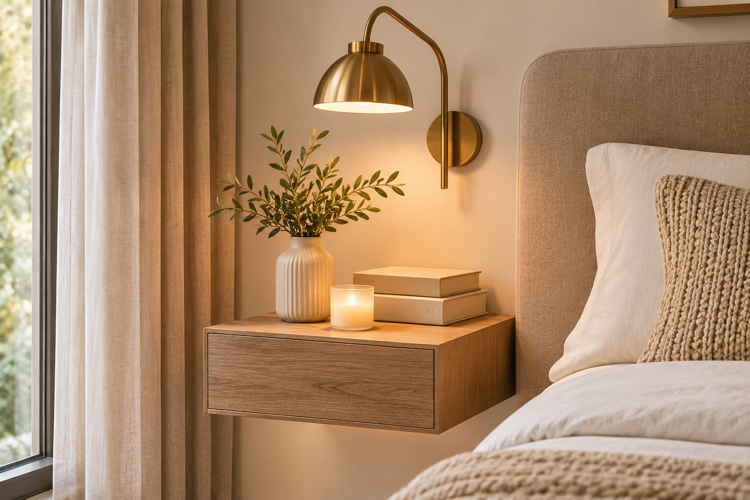
Traditional bedside tables can feel surprisingly bulky in a small bedroom. Floating nightstands offer a lighter alternative by attaching directly to the wall and leaving the floor beneath them visible.
A compact drawer or slim shelf provides enough room for everyday essentials without taking up as much visual space as a full-sized cabinet. The Lara Floating Nightstand by West Elm is one example of a wall-mounted design that keeps bedside storage compact while giving the room a clean, streamlined finish.
The wall above each nightstand is another opportunity to save space. Instead of placing a table lamp on the surface, consider a wall-mounted reading light or a pendant suspended beside the bed. The Felix Sconce by Rejuvenation is a particularly suitable option, with a solid brass fixture, fabric shade, dimmable function, and the flexibility of plug-in or hardwired installation. It provides bedside illumination without occupying valuable nightstand space.
Keep the styling simple. A small lamp, a book, or a single decorative object is usually enough. The more open surface you preserve, the calmer the room will feel.
Use a Custom Headboard to Create a Refined Focal Point

A well-designed headboard can give a small bedroom a distinctive sense of character without requiring additional furniture or decoration.
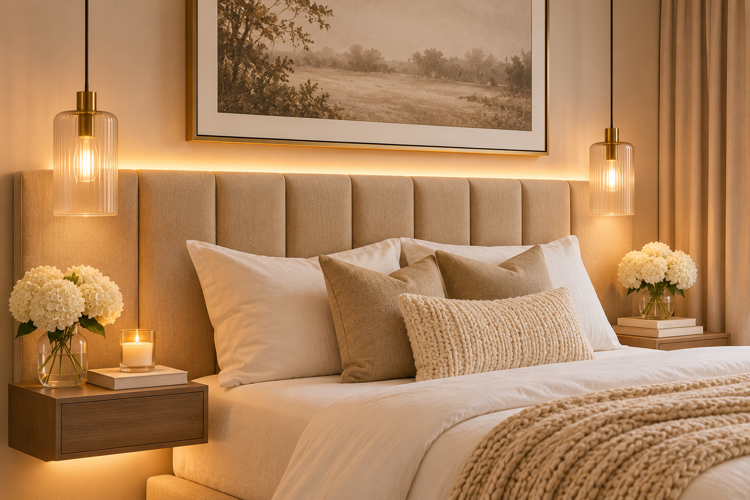
Consider an upholstered headboard that extends slightly beyond the width of the bed, creating a more substantial focal point. For a particularly polished look, a custom headboard can incorporate narrow bedside ledges, integrated lighting, or discreet storage niches.
Vertical upholstered panels can draw the eye upward, while a simple full-width design can make the bed feel more connected to the wall. Choose materials that add warmth, such as linen, textured fabric, or soft neutral upholstery.
The key is to keep the scale appropriate. A dramatic headboard can look beautiful in a room with generous ceiling height, but an oversized design may overwhelm a smaller space. Let the architecture and proportions of the bedroom guide the final choice.
Make Light and Mirrors Work Together
Lighting can change the way a small bedroom feels throughout the day. A single overhead fixture rarely creates the same warmth as a layered lighting plan.
Begin with ambient lighting that provides comfortable illumination across the room. Add bedside pendants or wall sconces for reading, then introduce a softer accent source, such as a discreet LED strip behind the headboard or within a built-in wardrobe.
Warm-toned bulbs and dimmable controls can make the bedroom feel more inviting in the evening. The aim is to create different levels of light rather than relying on one bright source.
Mirrors can help the room feel brighter by reflecting daylight and adding visual depth. A full-length mirror on a wardrobe door, a large mirror positioned near a window, or mirrored panels incorporated into cabinetry can all be effective. The Infinity Modern Brass Full-Length Floor Mirror by CB2 offers a clean-lined frame that can also serve as a decorative feature. Choose the placement carefully so that the reflection contributes to the room rather than simply adding another decorative surface.

Use Floor-to-Ceiling Curtains to Add Height
Window treatments can have a surprisingly strong influence on how spacious a bedroom appears. Curtains mounted close to the ceiling and extending all the way to the floor draw the eye vertically, making the walls feel taller.
For a refined look, choose fabrics with a soft drape, such as linen blends or lightly textured materials. Neutral shades that relate to the wall color create a continuous visual line, while a subtle contrast can add depth without making the window feel visually heavy.
The Ripple Fold Drapery by The Shade Store offers a tailored alternative to standard ready-made curtains. Its custom sizing and range of fabric and lining options make it possible to create a treatment that suits the window while balancing privacy with natural light. A double-track arrangement can also combine sheer curtains for daylight with heavier panels for privacy and light control. This layered treatment feels polished and gives the room flexibility throughout the day.
Avoid curtains that stop just below the window sill or end awkwardly above the floor. A carefully measured installation will look more tailored and make the entire room feel more finished.
Choose Furniture That Fits the Room
One of the most common mistakes in a small bedroom is choosing furniture based on appearance alone, without considering how it relates to the available space.
A beautiful armchair may look appealing in a showroom but leave little room to move once it is placed beside the bed. Similarly, an oversized dresser can dominate a wall that would be better used for a slimmer chest or built-in storage.
Look for pieces with clean silhouettes, useful proportions, and more than one function. A storage bench at the foot of the bed can hold extra blankets while providing a place to sit. A narrow console can serve as a dressing surface without taking up the depth of a traditional vanity. A wall-mounted desk can provide a compact workspace that folds away or visually disappears when not in use.
Leggy furniture can also help preserve a sense of openness by allowing more of the floor to remain visible. This does not mean every piece needs to be raised, but mixing solid storage with lighter furniture can create a more balanced composition.
Bring in Texture, Color, and Thoughtful Details
A luxurious bedroom is not necessarily filled with expensive finishes. Often, it is the combination of materials, colors, and textures that makes the space feel special.
A restrained palette can help a compact room feel cohesive. Warm whites, soft taupes, muted grays, and natural wood tones create a calm foundation, while deeper accents can be introduced through cushions, artwork, or a throw.
Layering is what gives the room personality. Consider crisp bedding paired with a textured coverlet, a soft rug beneath the bed, and curtains that complement the upholstery. Natural materials such as linen, wool, wood, and stone can add depth without relying on busy patterns or excessive decoration.
Artwork should be selected with the same care as furniture. One well-proportioned piece above the bed can create a stronger focal point than several small frames scattered across the walls. Keep accessories edited, too. A small arrangement of flowers, a sculptural lamp, or a favorite object can add character without making the room feel cluttered.
The FINE Take
A small bedroom can feel every bit as considered as a spacious primary suite. The difference comes down to thoughtful proportions, storage that blends into the design, lighting that creates atmosphere, and finishes that make the room feel personal.
Rather than trying to fit more into every corner, focus on making each choice count. When furniture, lighting, textiles, and storage work together, a compact bedroom can become a beautifully balanced retreat.

(0) comments
We welcome your comments
Log In
Post a comment as Guest
Keep it Clean. Please avoid obscene, vulgar, lewd, racist or sexually-oriented language.
PLEASE TURN OFF YOUR CAPS LOCK.
Don't Threaten. Threats of harming another person will not be tolerated.
Be Truthful. Don't knowingly lie about anyone or anything.
Be Nice. No racism, sexism or any sort of -ism that is degrading to another person.
Be Proactive. Use the 'Report' link on each comment to let us know of abusive posts.
Share with Us. We'd love to hear eyewitness accounts, the history behind an article.