



Neurodivergence refers to the natural variation in brain structure, volume, and activity. It's similar to variations in height or skin color, but neurodivergence may affect how people perceive the world around them.
Unfortunately, neurodivergent people are one of the most stereotyped and stigmatized groups. But as mental health awareness grows, more people start to realize that neurodivergency isn't a delayed development. Besides certain challenges that can be overcome with accommodations, neurodivergent people have numerous strengths.
This article will explore neurodivergent people: what percentage of the world is neurodivergent, and how does this number impact the society we live in? You'll be surprised by how underestimated the impact of neurodivergents is.

How Many People Are Neurodivergent?
Approximately 15-20% of the world's population is neurodivergent [1]. It's a huge minority that equals the spread of blue eyes in the world. This number accounts for different mental health conditions under this umbrella: Autism Spectrum Disorder, ADHD, Tourette's syndrome, OCD (sometimes), dyslexia, and other cognitive differences.
Accurately estimating what percent of the world is neurodivergent is challenging due to underdiagnosis and stigma. Cultural attitudes to neurodivergence leave millions of people taking the "Am I neurodivergent?" quiz to confirm their doubts. Although online evaluations are excellent for validation, they don't provide the needed accommodations, unfortunately.
With approximately 1 billion people being neurodivergent, what conditions are the most common? Here's the percentage of the worldwide population with neurodevelopmental conditions:
Autism: 1-2% [2]
ADHD: up to 9% [3]
Dyslexia: 10%
Dyspraxia: 5-6%
Tourette's: 1%
A lot of neurodevelopmental conditions can co-occur. For example, a person on the autistic spectrum is more likely to also have ADHD than a neurotypical individual. In many regions, neurodivergence is underdiagnosed, especially in adults, women, and people of color, meaning true rates are likely even higher.

10 Famous Neurodivergent People
With an estimated 1 billion neurodivergent people, some of them should be famous, right? It's even more than you think. Neurodivergent individuals have shaped art, technology, culture, and public life for centuries. All due to their out-of-the-box thinking.
Luckily, more and more well-known figures are starting to openly discuss their "neurospiciness." Seeing this, more people are not afraid to seek a diagnosis as these famous neurodivergent people prove that neurodivergent traits can be powerful strengths.
1. Tim Burton (Autism)
Tim Burton's distinctive style, whimsical, eerie, and emotionally complex, can be linked to autistic traits he has acknowledged throughout his life. He openly shared his ASD diagnosis at a time when people still side-eyed him for that.
According to Tim's interviews, he has always had a special interest in dark and mystical things that other people found weird. He also shared that he feels more comfortable in imaginative worlds than in social settings.
Burton channels his rich, extraordinary thinking into storytelling that resonates globally. His work is full of symbols and always has a purpose that can stem from ASD's pattern-noticing habit.
Rather than conforming to Hollywood norms, Burton built a cinematic universe based on his natural neurology. A universe so unique that it made millions of dollars because of how innovative it was.
2. Greta Gerwig (ADHD)
Greta Gerwig has spoken openly about her ADHD in a Barbie press tour. She told the Guardian, "As a kid, my mum was like: 'Let's sign her up for every activity. Let's tire her out.' I've always had a tremendous amount of enthusiasm. I was just interested in, like, everything. I had a really active imagination. I had a lot of really deep feelings. I was emotional."
Her fast mind, intuitive leaps, and restless creative energy visibly shape her filmmaking process. Gerwig's ADHD traits are visible in her storytelling style, and that's what makes it stand out.
Besides being an outstanding director, Gerwig juggles other jobs, such as acting, writing, and numerous hobbies. Classic ADHD that she turned from a limitation into a part of her artistic process.
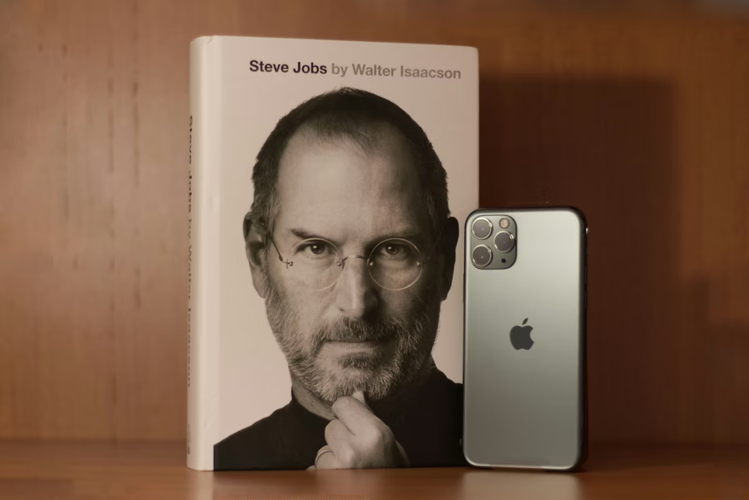
3. Steve Jobs (Dyslexia)
Steve Jobs, a genius who revolutionized the phone industry, can be imagined as a very tech-savvy guy. He was an incredibly smart person, but he also struggled to read due to his dyslexia.
Steve openly talked about his dyslexia with his biographers: reading and writing were his nightmares. Besides these two skills, although struggling in traditional academic environments, Jobs excelled in visual thinking, intuitive design, and nonlinear problem-solving. These traits helped him imagine technologies that felt human and simple. These two traits were Apple's advantages at the time.
It's not a coincidence. Dyslexia can strengthen reasoning and creative abilities as a compensation. Jobs' story is a reminder that difficulty with reading or neurotypical conventional school tasks doesn't define intelligence or potential.

4. Billie Eilish (Tourette's)
Billie Eilish is open about how she was diagnosed with Tourette's syndrome at just 11 years old. She also doesn't hide or cut her tics out of final takes of her interviews, helping to normalize a condition that's misunderstood by the public.
From what Eilish has shared, she experiences involuntary tics, particularly physical ones, which she manages while performing, touring, and appearing in interviews.
Billie is known for her authenticity, which is felt through her music. But besides her art, she's just an honest person who shows that neurodivergence and artistry can coexist.
5. Daniel Radcliffe (OCD, Dyspraxia)
In interviews, following the Harry Potter saga, Radcliffe revealed his OCD and dyspraxia diagnoses for the first time. According to Daniel, he noticed his OCD traits at the age of 5, when he needed to repeat certain words or sentences to soothe himself. Sometimes, it took him 5 minutes to just turn off the light switch.
Another Daniel's neurodevelopmental condition is dyspraxia, a developmental coordination disorder that affects motor skills. Radcliff's spokeswoman confirmed that the actor has a mild form of dyspraxia, which he doesn't hide. Due to the condition, Radcliffe has poor handwriting and struggles to tie shoelaces.
Radcliffe figured out how to live with his conditions and be one of the neurodivergent people. Although he mostly stepped out of acting, his example proves that building a career in a very demanding and draining field is possible for everybody, no matter if you are neurotypical or neurodivergent. The main rule is not to be afraid to ask for support.
6. Anthony Hopkins (Autism)
Anthony Hopkins has spoken about receiving an autism diagnosis later in life, when he was already 77 years old. He revealed that this diagnosis explains a lot of his "weird" behavior:
Need for hyperfocus. Hopkins said that he can go so deep into details and deconstruct his characters that it takes him forever. Although it made him exceptionally good at acting, hyperfocus took him a lot of energy.
Learning differences. Hopkings revealed that he had challenges in school that, besides academic achievement, got in the way of him making friends.
Social challenges. Hopkins was open about struggling with social cues and maintaining eye contact. He also said that it's hard for him to be around new people because of the masking.
The late diagnosis of the actor is actually a common experience of neurodivergent people, especially older adults. They grew up, not knowing that their struggles could be explained by a diagnosis. Today, Hopkins reframes autism not as a defining source of his creativity and discipline.
7. Tom Holland (ADHD, Dyslexia)
Tom Holland, a new Spider-Man and a brilliant actor, has shared that he was diagnosed with ADHD as a child just a few months ago, in September 2025. "I have ADHD and I'm dyslexic, and I find sometimes when someone gives me a blank canvas that it can be slightly intimidating. And sometimes you are met with those challenges when developing a character," Spider-Man star shared in an interview with IGN [4].
Yet the same traits of ADHD helped shape his energetic screen presence and physical acting style. ADHD can come with high kinetic intelligence, essential for roles requiring movement. Holland speaks openly about continuing to find strategies that support his focus and well-being. So far, he says that playtime and sports work for him as sources to navigate his energy into beneficial environments.

8. Orlando Bloom (Dyslexia)
Orlando Bloom was diagnosed with dyslexia at age seven and has described school as a place where he struggled significantly. He knew from an early age that traditional learning didn't work for him.
Lord of the Rings star shared that he had a very supportive environment, especially his mom, who immediately took measures. Together, they developed coping skills. Acting was actually one of them, an outlet for his emotions.
Bloom calls his dyslexia a gift. He has a high IQ and doesn't consider himself "stupid" (as he used to do), but rather different. Now, Orlando advocates for children with learning differences. It's his contribution to reducing stigma and showing that academic performance doesn't predict future success. His career is a living proof of that.
9. Cher (Dyslexia, Dyscalculia)
Cher was diagnosed with dyslexia and dyscalculia in her late 30s. Surprisingly, she hadn't considered herself a neurodivergent person. She realized it after bringing her son into a test and realizing a genetic nature of neurodivergency.
At first, a legend of pop music kept it a secret, but she realized the importance of sharing to spread awareness. According to Cher, she didn't want other kids to feel like her: incapable just because she couldn't keep up with lessons or deal with numbers.
Cher has said she learns best by listening rather than reading, a common experience among people with dyslexia. Her success across music, acting, and performance highlights how neurodivergent people excel when given room to learn in their own way.
10. Lele Pons (OCD, Tourette's, ADHD)
Lele Pons is known to the public as a funny girl who makes relatable videos about friends and relationships. However, the blogger has secretly battled with three neurodevelopmental conditions. She revealed it in her mental health documentary "A Secret Life of Lele Pons."
Her OCD manifested itself in ritualistic touching and intense paranoia if the rituals were missing. As for her Tourette's syndrome, Pons has physical tics and intrusive sensations that accompany it (along with shame about being "weird"). ADHD symptoms, like inability to concentrate and internalized hyperactivity, only contributed to her declining mental health state.
Sharing Lele's diagnosis publicly has helped her bring visibility to misunderstood conditions. In "A Secret Life of Lele Pons," she describes how she navigates tics during filming, daily tasks, and high-pressure environments, emphasizing that these conditions do not diminish her creativity or ambition. Instead, her openness has turned into advocacy, inspiring younger people with the condition to embrace their uniqueness without shame.
FAQ about Neurodivergent People
What percent of the world is neurodivergent?
Many scholarly sources agree that 15–20 percent of the global population is neurodivergent. This includes people with various neurodevelopmental conditions, such as ADHD, autism, dyslexia, dyspraxia, Tourette’s, OCD, and other cognitive differences. Actual numbers may be higher due to underdiagnosis.
How many people are neurodivergent?
Based on global population size, nearly 1.2–1.6 billion people worldwide may be neurodivergent. Because definitions and diagnostic access vary between countries, prevalence studies underestimate the real number.
Who was case #1 of autism?
The first documented case of autism was described by psychiatrist Leo Kanner in 1943. He profiled 11 children, including a boy identified as “Donald T.,” who is often considered the first formally recorded case of autism in modern clinical literature. However, people on the autistic spectrum lived long before that, but their symptoms were not recognized as a separate mental health condition.
Are high-IQ people neurodiverse?
Not necessarily. High IQ is not a form of neurodivergence, but many neurodivergent individuals (especially autistic people and those with ADHD or dyslexia) may have above-average intelligence or strengths in specific areas. Neurodivergence describes how the brain processes information, not intelligence level.
Is neurodivergence overdiagnosed?
Current research suggests the opposite: neurodivergence is underdiagnosed, especially in women, people of color, and adults who learned to mask symptoms. People who claim that "neurodivergent people are everywhere" may lack awareness about the actual prevalence of neurodivergence.
Sources:
Neurodiversity at work: a biopsychosocial model and the impact on working adults. Nancy Doyle. September 2020.
The global prevalence of autism spectrum disorder: A three-level meta-analysis. Oksans Talantseva, et. al. February 2023.
Attention-Deficit/Hyperactivity Disorder (ADHD). National Institute of Mental Health. 2025.
Spider-Man Star Tom Holland Looks Unrecognizable in New LEGO Short Film — He Takes a Break From Filming Brand New Day to Tell IGN Why. Tom Phillips. September 2025.


(0) comments
We welcome your comments
Log In
Post a comment as Guest
Keep it Clean. Please avoid obscene, vulgar, lewd, racist or sexually-oriented language.
PLEASE TURN OFF YOUR CAPS LOCK.
Don't Threaten. Threats of harming another person will not be tolerated.
Be Truthful. Don't knowingly lie about anyone or anything.
Be Nice. No racism, sexism or any sort of -ism that is degrading to another person.
Be Proactive. Use the 'Report' link on each comment to let us know of abusive posts.
Share with Us. We'd love to hear eyewitness accounts, the history behind an article.