
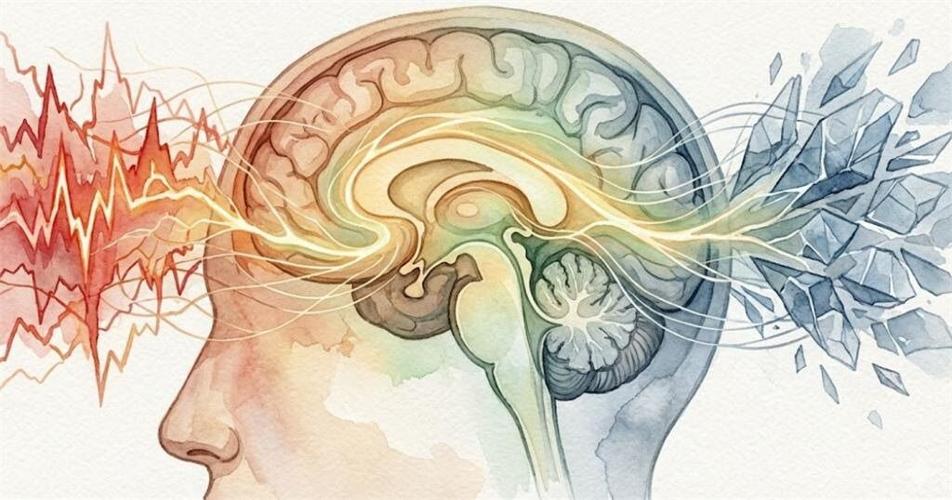
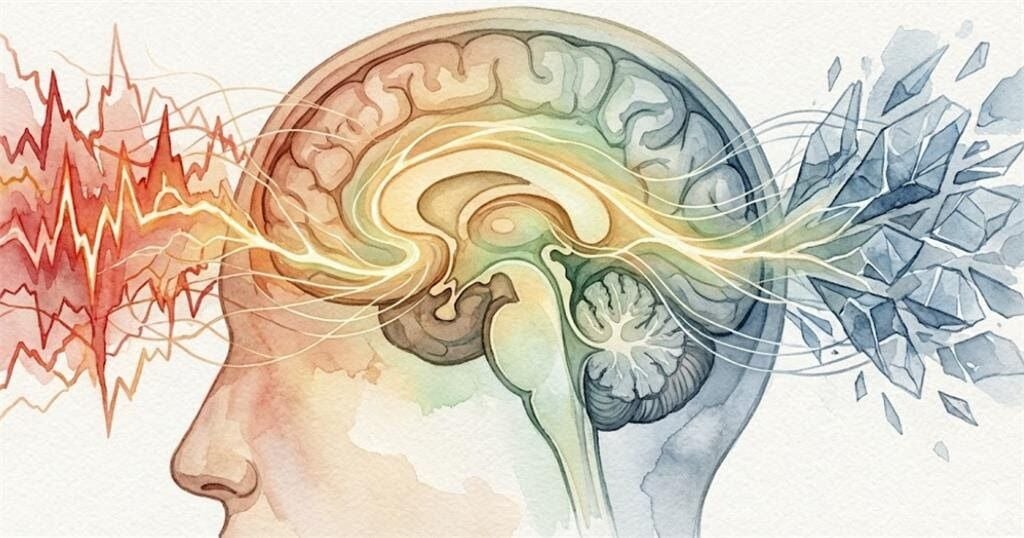
For all the advice about staying calm, breathing deeply, or “thinking positively,” very few people manage grace under pressure. Arguments escalate, composure evaporates, and even the most disciplined minds can be overtaken by fear, anger, or numbness. This collapse frustrates people not because stress is unfamiliar, but because it defies logic: if we know better, why do we not do better?
For decades, psychology tried to solve the problem at the level of mindset. Stress, we were told, was a cognitive challenge: reframe the story, disrupt negative thoughts, visualize success. But that view is being challenged by a quieter revolution emerging from somatic psychology, neuroscience, and trauma research, which suggests the mind is often an observer in moments we assume it is in charge. The real action is happening in the body.
At the center of this reframe is the concept of the window of tolerance, a term clinicians use to describe the bandwidth in which the nervous system can remain present and relational without flipping into survival mode. Within that window, difficult emotions do not hijack behavior. Anger stays contained. Anxiety does not become panic. Thinking remains flexible and connected to reality. Outside it, the nervous system makes different decisions.
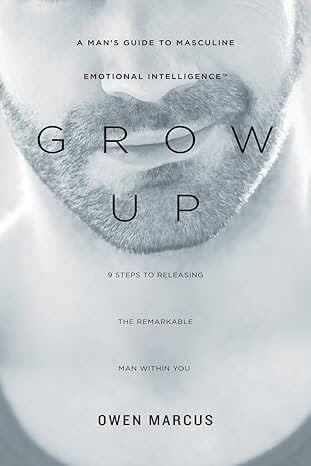
“It’s not about being tougher,” says Owen Marcus, the founder of MELD and a longtime practitioner in somatic regulation. “It’s about how much activation your nervous system can hold before it defaults to protection.” In his work, the collapse of emotional control isn’t a character failure—it’s a physiological threshold being exceeded.
That threshold explains the two very different ways people break under pressure. Some go up: urgency, fight, agitation, anxiety, control. Others go down: shutdown, withdrawal, numbness, fatigue. One looks like intensity, the other like absence, but both are survival responses activated when the system can no longer stay inside its workable range.
Perhaps the most counterintuitive discovery in this field is that most stress problems are not caused by excessive stress. They are caused by insufficient capacity. In other words, there is nothing inherently pathological about high demand. What breaks people is the nervous system’s inability to metabolize it.
This perspective also explains why the most culturally popular stress strategies fail at the exact moments they are needed most. Techniques like reframing, deep breathing, or “staying calm” rely on cognitive override; they assume the conscious mind can outvote the fear circuitry. But once the body has shifted into threat physiology, cognition becomes less of a steering wheel and more of a passenger. Insight doesn’t regulate the nervous system—regulation unlocks insight.
Marcus describes it this way: “Regulation before insight. Capacity before catharsis. Repetition before transformation.” The order matters. Stress responses are ancient. They do not negotiate with logic.
If this all sounds clinical, the implications are surprisingly hopeful. Instead of viewing composure as a personality trait or emotional stability as a moral achievement, this framework treats both as trainable skills. The nervous system learns through experience—not through lectures, resolutions, or motivational slogans. It widens its window through repeated exposures to mild or moderate activation followed by a successful return to baseline. Neuroscientists call this neuroplasticity. Athletes call it training.
What widens that capacity is not heroic stoicism but something far more mundane: awareness of sensation. Somatic researchers describe this as interoception—the ability to detect internal shifts in breath, temperature, muscle tension, or heart rate before they snowball into action. The earlier these signals are detected, the easier it is to stay inside the window of tolerance. Over time, triggers lose their power not because life becomes easier but because the body becomes less reactive.
There is also a social dimension to this science that challenges the modern cult of self-regulation. Humans are not wired to regulate themselves alone. Infants rely on caregivers for nervous system regulation; adults rely on partners, friends, teams, and communities in quieter but no less biological ways. Co-regulation—the ability of one regulated nervous system to help another settle—explains why conflict softens when one person stays present, why athletes recover under steady coaching, and why arguments escalate when both sides lose composure.
What contemporary stress culture gets wrong is the idea that independence is the apex of resilience. In reality, resilience scales through connection. The nervous system evolved collectively, not individually. A supportive group can carry regulation when an individual cannot—something Marcus sees repeatedly in his men’s work, where group somatic practices expand capacity beyond what solitary effort typically achieves.
The broader reframing is subtle but profound: progress is not measured by how rarely someone gets triggered, but by how quickly they recover. Stress doesn’t disappear from life. What changes is the nervous system’s ability to remain in dialogue with the moment rather than abandoning it.
Seen through this lens, the collapse of emotional control under stress is not a failure of character, discipline, or mindset. It is a physiological bottleneck—one that can be widened. The goal is not to prevent activation but to avoid being owned by it.
If modern culture is to take stress seriously, it will require a shift in focus from thinking better to having a system that can feel more without breaking. Emotional control, it turns out, is less about the mind at its best than the body at its most overwhelmed.

(0) comments
We welcome your comments
Log In
Post a comment as Guest
Keep it Clean. Please avoid obscene, vulgar, lewd, racist or sexually-oriented language.
PLEASE TURN OFF YOUR CAPS LOCK.
Don't Threaten. Threats of harming another person will not be tolerated.
Be Truthful. Don't knowingly lie about anyone or anything.
Be Nice. No racism, sexism or any sort of -ism that is degrading to another person.
Be Proactive. Use the 'Report' link on each comment to let us know of abusive posts.
Share with Us. We'd love to hear eyewitness accounts, the history behind an article.