

Overstimulation was once a temporary condition, something that happened in crowded cities, airports, or overstimulated social environments. Today it is ambient. Most adults would not describe themselves as overwhelmed, yet many live with a quiet state of cognitive tension: restlessness, shortened patience, difficulty relaxing, and a sense that even leisure no longer restores. This is not a personality flaw but a structural condition. Screens, sound, lighting, visual clutter, and decision load now layer into a continuous sensory environment without natural off-ramps.
The nervous system was designed for rhythm, not continuity. It expects cycles of engagement and recovery, stimulation and drift, alertness and idle attention. Contemporary life compresses these cycles into a single blurred channel. The result is a form of low-grade overstimulation that rarely causes collapse, but steadily erodes attention and rest.
Screens and the Velocity of Input
Screens are often criticized for brightness or blue light, but the issue is subtler: screens accelerate information density. In a matter of seconds, the brain parses faces, text, motion, advertising, notifications, and narrative. This is not passive consumption, it is continuous cognitive triage. Stanford research on attentional switching notes that high-volume media environments increase distractibility not because we lack discipline, but because the brain adapts to expect novelty.
Idle time, once a natural buffer in the day, has collapsed. Cooking, commuting, and waiting once slow experiences are now filled with rapid visual content. Boredom has become rare, yet boredom was historically a mechanism for mental recovery.
Sound Without Edges

Sound no longer arrives at intervals. It forms a continuous layer beneath life appliance hum, HVAC air, television voices, podcasts, notifications, traffic, and the reverberation of hard-surface interiors. Acoustic ecology research shows that it is not loudness that fatigues the nervous system, but inconsistency. Unexpected or varied noise triggers micro-vigilance, as the auditory system evolved to scan for deviations that might indicate threat. This vigilance drains attention even when we are unaware of it.
Cities and open-plan homes amplify this effect. When walls dissolve and materials harden, sound becomes uncontained. A kitchen becomes audible in the bedroom. A conversation becomes audible throughout the home. Without acoustic buffering, noise becomes the default condition.
Lighting That Signals “On” When We Need “Off”
Light functions as a biological instruction set. Cool, bright, wide-beam lighting signals daytime; warm, directional, dim lighting signals evening. Many modern interiors invert this logic. Homes are illuminated for photography rather than biology—bright, even, high-contrast illumination that keeps the brain in task mode after dusk.
Harvard’s circadian research has documented how evening light delays melatonin onset and reduces slow-wave sleep. The problem is not modern lighting, but the absence of transition. The body needs visual cues that the day is decelerating. Hospitality design excels at this through layered lighting—lamps, sconces, low glow, and selective illumination—while residential design often relies on singular overhead fixtures.
Visual Clutter and Scanning Fatigue
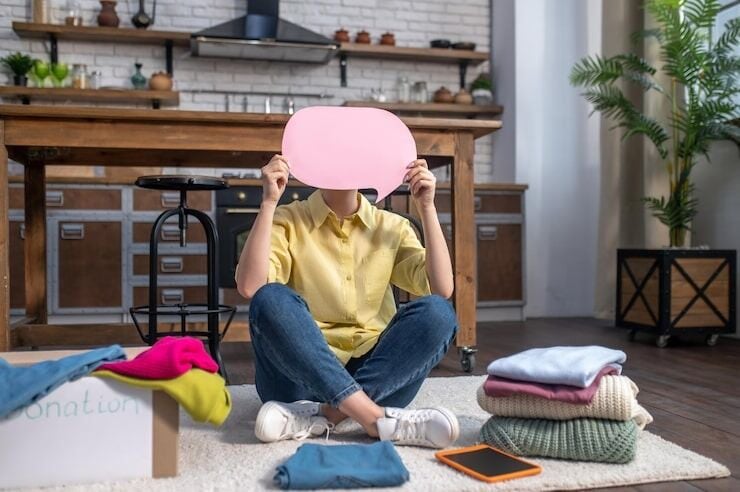
Visual clutter is not just about tidiness. It is about the brain’s requirement to parse objects in space. Kitchens with open shelving, living rooms with multiple focal points, devices on countertops, décor on every surface each item invites a micro-decision: ignore, interpret, or act. Neuroscience studies from Princeton demonstrate that excess visual stimuli reduce processing efficiency because objects compete for neural representation.
Even beautifully curated spaces can be visually noisy when everything is visible at once. Closed storage is not merely a convenience; it is a sensory buffer.
Decision Fatigue and Choice Inflation
Overstimulation is also cognitive. The number of decisions an adult makes daily has multiplied across categories: meals, media, messaging, commerce, leisure, travel, and personal performance. Barry Schwartz’s work on decision fatigue shows that more choice leads to more paralysis, not more satisfaction.
Affluent households experience this acutely because high-end consumption often multiplies option sets rather than narrowing them. Leisure itself has become curatorial—restaurants, streaming platforms, travel itineraries, wellness habits—each requiring selection.
Designing for Sensory Buffering
The common advice for overstimulation—digital detoxes, silent retreats, weekend resets—assumes withdrawal is the only antidote. In reality, the more effective strategy is buffering: creating sensory gradients rather than sensory zeros.
At home, buffering looks like:
layered lighting rather than uniform overhead brightness
closed storage rather than aspirational minimalism without containment
acoustic absorption through textiles, rugs, upholstery, or partitions
visual restraint in high-traffic sightlines
device zoning to reintroduce cognitive transitions
analogue duration such as reading, bathing, cooking, or walking
This aligns with broader conversations in the design and wellness space. In a recent FINE feature on recovery-oriented environments, From Treatment to Home: Building a Living Environment That Nurtures Lasting Recovery, the author argues that physical spaces can either amplify systemic stress or mitigate it through intentional design cues—precisely the logic at work in sensory buffering.
A small number of design-forward brands are now addressing sensory overload without resorting to tech gimmicks. Muuto’s acoustic lighting series, for example, combines downward illumination with sound absorption, softening two sensory channels at once. The intervention is quiet, architectural, and non-performative—precisely the kind of solution that restores function without demanding aesthetic compromise.
The Nervous System Needs Rhythm, Not Purity
Overstimulation is not a failure of character; it is a mismatch between an ancient nervous system and a contemporary sensory economy. Humans evolved for thresholds: day to night, sound to quiet, stimulus to pause. When those thresholds vanish, overstimulation becomes the default condition. Recovery does not require asceticism or escape. It requires rhythm—the reintroduction of sensory exhale after sensory inhale.
In an age where stimulation is cheap and constant, stillness has become expensive. And like all scarce resources, it is increasingly valuable.
(0) comments
We welcome your comments
Log In
Post a comment as Guest
Keep it Clean. Please avoid obscene, vulgar, lewd, racist or sexually-oriented language.
PLEASE TURN OFF YOUR CAPS LOCK.
Don't Threaten. Threats of harming another person will not be tolerated.
Be Truthful. Don't knowingly lie about anyone or anything.
Be Nice. No racism, sexism or any sort of -ism that is degrading to another person.
Be Proactive. Use the 'Report' link on each comment to let us know of abusive posts.
Share with Us. We'd love to hear eyewitness accounts, the history behind an article.